
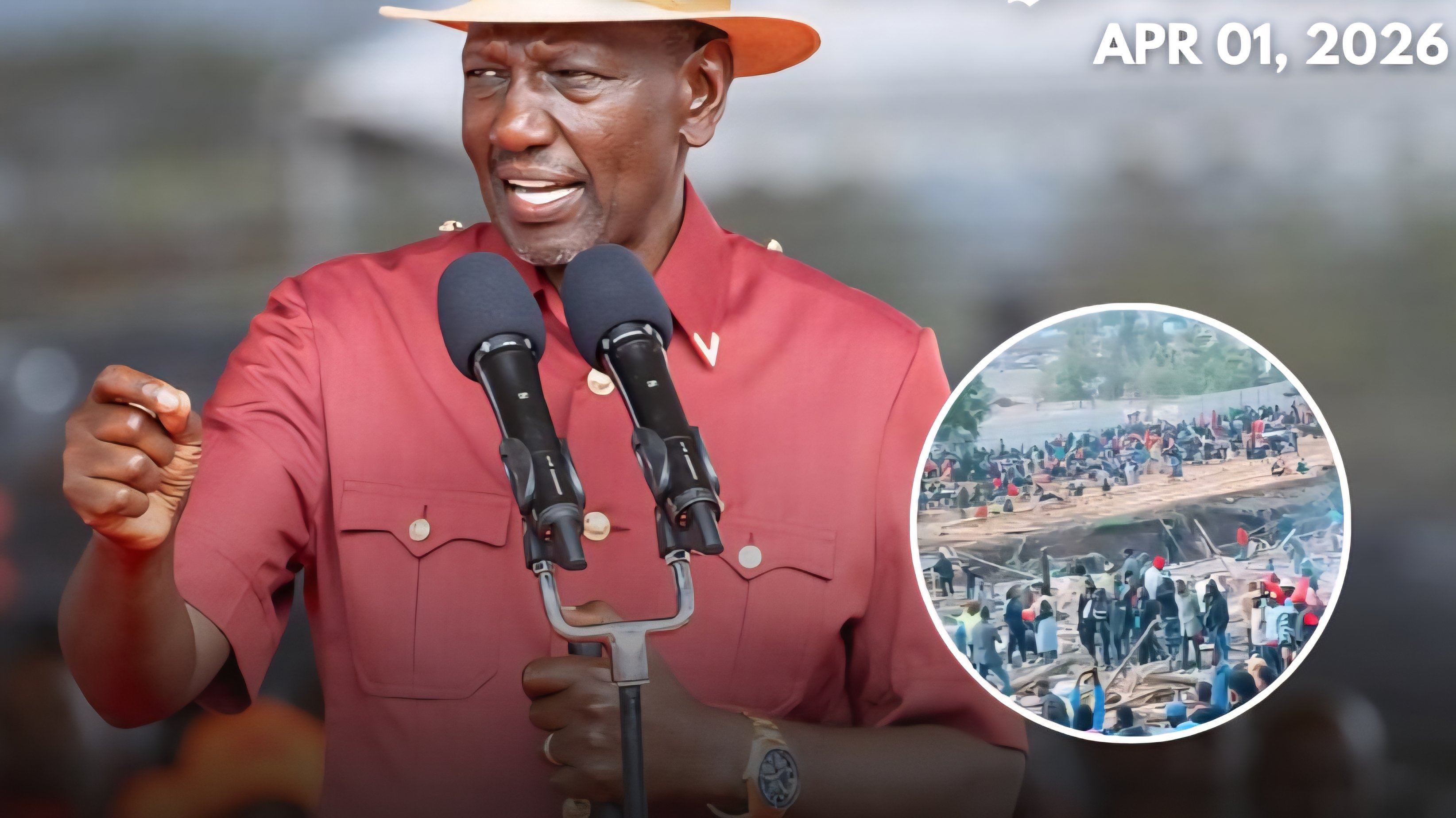

President William Ruto has defended the recent demolition of structures at the Gikomba market, stating that the exercise was carried out following direct requests from traders for a more dignified working environment. Speaking during a Maendeleo ya Wanawake meeting at State House on Wednesday, the President noted that the redevelopment is a response to the historical challenges of mud, poor sewage systems, and frequent fires that have long plagued the site.
The President explained that the traders themselves shared the history of Gikomba as a place of persistent hardship, where sewage often overflows, and fire outbreaks are a daily risk. He stated that the government is moving to help build a modern facility that will replace the makeshift structures currently in place. This project, according to the President, is integrated into the national programs focused on affordable housing and market development.
Work on the site has already commenced, with the first phase involving the construction of a linear market designed to accommodate 5,000 traders. This initial stage is estimated to cost Sh800 million. President Ruto further detailed that the government has committed Sh3 billion for further development, with an additional Sh5 billion earmarked for the main market facility. The total investment is expected to transform the sprawling trading hub into a structured, multi-storey environment.
The demolitions, which primarily affected the shoe market section on the night of March 30, had initially sparked concerns among the locals regarding the loss of livelihoods. However, Housing Principal Secretary Charles Hinga clarified that the redevelopment will be undertaken in phases to minimize business disruption. He noted that it is not feasible to relocate all 200,000 traders at once, and alternative trading spaces have been designated for those affected by the ongoing works.
Government officials have described the planned upgrade as a way to reclaim functionality in a market that had outgrown its original capacity. The new design focuses on improving infrastructure, including wider access roads for emergency vehicles and enhanced fire safety systems. By addressing the lack of proper drainage and waste management, the state aims to mitigate the sanitation issues that have historically defined the area.
President Ruto also addressed the political tension surrounding the evictions, cautioning against the politicisation of the project. He dismissed claims of ethnic profiling, insisting that the redevelopment follows the same model used for 500 other markets recently constructed across the country. He emphasized that the goal is to provide a safer, more organized space for the thousands of Kenyans who depend on Gikomba for their daily income.
Boniface Muigai, the Chairman of the Gikomba Shoe Market, confirmed that leaders were aware of the planned relocation and have been working with the government to allocate spaces in temporary holding areas. As construction continues, the state maintains that the transition from a mud-prone site to a modern trading hub will eventually benefit the entire network of traders who use the national market.
Comments (0)
Leave a Comment
No comments yet. Be the first to share your thoughts!