
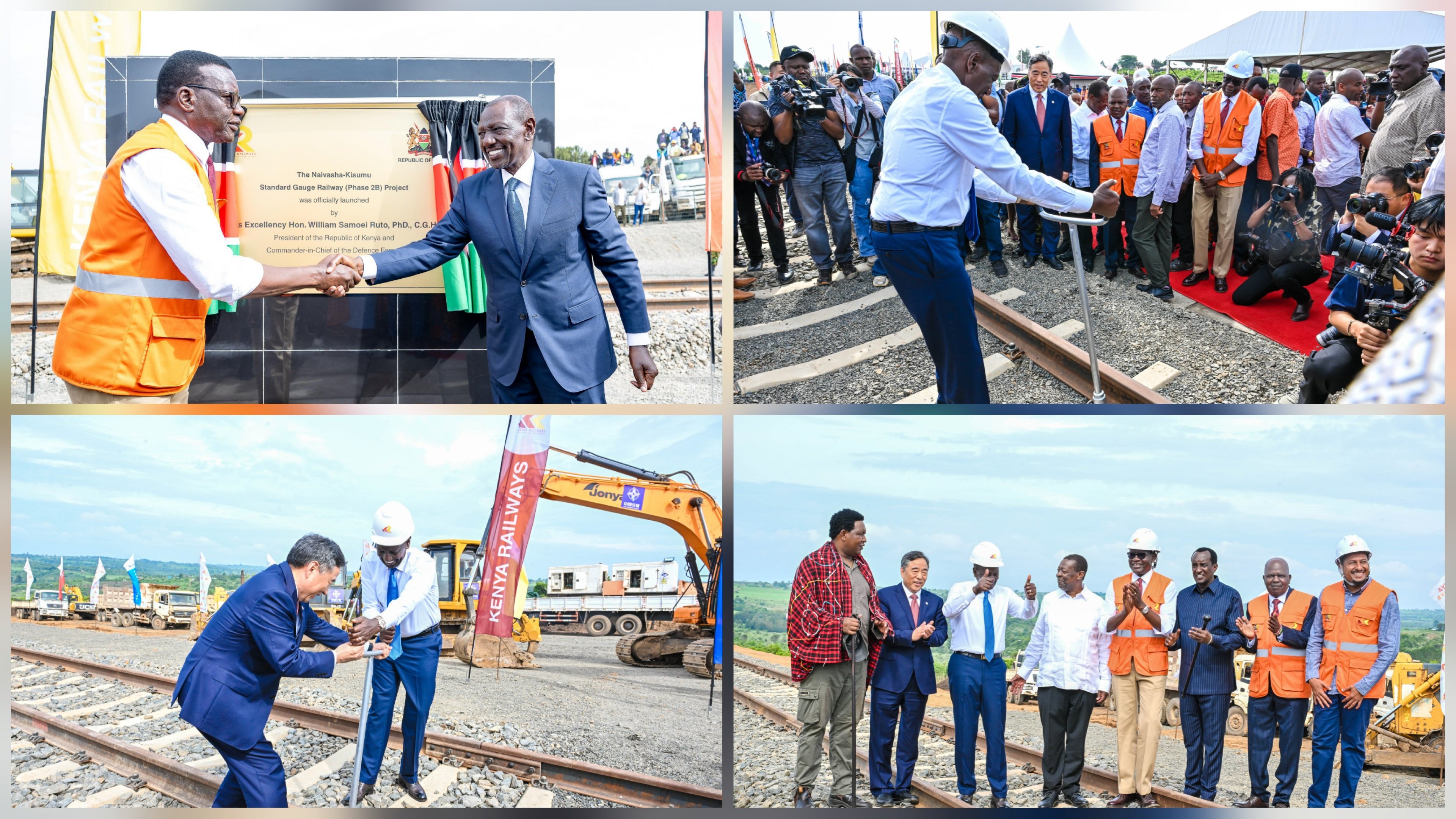

President William Ruto has officially launched the construction of the Naivasha to Kisumu Standard Gauge Railway (SGR) Phase 2B, a move intended to link the hinterland more effectively with the Port of Kisumu. The ceremony took place in the presence of the Cabinet Secretary for Roads and Transport, Davis Chirchir, and other senior government officials.
This latest development comes as the government seeks to complete the original design of the SGR, which was initially intended to reach the border with Uganda. The extension from the current terminus at Suswa in Naivasha is expected to streamline the movement of goods and passengers to the western parts of the country.
Speaking at the launch, the President emphasized the role of modern rail in reducing the cost of doing business. By moving heavy cargo from the roads to the rails, the government hopes to lower maintenance costs on the national road network while speeding up the transit of goods across East Africa.
The Naivasha-Kisumu section is a critical piece of the Northern Corridor. Historically, this route has relied on a century-old meter-gauge line that, although recently rehabilitated, lacks the speed and axle-load capacity of the new standard-gauge technology.
Engineers on-site noted that the project involves complex terrain, requiring the construction of several bridges and tunnels to maintain the necessary gradients for heavy freight locomotives. The project will also see the development of new stations and specialized handling facilities at the Kisumu terminus.
Cabinet Secretary Davis Chirchir described the launch as a defining moment for the nation's infrastructure history. The ministry has been under pressure to demonstrate the commercial viability of the SGR, and the extension to Kisumu is seen as a way to tap into the blue economy of Lake Victoria.
Financing for this phase has been a subject of long-term bilateral negotiations. While specific final budget breakdowns for this immediate launch were not detailed in the initial announcement, the project follows a series of high-level diplomatic engagements aimed at securing infrastructure partnerships.
The construction phase is expected to provide thousands of jobs for local technicians and laborers. Beyond the immediate employment, the government anticipates that the rail will stimulate industrial hubs along the route, particularly in Nakuru, Kericho, and Kisumu counties.
Local leadership in Kisumu has welcomed the move, noting that a direct SGR link could revitalize the city's position as a regional logistics hub for the Great Lakes region. The integration with the recently refurbished Kisumu Port is a central component of this strategy.
As the heavy machinery begins to move, the focus shifts to the timeline for completion. Previous phases of the SGR were noted for their rapid execution, and the Ministry of Transport has indicated that it will maintain strict oversight to ensure the Phase 2B project adheres to its technical specifications.
The launch signifies a shift back toward massive rail infrastructure as a priority for the current administration, after several years where the focus had largely remained on road maintenance and completing existing urban bypasses.
Comments (0)
Leave a Comment
No comments yet. Be the first to share your thoughts!