
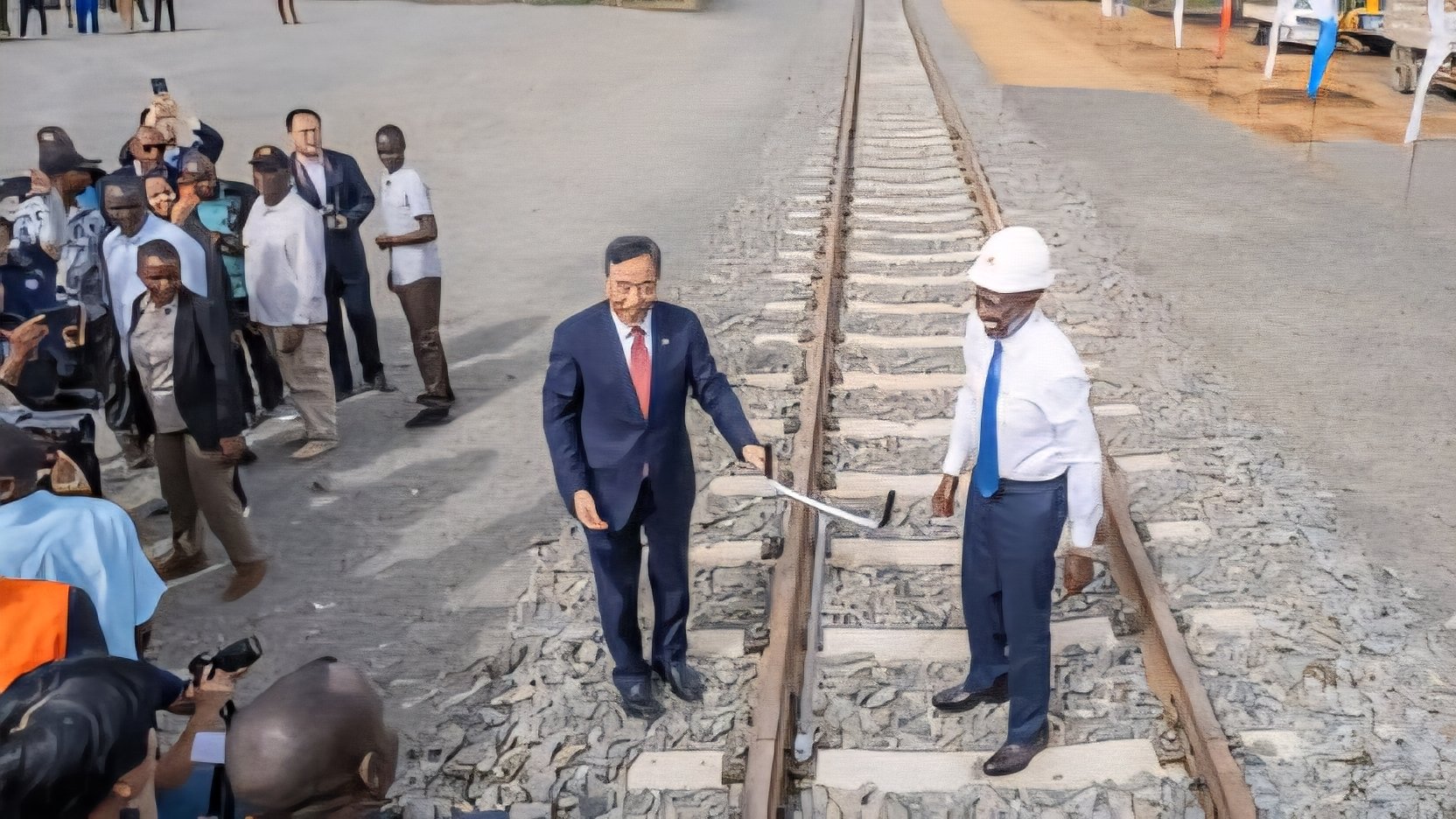

The government has officially commenced the construction of the Standard Gauge Railway extension from Naivasha to Malaba, a multi-billion-shilling project intended to complete the primary rail corridor between the Port of Mombasa and the Uganda border. President William Ruto led the groundbreaking ceremony on Thursday, March 19, 2026, in Suswa, Narok County, marking the start of a two-year construction period for the western segments of the line.
The project, which carries an estimated cost of Sh500 billion, is divided into two distinct phases. Phase 2B will cover 264 kilometres from Emurtoto in Narok County to the lakeside city of Kisumu. This section also includes a specialized 8.69-kilometre branch line dedicated to the proposed new Kisumu Port, aiming to integrate rail transport with Lake Victoria’s shipping routes.
Phase 2C will extend the tracks further by 107 kilometres from Kisumu to Malaba, traversing Siaya, Vihiga, Kakamega, and Busia counties. On Saturday, a second groundbreaking event is scheduled for the Kisumu-Malaba leg, which will eventually interface with Uganda’s planned SGR development at the Tororo border.
Technical specifications from Kenya Railways indicate that the new line will accommodate passenger trains traveling at 120 km/h and freight trains at 80 km/h. Each freight train is expected to have a haulage capacity of 4,000 tonnes, while passenger locomotives will be configured to carry 1,096 people per trip.
Engineering the route through the varied terrain of the Rift Valley and Western Kenya requires significant infrastructure. The design includes 13 tunnels, 23 bridges, and 376 culverts to maintain the requisite gradients for heavy freight operations. In total, the project features 26 stations, ranging from major terminals to smaller crossing points.
Intermediate stations for the Naivasha-Kisumu section are planned for Narok, Mulot, Bomet, Sotik, Sondu, and Ahero. Crossing stations along this stretch will span Narok, Bomet, Nyamira, Kericho, and Kisumu counties. The Kisumu-Malaba segment will include intermediate stops at Yala and Mumias, supported by crossing stations at Kisian West, Ramala, Musanda, Manyulia, and Amukura.
The construction is being undertaken by China Communications Construction Company, returning to the project after a period of limited activity on the rail corridor. Current government data suggests that the Mombasa-Naivasha section already generates approximately Sh1.3 billion in monthly freight revenue, and officials expect the extension to further capitalize on these volumes by providing a direct link for transit cargo.
According to the State Department for Transport, the primary objective is to transition long-distance haulage from the road network to rail. Currently, cargo transit from Mombasa to Malaba can take up to 80 hours by road. The SGR extension is designed to reduce these timelines and lower the overall cost of doing business within the Northern Corridor.
Land acquisition for the corridor remains a priority, with the National Land Commission currently verifying parcels along the route. The project is expected to require roughly 5,000 acres of land. Authorities have indicated that the full extension to Malaba is targeted for completion by June 2027, provided the construction schedule remains on track.
Comments (0)
Leave a Comment
No comments yet. Be the first to share your thoughts!