
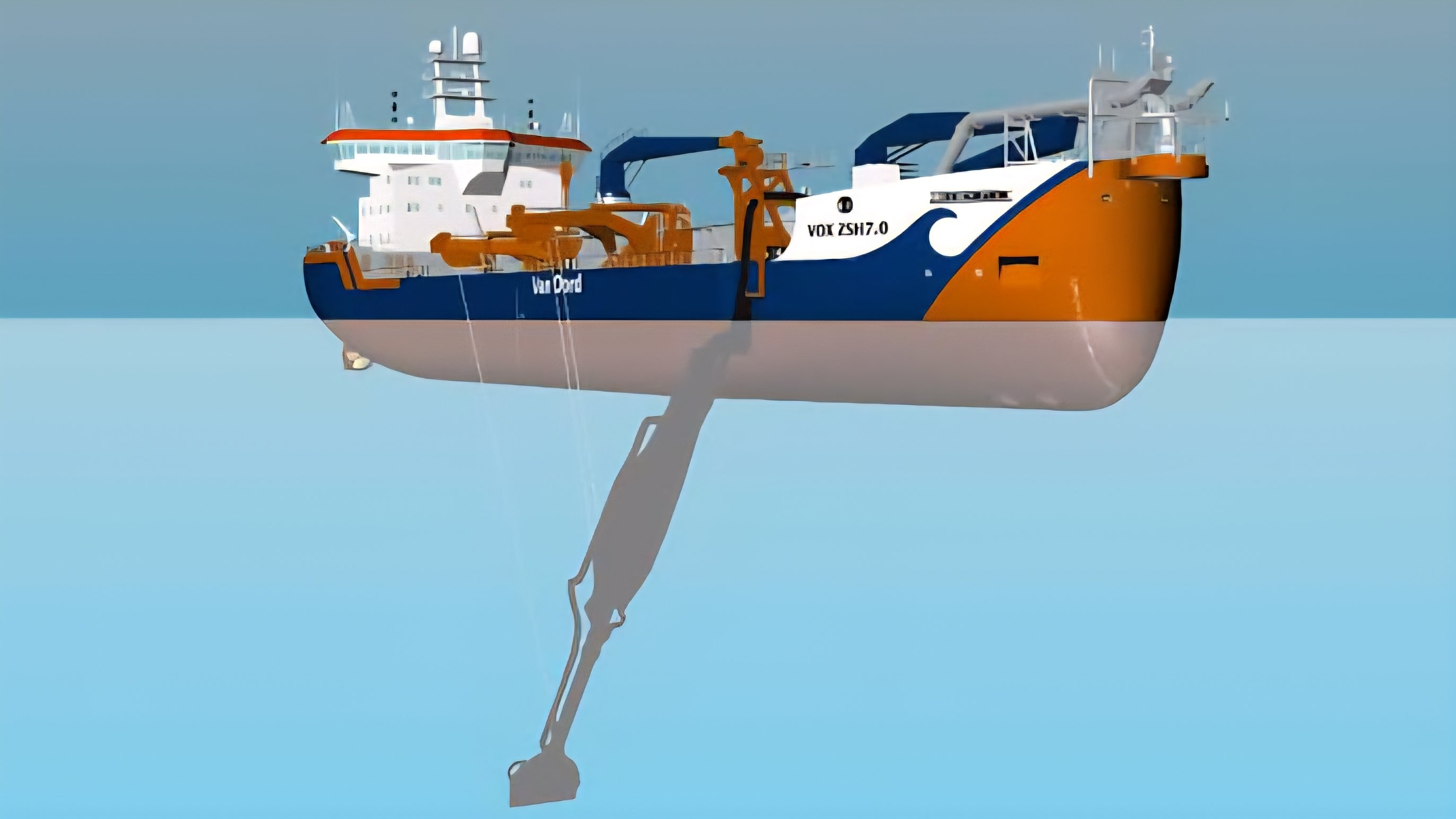

A recent online post by Killa Lando on the X platform highlights the technical strategy guiding the dredging works at a critical maritime infrastructure site.
The discussion centers on the natural depth of the seabed.
Engineers have identified a natural depth of 17 meters at the location, which they describe as a primary factor in selecting the site for development.
By utilizing these existing conditions, project planners have significantly altered the scope of necessary dredging works.
According to the information shared, the main channel requires a dredging depth of only 0.5 meters to reach the necessary operational specifications.
This relatively minor intervention has yielded substantial cost savings for the project.
The Government of Kenya (GoK) has subsequently been able to cover the total financial requirements for this phase of the work.
This financial arrangement has effectively de-risked the infrastructure project, reducing reliance on complex external funding models.
Looking ahead, the project specifications mandate a further deepening of the channel.
Current plans confirm the target depth for the channel is 21 meters.
This additional work will require more extensive seabed excavation to accommodate larger vessel drafts.
The strategy relies heavily on the initial 17 meters of natural clearance to keep the overall volume of material that must be removed at a manageable level.
Proper maintenance of these depths is essential for the long-term viability of maritime trade routes and terminal operations.
The approach suggests a focus on minimizing capital expenditure during the initial construction phase by aligning site selection with favorable geological characteristics.
Dredging remains a highly specialized aspect of marine construction.
It involves the removal of sediments and debris from the bottom of lakes, rivers, or harbors.
The precise execution of this work dictates the maximum size of ships that can safely dock at a facility.
Operators must balance these deepening requirements against environmental considerations and the sheer scale of the engineering task involved in moving such large volumes of material.
Comments (0)
Leave a Comment
No comments yet. Be the first to share your thoughts!