

A version of this article appeared on LinkedIn by the Energy Shift.
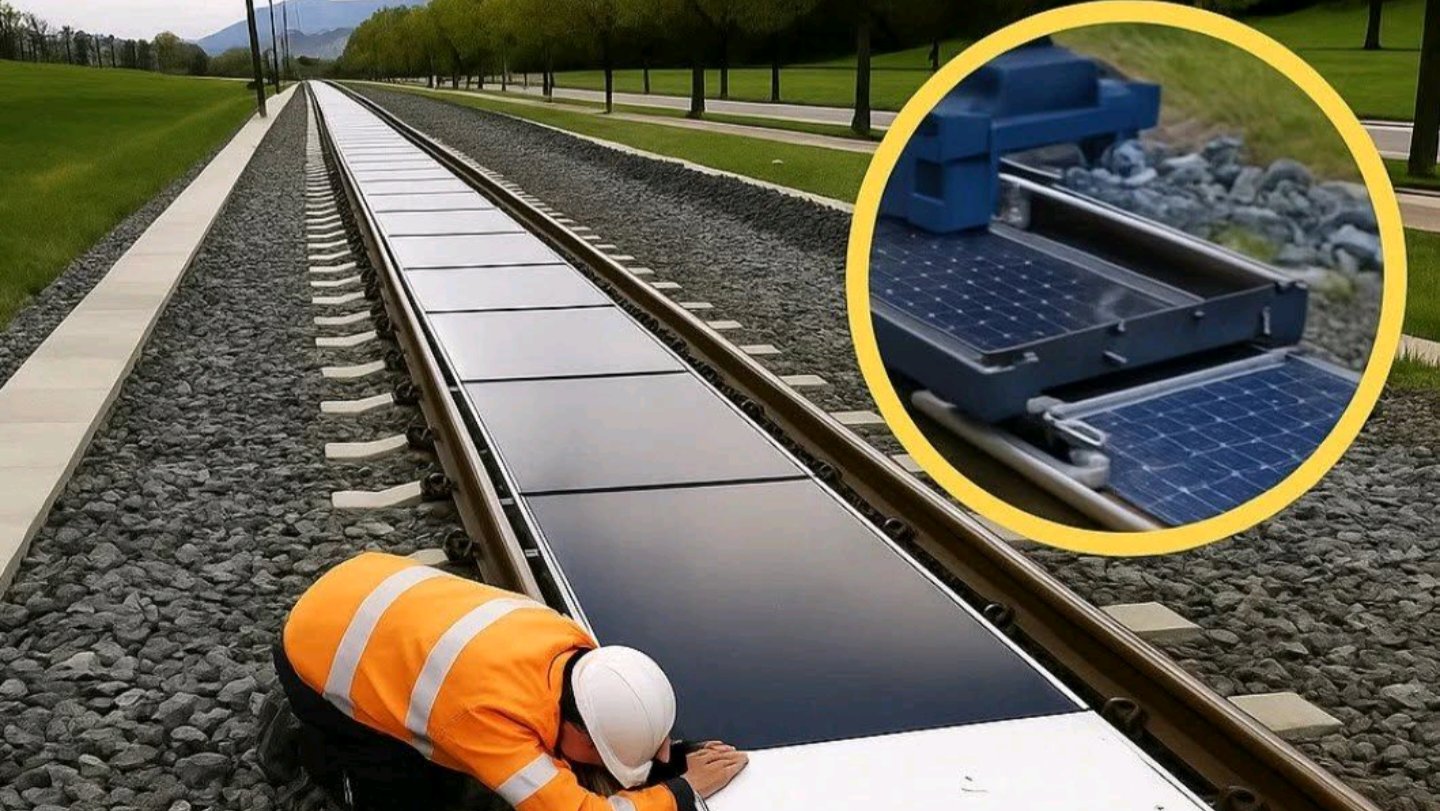
Switzerland has officially commenced a pioneering engineering trial by mounting solar panels directly onto active railway tracks. The pilot installation utilizes the empty, flat space between the two steel rails, which normally sits completely idle during daily passenger train operations.
The mechanical system was developed by the Swiss clean technology firm Sun-Ways, which collaborated with local technical institutions. The initial phase of the test project is situated on an active rail line near the village of Buttes, within the canton of Neuchâtel.
Engineers deployed 48 specialized solar panels along a 100-meter section of the operational track. This configuration provides a total power capacity of 18 kilowatts (kW), and technicians expect it to generate roughly 16,000 kilowatt-hours (kWh) of clean electricity every year.
The generated power is currently directed into the local electricity distribution network, but operational constraints mean the electricity cannot yet power the trains directly. The system feeds electricity straight into local residential homes, which helps offset municipal carbon footprints.
The Swiss Federal Office of Transport (FOT) initially blocked the engineering proposal in 2023, because of strict safety and infrastructure maintenance concerns. The regulatory body required extensive proof that the panels would not impair track stability, although they later granted approval.
Sun-Ways spent months manufacturing prototypes, and the company commissioned independent safety audits from Geste Engineering. After technical assessments showed no increased hazard to passing rolling stock, the FOT granted permission for a three-year pilot phase, which runs through 2028.
Global bodies like the International Union of Railways (UIC) have expressed skepticism, noting that panels might suffer structural micro-cracks. There are also persistent concerns regarding blinding reflections, which could distract train drivers during bright daylight hours.
To mitigate these hazards, the manufacturer applied a specialized anti-reflective coating to the Photo Voltaic (PV) modules. The mechanical housing of the panels is heavily reinforced to withstand the extreme vibrations caused by passing trains, but remains lightweight.
The solar modules can be rapidly unclipped and removed, if a rail line requires urgent track repairs or regular ballast maintenance. This operational access is secured through a fully reversible design, which means the panels are not permanently anchored to the railway sleepers.
The installation process relies on a custom track maintenance train developed by Swiss engineering specialist Scheuchzer SA. This mechanical system is capable of laying or removing up to 1,000 square meters of solar panels per day, when operating at full speed.
Dust and debris buildup from passing trains can severely reduce solar energy yield over time, but the developers created an integrated solution. Passenger trains can be fitted with specialized cylindrical undercarriage brushes, which automatically clean the panels as they travel.
The total budget for this initial engineering trial in Buttes amounts to approximately 585,000 Swiss Francs (CHF). A significant portion of this funding was provided through partnerships, including support from the Swiss Agency for Innovation Promotion (Innosuisse).
The pilot program is scheduled to run for three years, and the long-term data will be shared with international partners. The French national rail operator, Societé Nationale des Chemins de fer Français (SNCF), has already partnered to evaluate the operational results.
The implications for European infrastructure could be substantial, if the methodology proves resilient over the three-year trial. Sun-Ways estimates that utilizing the country's entire 5,320-kilometer rail network could produce one billion kWh of electricity annually.
This volume of renewable generation would satisfy nearly two percent of total electricity consumption across the Swiss Federation. It would also circumvent public opposition to large-scale solar installations, which often face resistance when located on pristine alpine mountainsides.
The developer believes that up to 50 percent of global railway networks could eventually be equipped with this technology. This approach could effectively turn thousands of kilometers of steel tracks into decentralized power facilities, when deployed at a global scale.
Comments (0)
Leave a Comment
No comments yet. Be the first to share your thoughts!