
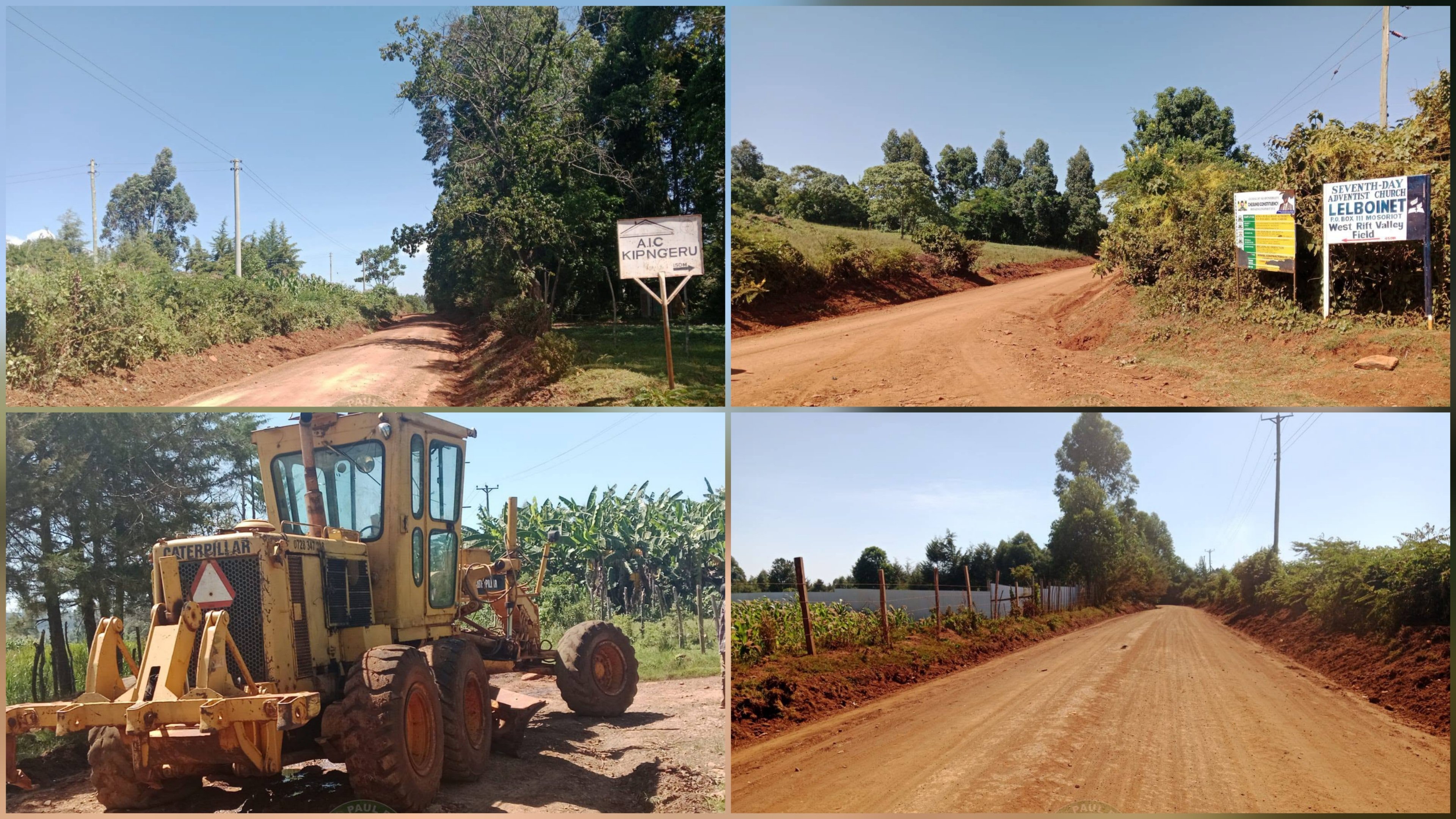

The State Department for Roads has confirmed steady progress on the engineering works to upgrade the Mosoriot–Lelboinet–Kapkong'ony road network, a key corridor supporting rural commerce and transit.
The infrastructure installation is transitioning the existing earth and gravel standard into a resilient bitumen system, targeting long-term durability against heavy regional traffic.
Engineering teams are executing the project through a planned, phased implementation strategy.
This approach combines heavy tarmac laying along the primary alignment with localized structural improvements on critical feeder sections, maintaining local transit access while heavy machinery operates.
A central objective of the engineering design remains the mitigation of transport bottlenecks. Contractors are reshaping earthworks and adjusting alignments to cut travel times, which historically spike during regional wet seasons.
The civil engineering scope features a comprehensive overhaul of the local drainage architecture. Technicians are installing dedicated drainage networks, including culverts and side drains, to protect the new road layers from water logging.
Uncontrolled runoff has historically accelerated pavement degradation on the unpaved corridor, necessitating robust water management infrastructure.
Heavy earthmoving equipment, including a motor grader captured operating on-site in the 248824.png engineering file, continues leveling the subgrade layers to establish a stable foundation before application of the final asphalt concrete course.
The Kenya Rural Roads Authority (KeRRA), which oversees the wider rural network classification in the region, has identified the upgrade as vital for stabilizing regional transport.
The project aims to integrate agricultural areas directly with main transit hubs, reducing vehicle maintenance costs for local transporters.
By upgrading the route to full bitumen standards, the State Department for Roads expects to establish permanent, all-weather accessibility across the entire network.
The phased structural interventions on the feeder links ensure that the benefits of the primary highway upgrade extend directly to smaller rural farming communities, maximizing the utility of the public infrastructure investment.
Comments (0)
Leave a Comment
No comments yet. Be the first to share your thoughts!