
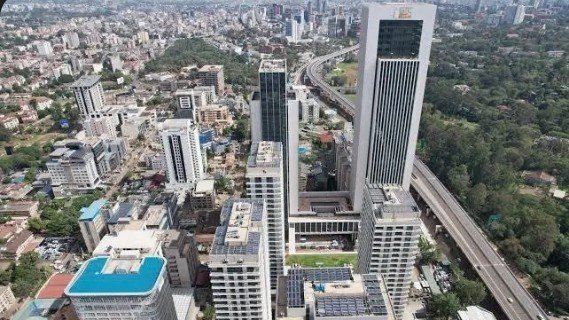

Nairobi’s skyline is changing at a pace few could have imagined a decade ago. The city, once defined by low-rise buildings and modest office blocks, now hosts a cluster of modern towers that are reshaping its identity. These buildings are not just functional spaces for offices or apartments, they are symbols of status, economic growth and urban ambition. Developers are increasingly competing to claim a visible presence in the city’s skyline and this competition is evident in the height, design and location of new constructions.
The demand for premium office space and luxury apartments has encouraged developers to build higher and more striking structures. Many new towers are concentrated along the Nairobi Central Business District and along major highways such as Thika Road and Mombasa Road. The trend reflects a shift in urban planning where vertical growth is considered a solution to limited land availability and increasing population density. These towers are designed to accommodate a mix of commercial, residential and retail spaces, offering a one stop urban experience.
Height has become a central factor in the competition. Developers are aiming to construct buildings that not only maximize space but also stand out visually. A taller tower naturally becomes a landmark, attracting businesses, residents and investors who are drawn to its prominence. Some of the recent developments include buildings that surpass twenty stories, while a few projects are aiming for over thirty floors. This ambition for height reflects Nairobi’s desire to position itself alongside other African cities like Johannesburg and Lagos, which are known for their high-rise skylines.
Beyond height, design innovation is also a major factor in the competition. Developers are investing in architecture that combines functionality with aesthetics. Towers featuring glass facades, unique lighting, and modern finishes are now common. Many buildings are designed to be energy efficient, incorporating green technologies such as solar panels, water recycling systems and intelligent climate control. Such features appeal to both environmentally conscious tenants and companies seeking modern facilities that align with global standards.
Location plays an equally important role. Towers built in central areas or along major roads gain visibility and easy access, making them more attractive to businesses and residents alike. Developers are increasingly choosing prime locations near transport hubs, shopping centers, and business districts to enhance convenience and prestige. This trend has led to a clustering of high rise structures, gradually transforming the Nairobi skyline into a mix of modern towers and older low rise buildings.
The competition is not without challenges. High construction costs, regulatory hurdles, and infrastructural limitations sometimes slow down projects. Nairobi’s road network and power supply must keep up with the growth in vertical developments. There are also concerns about the impact on the environment, traffic congestion, and the character of the city. However, despite these challenges, investors remain optimistic, driven by the potential returns from commercial leases, luxury apartment sales and office rentals.
The rise of these towers also reflects broader economic trends. Nairobi has become a hub for international business, finance, and technology. Many multinational companies prefer modern office towers for their headquarters, while local businesses seek buildings that can provide a competitive image. Residential towers cater to the growing middle class, offering modern living spaces close to work and social amenities. The presence of high-end towers signals Nairobi’s evolution from a regional city to one with aspirations of being a cosmopolitan African capital.
The competition for Nairobi’s skyline shows no sign of slowing down. Each new tower represents not just a physical structure, but a statement of ambition and progress. As more developers invest in high rise projects, the city’s skyline will continue to evolve, blending contemporary architecture with Nairobi’s unique urban character. The race for visibility and prestige in the skyline reflects not only the economic growth of the city but also its aspirations on the continental and global stage.
The transformation of Nairobi’s skyline is a story of ambition, investment, and urban change. While challenges remain, the ongoing construction of towers demonstrates the city’s determination to embrace vertical growth and modernity. For residents, businesses and visitors, the evolving skyline offers a glimpse of a city that is increasingly looking upward, both literally and figuratively.
Comments (0)
Leave a Comment
No comments yet. Be the first to share your thoughts!