
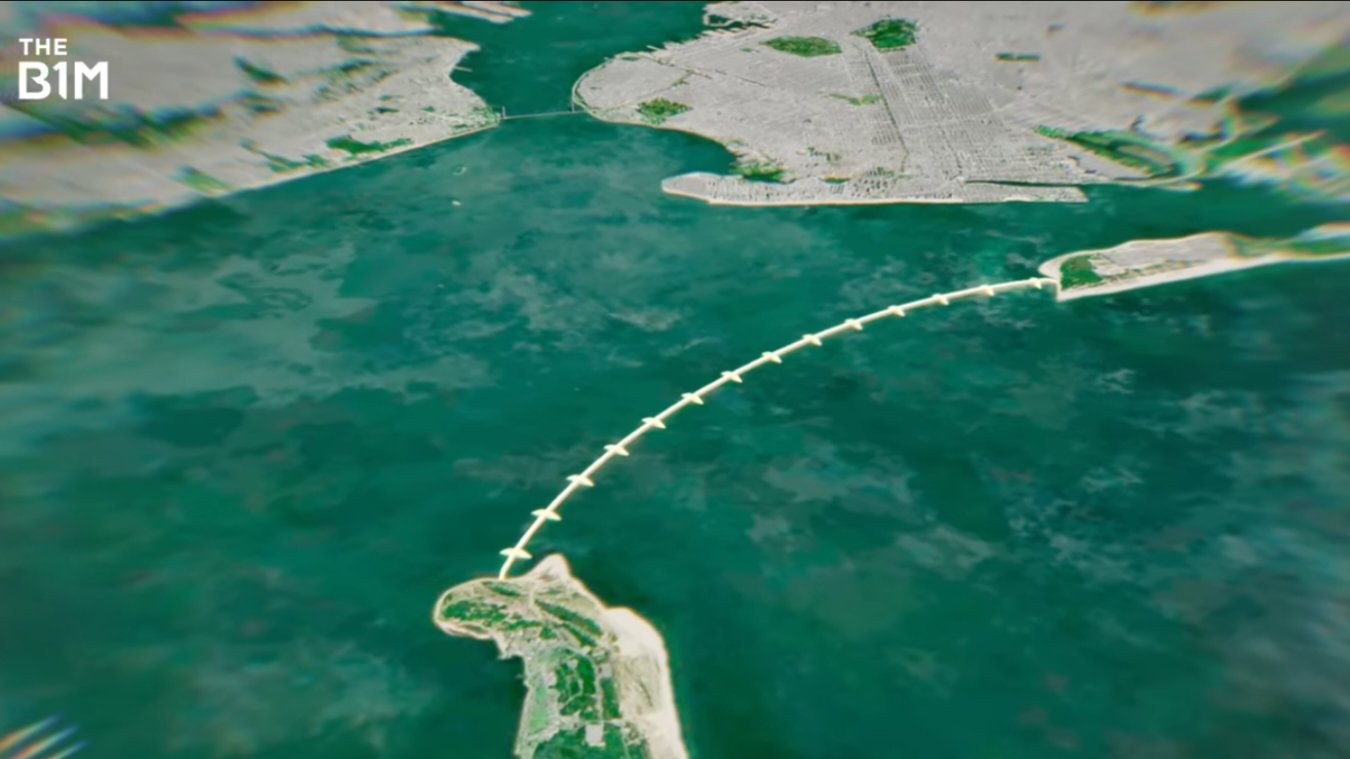

This article was adopted from the The B1M/YouTube.
A massive coastal defense project proposed by the United States Army Corps of Engineers aims to shield the New York metropolitan region from catastrophic storm surges. The sweeping infrastructure plan addresses deep vulnerabilities exposed in 2012 when Hurricane Sandy inundated approximately 17% of New York City, causing over 19 billion dollars in economic losses and physical damage.
Following a comprehensive decade-long examination of regional flood risks, authorities formulated a strategy anchored by offshore retractable gates and extensive shoreline reinforcements. Originally conceptualized as a singular 119 billion dollar outer harbor wall spanning nearly 10 kilometers, the design underwent revision to improve financial and logistical feasibility. The updated blueprint, designated as Alternative 3B, carries an estimated price tag of 50 to 53 billion dollars.
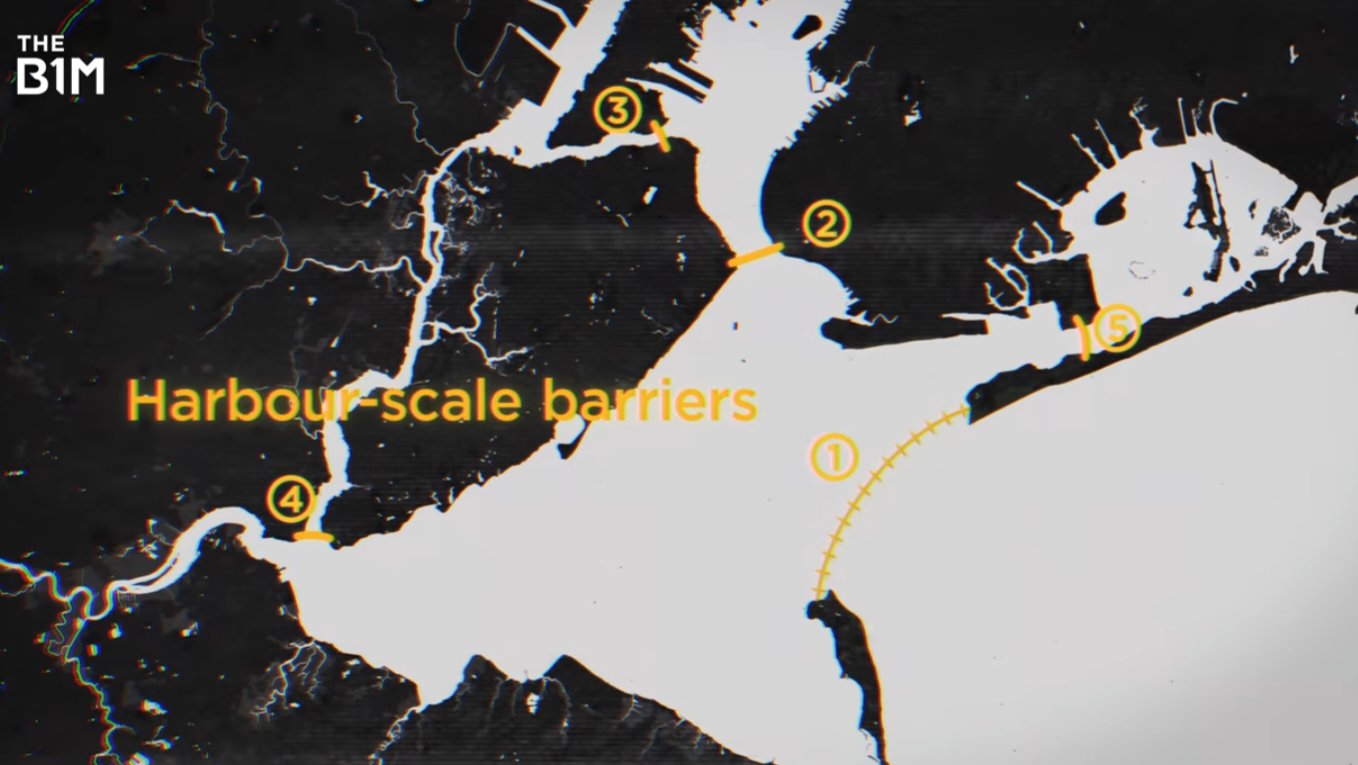
The illustration of harbour-scale barriers for the New York sea barrier. Photo: The B1M/YouTube
Rather than deploying a single continuous barrier, the revised program distributes defense measures across smaller, sequential segments. The framework incorporates 12 movable storm surge barriers placed at strategic tidal straits and creeks, alongside dozens of kilometers of land-based flood walls, levees, and elevated promenades. These movable gates are designed to lie open during ordinary conditions to protect marine ecosystems, tidal flows, and commercial shipping lanes, rotating shut only when severe weather threatens the coast.
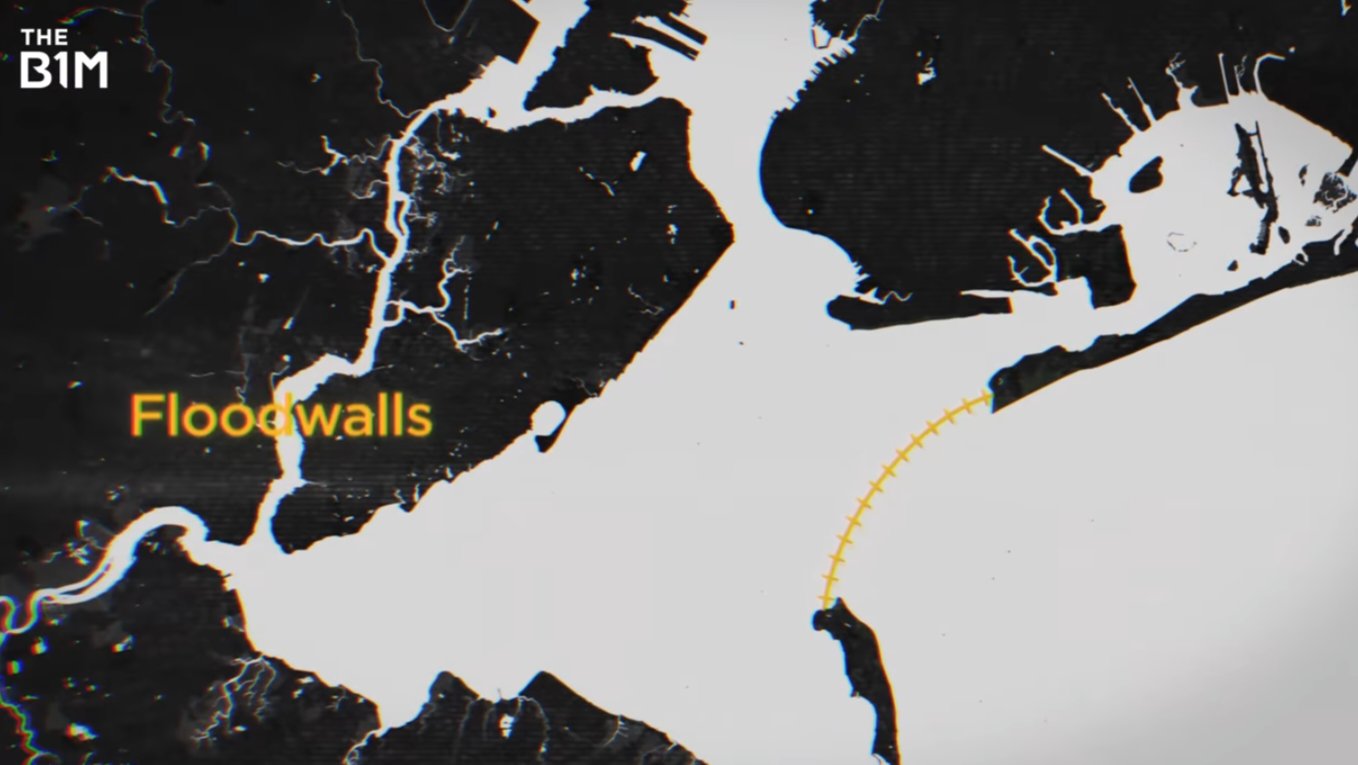
The illustration of flood walls for the New York sea barrier. Photo: The B1M/YouTube
This strategic approach draws functional parallels to the famous Thames Barrier in London, functioning as a targeted shield against extreme weather rather than daily tidal fluctuations. Localized construction efforts are scheduled to commence by 2030, with an anticipated 10-year construction timeline that significantly accelerates the initial 25-year completion estimate. Financing the multi-billion dollar undertaking requires careful legislative navigation, with local state governments expected to fund 35% of the total cost, while the remaining 65% relies on formal congressional approval.
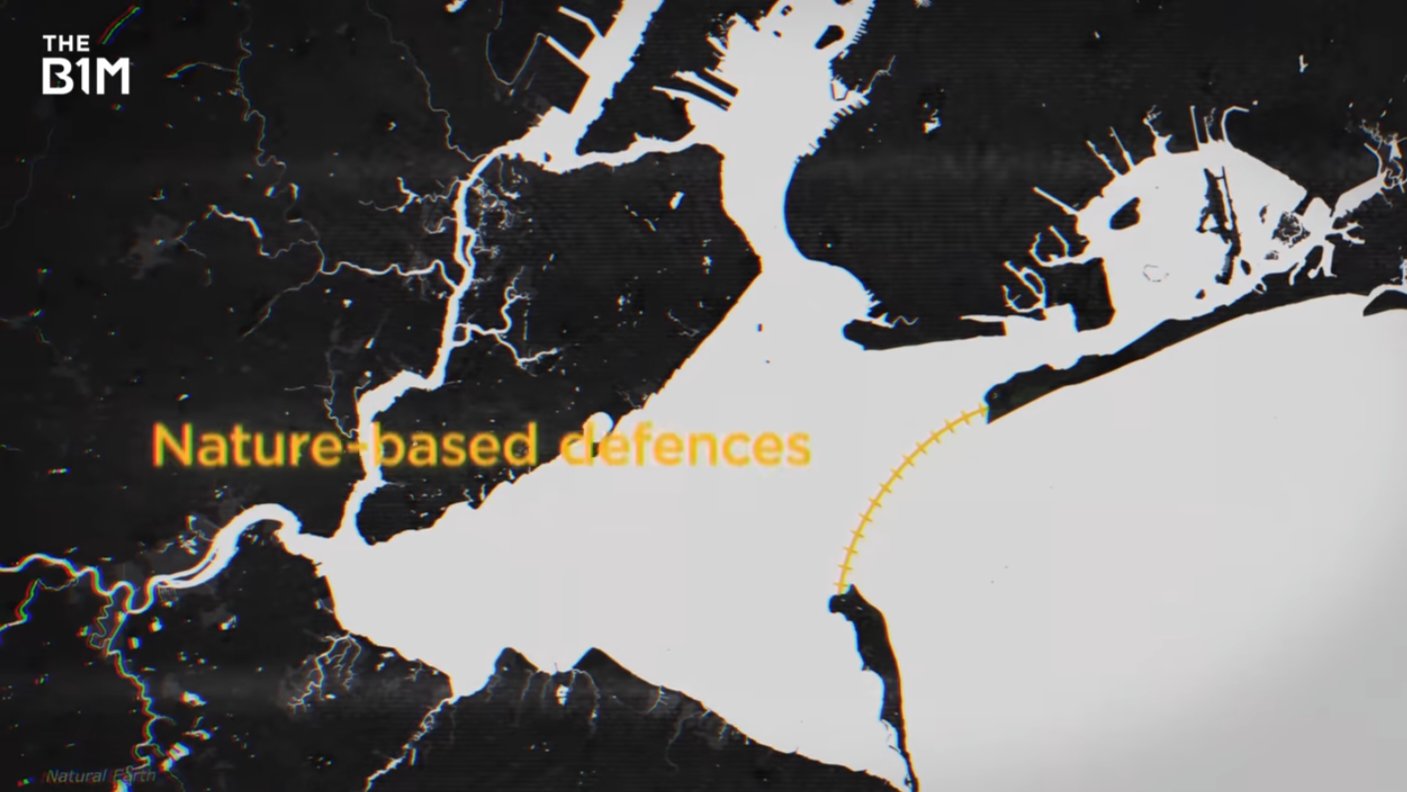
The illustration of nature-based defenses for the New York sea barrier. Photo: The B1M/YouTube
While long-term regional planning continues, separate independent civil engineering works are actively transforming the city shoreline. The city is currently executing a multi-billion dollar flood resiliency scheme at Battery Park, elevating the entire public ground to withstand projected sea level rises through 2100. Simultaneously, the 1.45 billion dollar East Side Coastal Resiliency (ESCR) project is reshaping 3.8 kilometers of the East River waterfront. Designed by the architectural firm Bjarke Ingels Group (BIG), the ESCR initiative integrates structural flood protection directly into public park topography.
These ongoing coastal works represent a significant shift in how dense coastal cities manage escalating climate risks, moving past temporary emergency responses toward permanent urban adaptation. With a large portion of the global urban population residing in low-lying coastal zones, engineering interventions of this scale may set a precedent for international infrastructure development.
Comments (0)
Leave a Comment
No comments yet. Be the first to share your thoughts!