
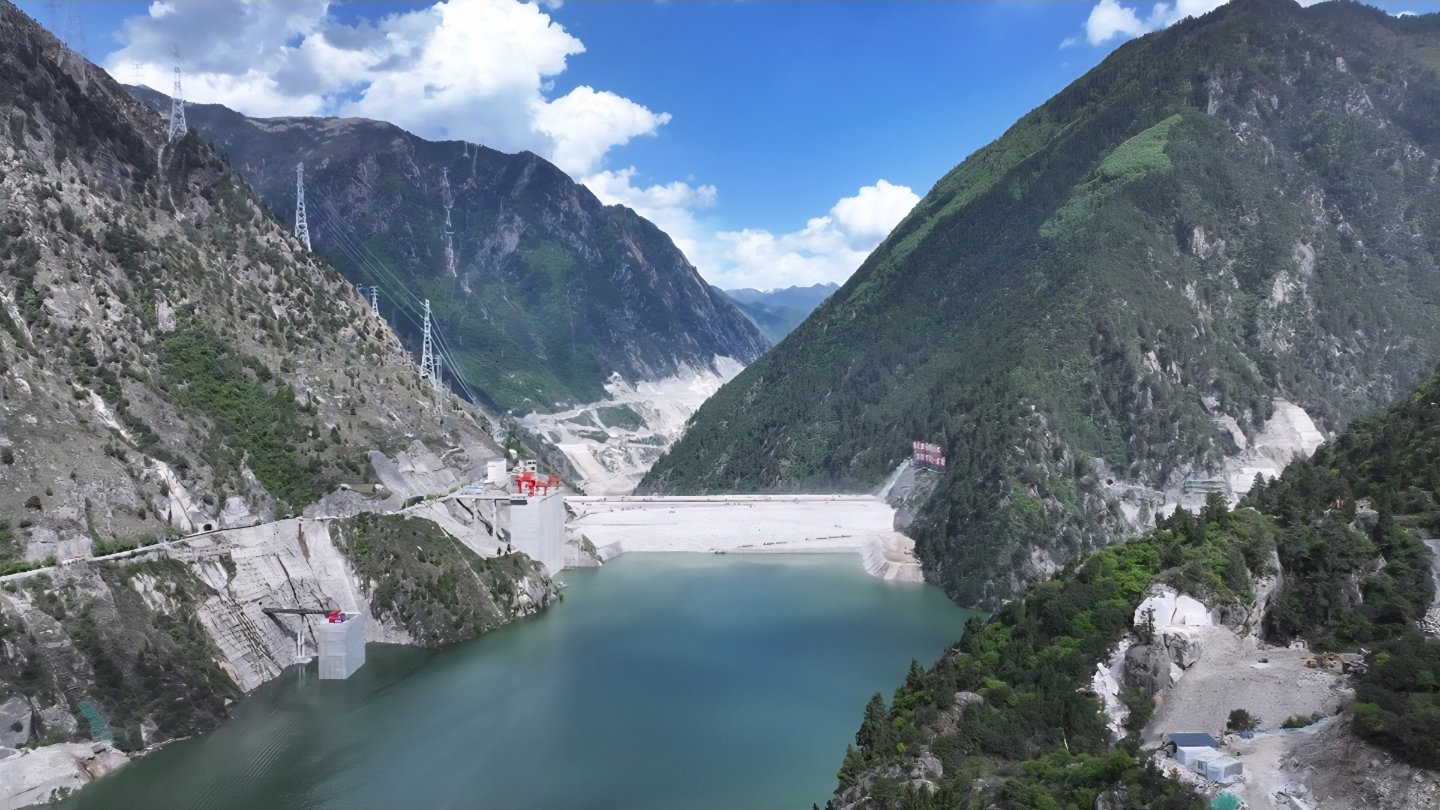

China Central Television (CCTV) News reported that the second generating unit of the Shuangjiangkou Hydropower Station started commercial operations. The project is located in Sichuan Province, where it serves as a key energy asset.
This engineering development marks a critical phase for the facility, which features the world's tallest dam. Engineers successfully brought two major generation units online within a tight two-week window.
The facility acts as a crucial controlling reservoir, if we look at the upper reaches of the Dadu River basin. Local reports state that the site functions as the leading power station along this waterway.
The project has established multiple domestic and global engineering records during its construction phase. It contains an underground powerhouse with the highest in-situ stress recorded anywhere in the world.
The complex features the largest-capacity hydraulic hoists ever built for an infrastructure project. Builders also constructed a massive cross-section spillway tunnel, which handles immense water flows during seasonal floods.
Technical documents highlight a variable cross-section vortex shaft, which remains under construction at the site. The entire structure is designed primarily to maximize clean energy generation for the regional power grid.
The asset possesses a total installed capacity of three million kilowatts, when all units become fully operational. It is projected to produce an annual average of 7.7 billion kilowatt-hours of electricity.
The site has a total reservoir capacity of 2.9 billion cubic meters, which assists in water regulation. This storage capacity will increase dry-season power generation at downstream cascade stations significantly.
Downstream facilities will see an increase of 6.6 billion kilowatt-hours of electricity each year, according to projections. This shift helps reduce regional carbon dioxide emissions by approximately 7.18 million metric tons annually.
The United States Environmental Protection Agency (EPA) carbon calculations show this reduction equals removing 1.5 million vehicles. Additional units will further expand the clean energy capacity available in the basin.
The expanded system will enhance the power grid's peak-shaving capabilities, although regional demand continues to fluctuate. It will also improve critical frequency regulation capabilities across the Sichuan network.
The facility helps strengthen flood control operations along the upper reaches of the Yangtze River. The first generating unit successfully connected to the national grid on June 26, according to official reports.
The Xinhua News Agency reported that the initial activation provided fresh support for regional clean energy networks. This progress supports the national carbon peaking and carbon neutrality goals established by the state.
Following the activation of this first unit, the total regional hydropower capacity reached 15 million kilowatts. The network delivers more than 60 billion kilowatt-hours of clean electricity to consumers annually.
This substantial energy output supports the development of the Chengdu-Chongqing economic circle. The underlying structure of the Shuangjiangkou Dam utilizes a specialized gravel-core rockfill design.
The mega-structure features a maximum height of 312 meters, which makes it the tallest dam in the world. Workers utilized more than 46 million cubic meters of earth and rock materials.
The hydropower units operate across a maximum hydraulic head variation of 80 meters during standard cycles. The facility also features a maximum flood discharge head of 250 meters, which ranks among global records.
Comments (0)
Leave a Comment
No comments yet. Be the first to share your thoughts!