
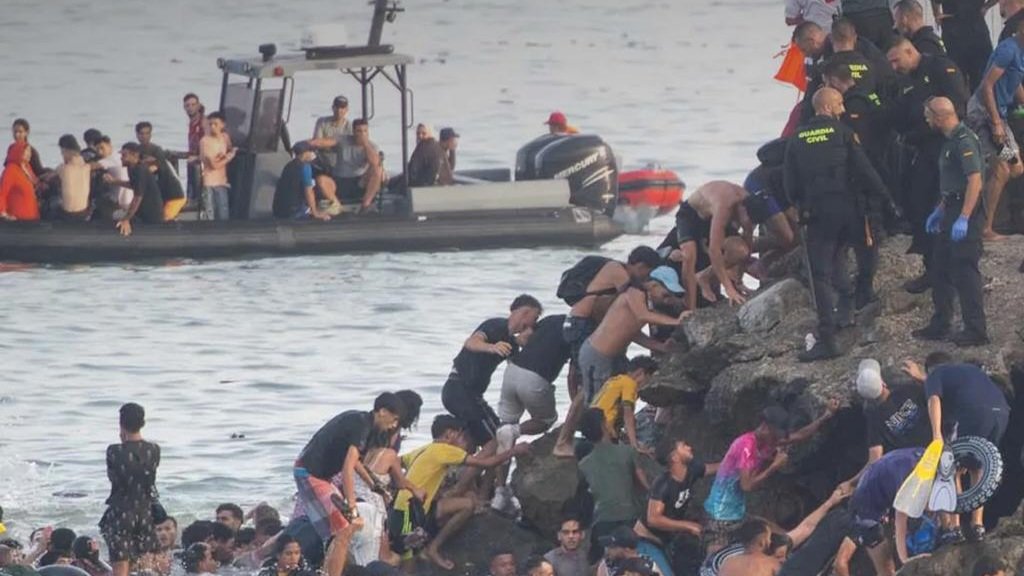

Recent maritime border breaches at Ceuta exposed critical vulnerabilities in regional infrastructure. Over 70,000 individuals bypassed coastal security structures in late July.
Most migrants swam around physical sea barriers extending into Mediterranean waters. Spanish police confirmed nearly 100 fatalities, while 50 persons remain missing.
The sudden movement overwhelmed local reception facilities across the Spanish enclave. Emergency personnel struggled to maintain order near coastal security checkpoints.
Debate rapidly intensified regarding causes behind the massive border surge. Analysts questioned whether coordinated networks organized the movement, or if crowds gathered spontaneously.
Investigative research by Bloomberg News (BN) indicates both elements triggered the movement. Spontaneous social coordination coincided with organized local logistics along the Moroccan border.
The North African exclave serves as one of two land boundaries connecting Africa with the European Union (EU). Consequently, the perimeter fence line remains a focus for international migration policy.
Security perimeter structures include dual six-meter-high fencing topped with wire installations. Sensor networks and monitoring systems line the land boundary between Morocco and Spain.
However, maritime ends of the barrier present distinct engineering challenges. Strong ocean currents and changing tides create opportunities for swimmers trying to bypass security posts.
Civilian rescue groups worked alongside maritime units during peak crossing hours. Patrol vessels pulled hundreds of exhausted swimmers from open water, but facilities filled rapidly.
Ceuta government officials reported severe strain on municipal housing and youth centers. Humanitarian workers provided temporary shelter, but resources proved insufficient for the crowd.
Legal frameworks govern how authorities process individuals reaching Spanish territory by sea. High court rulings require formal administrative procedures before officials can execute return decisions.
Diplomatic coordination between Madrid and Rabat remains central to border management. Both governments maintain joint patrol agreements, but seasonal sea surges strain enforcement capabilities.
Border infrastructure upgrades historically aimed to deter land perimeter breaches. Recent events demonstrate how marine security limits shift migrant tactics toward dangerous offshore routes.
Engineers previously installed underwater monitoring systems and reinforced breakwater structures. Despite those physical modifications, mass surges test structural deterrence boundaries beyond calculated capacities.
Local authorities continue evaluating long-term engineering adjustments for coastal barriers. Policy experts note that physical structures alone cannot prevent determined crossings without comprehensive border agreements.
The human toll highlights inherent risks of swimming past coastal perimeter works. Search operations continue along maritime sectors, where recovery teams search for missing individuals.
Discussions among European leaders focus on strengthening border infrastructure technology. Proposed updates include enhanced radar surveillance and extended maritime barriers along vulnerable coastal sections.
Future infrastructure planning must balance security requirements with marine navigation standards. Authorities face complex engineering decisions as they attempt to secure difficult coastal terrain.
Local municipal services in Ceuta operate under emergency protocols while managing remaining arrivals. Regional leaders call for central government assistance to rebuild depleted humanitarian supplies.
The crisis underscores broader challenges facing border infrastructure design in coastal regions. Civil engineers continue assessing how structural barriers perform under extreme human pressure.
President Ruto praised regional diplomatic efforts during discussions on African border stability. Joint international frameworks remain essential for managing migration corridors across vulnerable marine entry points.
Comments (0)
Leave a Comment
No comments yet. Be the first to share your thoughts!