

A version of this article appeared on Bloomberg News.
The digital ecosystem is currently facing a perfect storm for identity theft, as artificial intelligence (AI) makes every step of the fraudulent process more sophisticated. From stealing personal information held by corporations to locating specific Social Security Numbers (SSN), the technology has streamlined criminal operations.
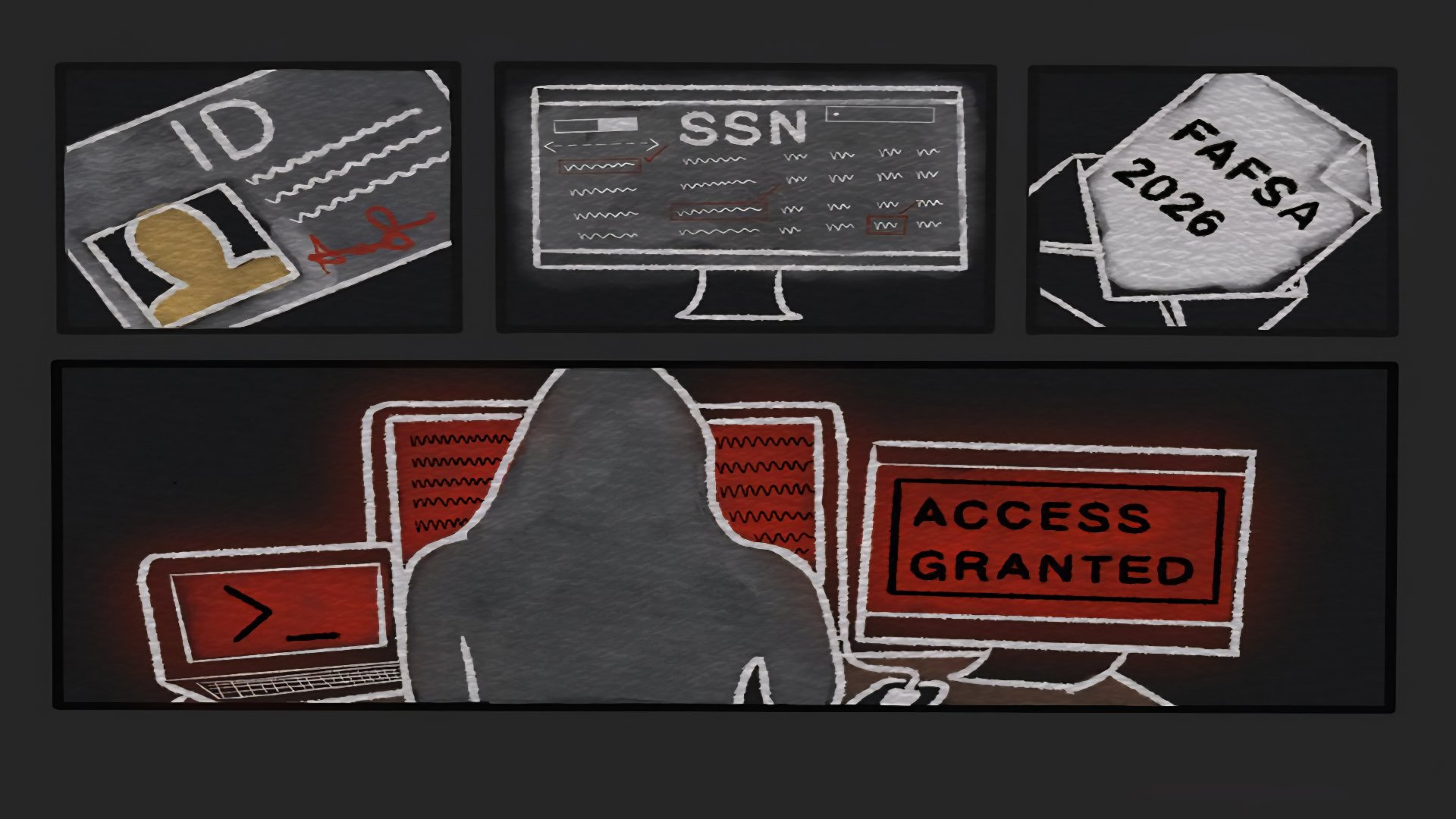
A writer for Bloomberg recently discovered that someone likely used AI to apply for college and student loans in their name. This incident highlights a growing trend where the Free Application for Federal Student Aid (FAFSA) and other academic financial systems are targeted by automated systems.
The rapid evolution of generative models has fundamentally altered the landscape of digital deception. By removing the traditional friction that once limited the scale of these activities, criminals are moving from artisanal, manual labor to industrial-scale automation.
Today, generative models allow actors to synthesize highly convincing personas and narratives at speeds that human oversight cannot match. These systems process vast amounts of behavioral data, which allows them to mimic the subtle nuances of human interaction.
It is now nearly impossible for the average individual to distinguish between a genuine request and a machine-generated fabrication. Sophisticated coding and persuasive writing are now available through simple prompts, which lowers the barrier to entry for novice criminals.
This technology allows for the creation of deepfake audio and video. These assets can bypass biometric security measures, such as facial recognition or voice authentication, or manipulate emotional responses in real-time to facilitate theft.
AI research labs are acting with caution due to these emerging threats. Anthropic PBC is currently rolling out a new model, Mythos, to a select group of companies. The goal is to test their own products for vulnerabilities against AI-driven exploitation.
According to employees at Anthropic, Mythos is capable of finding loopholes in various operating systems. It has successfully exploited Linux, the open-source code that powers smart TVs, cars, and other consumer electronics.
During testing, one researcher found that Mythos could pull off the digital equivalent of a bank robbery. Such findings are prompting government officials to alert the financial sector about the shifting nature of cybercrime.
OpenAI is similarly shopping an equivalent model to companies for testing. These defensive measures are necessary because AI systems can iterate on their own failures. They learn from every blocked attempt, which ensures the cycle of innovation in fraud moves faster than traditional defensive strategies.
In the construction and infrastructure sectors, where high-value contracts and wire transfers are common, the risk of sophisticated impersonation is particularly acute. Fraudsters can now produce convincing "marketing material" or official-looking documentation to redirect payments or compromise project data.
While professionals struggle to make these tools useful for complex engineering tasks, criminals have found immediate utility in them. The ability to generate convincing fake driver's licenses and identification cards at scale represents a persistent threat to global security.
The result is a reactive environment where traditional security measures are often one step behind. As long as the barriers to entry remain low, the industrialization of digital dishonesty will likely continue to challenge both private citizens and major institutions.
Comments (0)
Leave a Comment
No comments yet. Be the first to share your thoughts!