
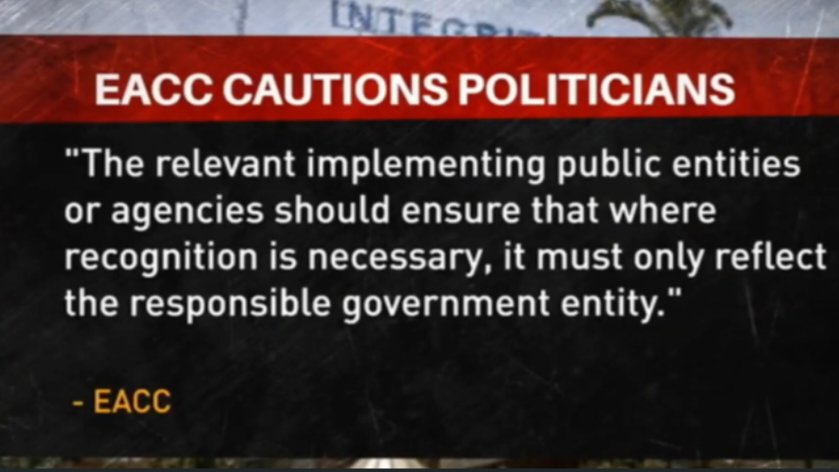

The Ethics and Anti-Corruption Commission (EACC) has issued a nationwide directive banning politicians from branding publicly funded infrastructure projects with their names or personal identities.
According to the anti-graft watchdog, the long-standing practice by elected leaders to claim personal credit for public works constitutes a clear abuse of office and a misuse of public resources.
The directive targets all levels of government development, including schools, roads, healthcare facilities, and water infrastructure.
EACC Chief Executive Officer (CEO) Abdi Muhammad stated that any necessary project recognition must exclusively reflect the responsible government entity rather than individual political office holders.
The commission clarified that while acknowledging public service remains important, personal branding on projects financed by taxpayers amounts to unethical conduct.
Across Kenya, citizens and professional sectors have widely welcomed the move, noting that the practice of appending political names to public contracts had increasingly been normalized.
Legal experts have also backed the decision, declaring that displaying personal names or portraits on taxpayer-funded structures violates established laws.
Some political leaders have endorsed the commission's firm stance, arguing that personal name displays on public works are outdated and should be restricted entirely to private initiatives.
Legal analysts have noted that while the EACC exercises its regulatory and investigative authority, full enforcement will require close collaboration with the Director of Public Prosecutions (DPP) to initiate formal charges against non-compliant officials.
The regulatory body has urged members of the public to report instances where public property or infrastructure assets are being utilized to advance individual political legacies.
With the order now active, the construction sector faces immediate adjustments in how project signboards, plaques, and completion handovers are managed.
The focus now shifts to whether implementing agencies will strictly enforce the guidelines on active sites, or if the directive will face compliance challenges on the ground.
Comments (0)
Leave a Comment
No comments yet. Be the first to share your thoughts!