
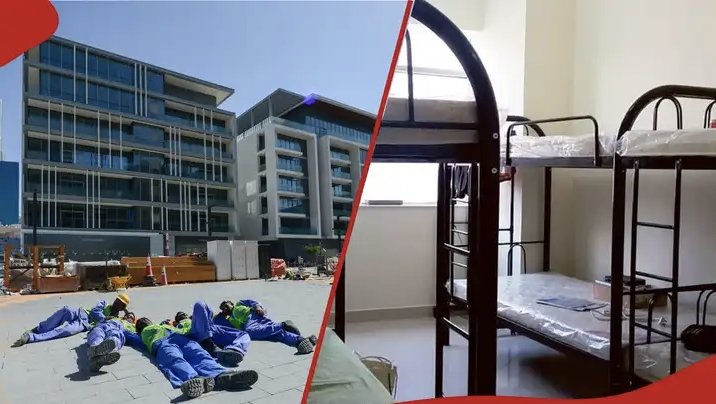

Kenyans living in shared apartments and rooms across Dubai are facing a shift in how their accommodation is regulated, following the commencement of Dubai's Law No. (4) of 2026 on August 26, 2026.
The law introduces a structured framework governing shared housing across the emirate, covering special development zones and free zones while excluding labour accommodation. It applies to property owners, licensed operators and residents, and carries financial penalties of up to Dh 1 million, roughly KSh 35 million, for violations.
Among the most significant changes is a requirement for a special permit before any property can lawfully operate as shared housing. Informal arrangements where several workers jointly rent an apartment without official approval could fall outside the permitted framework once the permit system is fully operational.
The law also prohibits tenants from subletting rooms or spaces to other individuals. Subletting is now only permitted along a defined chain, either from the property owner to a licensed management company, or directly from the owner to occupants.
Workers who currently rent a flat and informally accommodate others in exchange for rent contributions will need to reassess those arrangements as enforcement approaches. A Shared Housing Register, maintained through an electronic system, will require all tenancy contracts to be recorded before they carry legal standing.
For Kenyans currently sharing flats or rooms to reduce living costs, the pressing question is whether they risk eviction now that the law is in force. According to Gulf News, the Dubai Municipality has confirmed that inspections targeting compliance with the new requirements will not begin until the relevant procedures are fully finalised.
A one-year grace period, running from August 26, 2026, has been granted to allow property owners and operators to bring their arrangements into compliance. The period can be extended once if the Director-General of Dubai Municipality deems it necessary.
The grace period, however, does not mean the situation is without consequences. Properties that remain non-compliant once enforcement begins could face permit cancellations, utility disconnections or, ultimately, a court-ordered vacation order. Where residents are required to leave a property, the law requires that they be given adequate time to secure alternative accommodation rather than being removed immediately.
Financial penalties under the law range from Dh 500 to Dh 500,000 per violation, with repeat offences within one year attracting double the original fine, up to the Dh 1 million ceiling. These penalties apply to operators and owners found in violation, not automatically to every tenant.
Employees of government bodies and private companies are among six recognised categories of people permitted to occupy approved shared housing, meaning Kenyan workers fall within the law's framework. Dubai has long relied on shared housing arrangements to accommodate its large expatriate workforce, a group that includes a substantial number of Kenyan professionals and labourers.
Kenyans in shared accommodation have been advised to monitor communications from their landlords and Dubai authorities as the permit and registration systems are progressively introduced over the coming year.
Separately, Dubai-based recruitment platform GulfTalent listed 6,744 live job vacancies in the city as of August 26, 2026, with opportunities open to Kenyans and other foreign nationals, including roles with employers such as Marriott International, Accor and GEMS Education.
Comments (0)
Leave a Comment
No comments yet. Be the first to share your thoughts!