
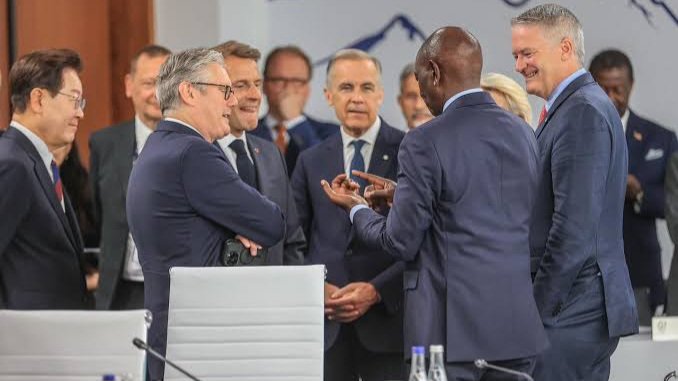

President William Ruto has renewed his call for international leaders to change their perspective on the African continent. Speaking to global figures, the Kenyan head of state emphasized the necessity of viewing the region through a lens of equitable economic cooperation.
The appeal comes at a time when the Group of Seven (G7) nations are face-to-face with mounting pressure to implement systemic changes, particularly regarding how international lenders manage developing nations' financial obligations.
During the high-level diplomatic engagement, President Ruto noted that the historical framing of the continent must shift, because African nations possess immense potential to contribute positively to global markets.
The focus centered heavily on restructuring the global financial architecture, which many emerging economies argue disproportionately penalizes them with higher interest rates and rigid repayment terms.
International monetary policies have long faced criticism from African leaders, who argue that current frameworks stifle domestic infrastructure investments and limit sustainable industrial growth across the region.
By securing backing from the global leaders for comprehensive debt reforms, the discussions mark a crucial point in ongoing negotiations between global financial institutions and developing economies.
President Ruto has consistently maintained that Africa should be approached as an equal partner, but not as a beggar seeking unilateral financial assistance from wealthy Western nations.
This diplomatic push aims to unlock new avenues for infrastructure development, although many international partners emphasize that domestic governance and transparency remain critical components for success.
The ongoing conversations at the summit highlight a growing consensus that the existing economic models require urgent updates, if global financial equity is to be realized for developing states.
Kenya has been at the forefront of championing these reforms, which could ease the fiscal strain on nations balancing heavy infrastructural commitments with domestic social spending obligations.
As global interest rates fluctuate, the burden of servicing foreign debt has restricted many African governments from allocating sufficient funds toward essential public works and transportation networks.
The endorsement from prominent world leaders signals an openness to review lending practices, although concrete legislative frameworks will require further multilateral coordination across various international banking sectors.
Advocating for a more balanced approach to international development funding, President Ruto stressed that sustainable growth is achievable, if global partners commit to fair financial treatment.
The summit focused on creating resilient economic systems, which can withstand geopolitical shocks without forcing vulnerable nations into unsustainable debt cycles that hinder generational progress.
With the backing of key international players, the proposal for deep financial restructuring moves closer to reality, but it remains a complex task requiring prolonged diplomatic negotiation.
The call to reframe Africa's economic position reflects a broader strategy to attract high-quality investment, which can stimulate local economies and build robust, independent infrastructure.
Analysts suggest that achieving true reform will depend on how major financial centers execute these changes, when bilateral agreements are updated to match modern economic realities.
The dialogue between African representatives and global leaders underscores the shifting dynamics of international diplomacy, where economic self-reliance has become a central theme for emerging markets.
President Ruto continues to voice these concerns on international stages, because the future of continental infrastructure depends directly on securing fair, accessible, and long-term capital.
The outcome of these high-level discussions will likely influence upcoming multilateral forums, although the immediate focus remains on refining the specific mechanisms of debt relief.
Comments (0)
Leave a Comment
No comments yet. Be the first to share your thoughts!