

A version of this article appeared on The Financial Times.
Global energy infrastructure faces an unprecedented mismatch as massive Chinese solar manufacturing capacity sits underutilised despite widespread disruptions in traditional fossil fuel supply chains.
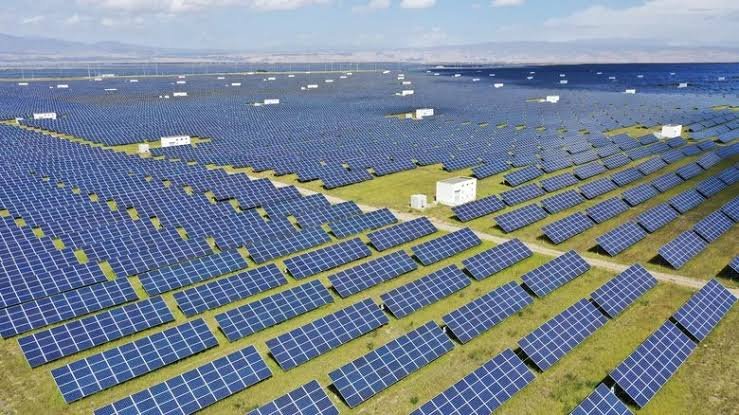
Following an investment surge that began in 2020, Chinese industrial capacity has expanded to produce a staggering 1,000 gigawatts (GW) of solar panels annually.
The global market has failed to absorb this immense volume, triggering severe financial distress across the supply chain.
More than 40 Chinese solar manufacturers have gone bust, been bought out, or delisted from stock exchanges.
The five largest surviving manufacturers have collectively made a third of their workforce redundant.
Consequently, manufacturing facilities are idling even though the market price for solar technology has dropped to historic lows.
Industry analysts point out that the inability to capitalise on cheap clean power stems from severe coordination failures rather than engineering limitations.
While intermittent generation was long considered the primary hurdle, manufacturing companies are now integrating battery storage systems directly into their equipment to provide baseline stability to electrical grids.
The primary bottlenecks slowing deployment have shifted entirely to localized grid upgrades, financing constraints, permitting delays, and political friction.
Protectionist policies and import tariffs in Western economies have further restricted the distribution of these low-cost components.
Conversely, shipments to alternative regional markets are expanding significantly.
Development initiatives such as the Mission 300 programme, backed by the World Bank and the African Development Bank (AfDB), are aiming to leverage this affordable technology to bring clean electricity to 300 million people across Africa.
Emerging consortiums are also exploring long-term applications, including a project in Shanghai designed to deploy solar infrastructure in space to power orbital data centres.
For international infrastructure planners, the current gridlock illustrates how geopolitical and regulatory friction can stall the adoption of vital civil engineering assets.
Comments (0)
Leave a Comment
No comments yet. Be the first to share your thoughts!