
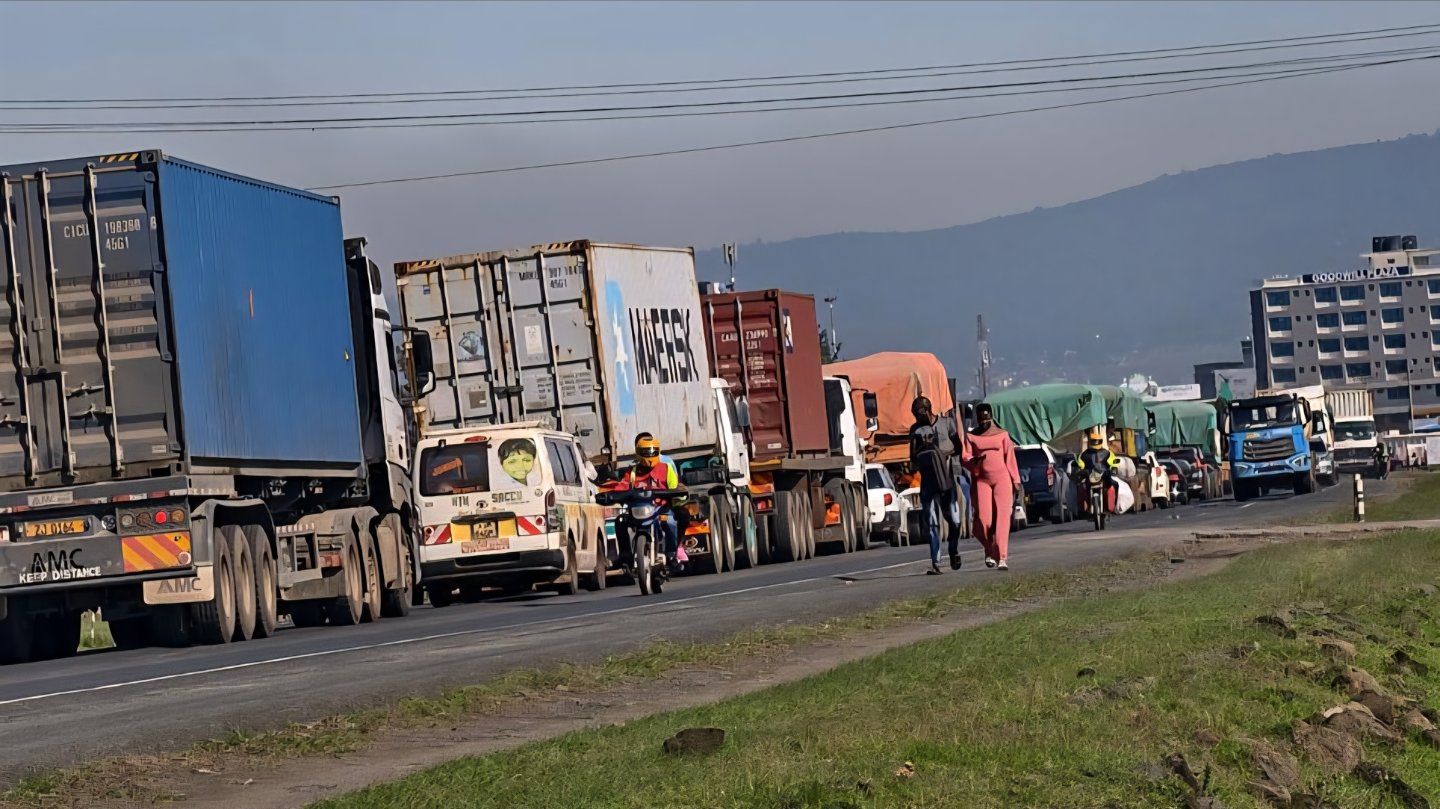

The Nairobi-Nakuru highway, a critical artery for East African trade, experienced severe congestion this morning as the Easter holiday exodus commenced in earnest. Thousands of motorists found themselves trapped in slow-moving traffic stretching several kilometers, particularly around the notorious hilly sections and viewpoints.
This seasonal surge in vehicle volume coincides with a period where transport infrastructure remains under intense pressure. The highway, which serves as a primary link for landlocked countries such as Uganda and Rwanda, is currently handling a mix of heavy-duty transit trucks and private passenger vehicles.
The locals, many of whom rely on the roadside economy, observed that the buildup began as early as the morning hours. Public service vehicles and private cars heading toward Western Kenya and the North Rift regions have contributed to the narrowing of usable lanes.
Transport experts note that the current design of the A104 often struggles with such high-capacity events. While President Ruto has previously emphasized the need for expanded road networks, the reality on the ground remains one of significant bottleneckis during peak festivities.
Police presence has been increased at major junctions to manage the flow, although progress remains sluggish. Overlapping and illegal U-turns by impatient drivers have further exacerbated the situation, leading to minor fender benders that stall movement for hours.
Heavy commercial vehicles, carrying essential cargo from the Port of Mombasa, are particularly affected by the stop-and-go conditions. Drivers of these long-haul trucks report that fuel consumption increases significantly during these periods of prolonged idling on the steep inclines.
The Kenya National Highways Authority (KeNHA) typically issues advisories during such windows, urging motorists to use alternative routes such as the Flyover-Njabini-Ol Kalou road. However, many travelers prefer the main highway due to its familiarity, despite the predictable holiday delays.
Safety remains a primary concern for the traffic department. Officers have warned that fatigue from long hours spent in traffic often leads to poor decision-making and accidents later in the journey.
Economic analysts suggest that these delays result in lost man-hours and increased logistical costs for the transport sector. The impact is felt most by perishable goods transporters who must reach markets in Nakuru or Kisumu within strict timeframes.
As the Easter weekend progresses, traffic is expected to fluctuate, with another peak anticipated on Monday when travelers return to the capital. For now, those on the road are advised to exercise patience and maintain lane discipline to avoid a total lockdown of the corridor.
Comments (0)
Leave a Comment
No comments yet. Be the first to share your thoughts!