
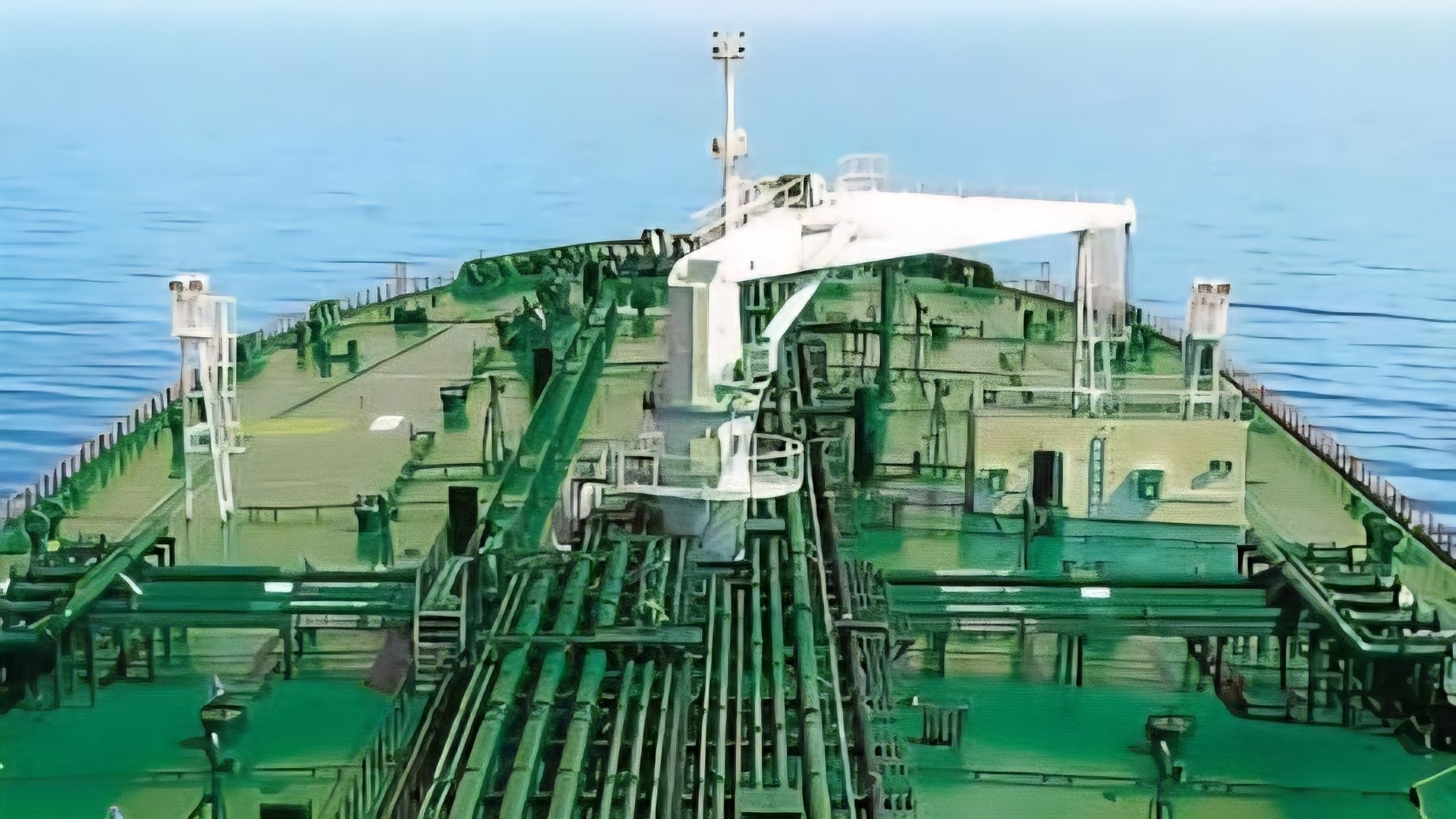

The global maritime logistics network continues to rely heavily on heavy fuel oil (HFO), a thick, residual substance from oil refineries that powers nearly 80 percent of global shipping by volume. This fuel moves almost 11 billion tons of cargo every year, including smartphones, cars, and food.
Refining crude oil extracts lighter fractions like gasoline, jet fuel, and diesel. At the bottom of the distillation column remains a thick black sludge known as HFO, bunker C, number six fuel oil, or intermediate fuel oil (IFO). Below 15 degrees Celsius, it turns practically solid.
Burning this substance requires specialized engineering. Ships operate as onboard fuel conditioning facilities, using extensive heating systems to warm the fuel to 50 degrees Celsius for pipe flow and 140 degrees Celsius for engine combustion. Marine two-stroke slow-speed diesel engines stand four stories tall to allow slow ignition.
Economics keep the industry tied to this residue, which costs roughly 30 percent less than cleaner fuel alternatives. Switching a single large container ship to marine gas oil adds an estimated 60,000 to 80,000 dollars per day in fuel costs, expenses that would pass to consumers.
The environmental and health impacts remain severe. Historically, HFO sulfur content reached 35,000 parts per million, causing global shipping to generate 8 percent of global sulfur dioxide emissions. These emissions contribute to about 400,000 premature deaths annually, with related healthcare costs hitting 50 billion dollars.
Spills cause permanent ecological damage. In August 2020, the MV Wakashio bulk carrier ran aground off Mauritius, spilling over 1,000 tons of HFO onto diverse marine ecosystems. Unlike lighter oil, HFO congeals, sinks, and cannot be recovered from water columns with existing technology.
Regulatory pressure is mounting. In January 2020, the International Maritime Organization (IMO) cut permitted marine fuel sulfur content to 0.5 percent, forcing a shift to very low sulfur fuel oil (VLSFO) or exhaust scrubbers. A July 2024 ban on HFO in Arctic waters also took effect.
Transitioning the industry involves a long-term infrastructure overhaul. Alternative fuels under consideration include liquefied natural gas (LNG), methanol, and ammonia. There are also movements to build commercial vessels utilizing small modular reactors (SMRs) to allow decades of operation without refueling.
Comments (0)
Leave a Comment
No comments yet. Be the first to share your thoughts!