
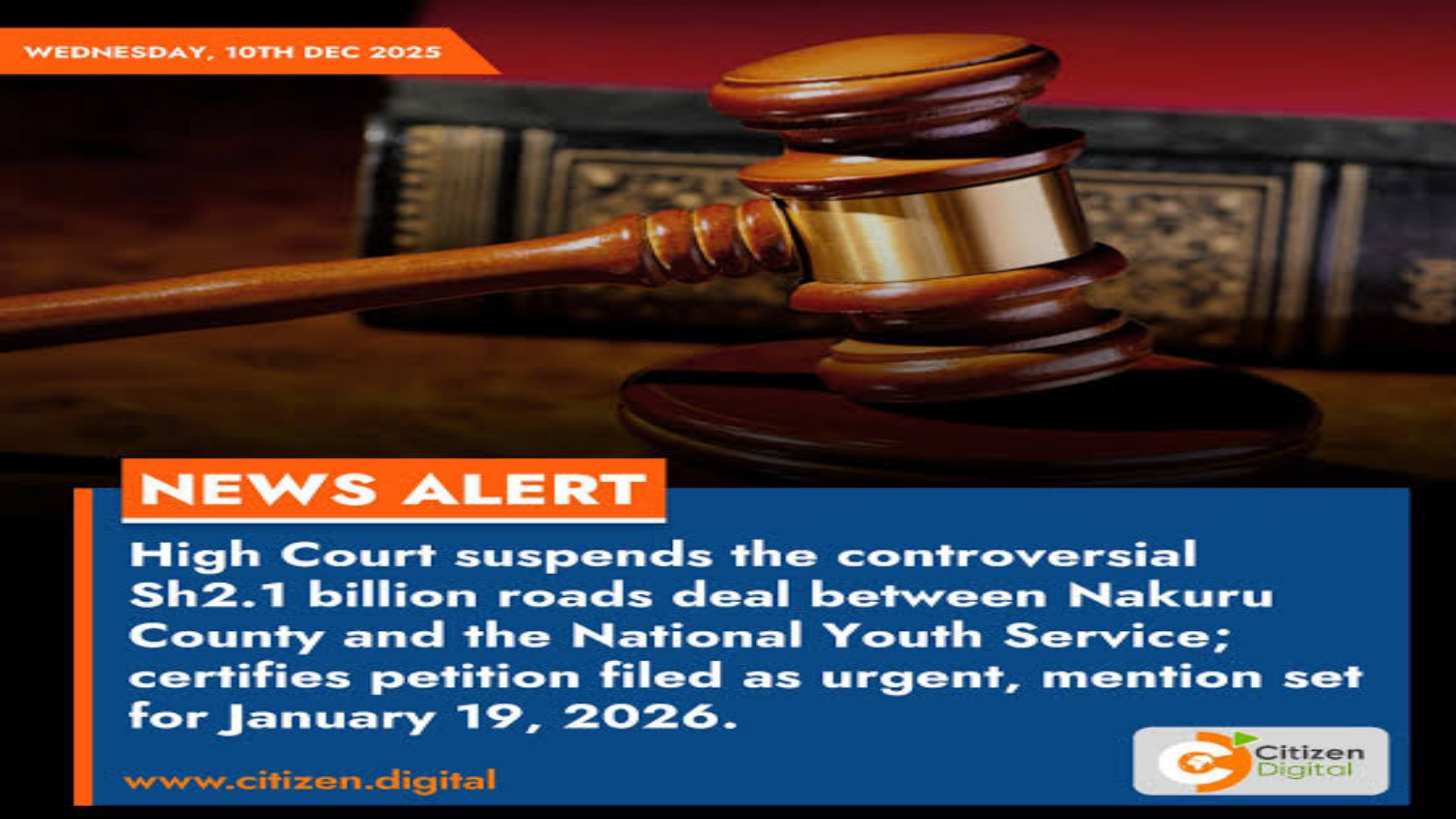

In a significant development concerning infrastructural projects in Kenya, the High Court has issued a suspension on a contentious KSh 2.1 billion roads deal forged between the Nakuru County Government and the National Youth Service, as reported by Citizen Digital.
The agreement, which aimed to facilitate the maintenance of all feeder roads within the county under the "Marishia Barabara" program over the next year, has now been put on hold following a successful petition. This judicial intervention shines a spotlight on the meticulous requirements for accountability in large-scale public contracts.
The court's decision, delivered by Justice Julius Nanga, certified the matter as urgent and issued conservatory orders effective until January 19th, when the main petition is scheduled for mention.
The legal challenge was brought forward by petitioners Paul Mushiri and Kea Omuyoma, who argued that the monumental KSh 2.1 billion agreement, formally entered on November 7th, lacked adherence to critical legal frameworks.
Specifically, their contention rested on the assertion that the deal bypassed the mandatory procurement process and failed to incorporate necessary public participation before its operationalization.
By alleging that the deal was entered without a proper bidding process, the petitioners have raised fundamental questions about the fairness and competitive nature of awarding such a high-value contract.
While the involvement of the National Youth Service in infrastructure projects is often touted as a measure for cost efficiency, collaborations even between state entities must be meticulously scrutinized to prevent the circumvention of financial regulations and due process.
Furthermore, the absence of public participation is viewed as a crucial constitutional breach, especially for local infrastructure projects like feeder road maintenance which directly affect community welfare.
The ongoing maintenance of feeder roads is vital for the agricultural economy and daily transport across Nakuru County, making project transparency paramount.
This conservatory order serves as a strong reminder to all levels of government that due process, including thorough public engagement and adherence to strict procurement standards, cannot be overlooked in the rush to implement projects.
The outcome of the petition in January will ultimately determine the fate of the "Marishia Barabara" initiative and set a significant precedent for future county-NYS collaborations.
Comments (0)
Leave a Comment
No comments yet. Be the first to share your thoughts!