
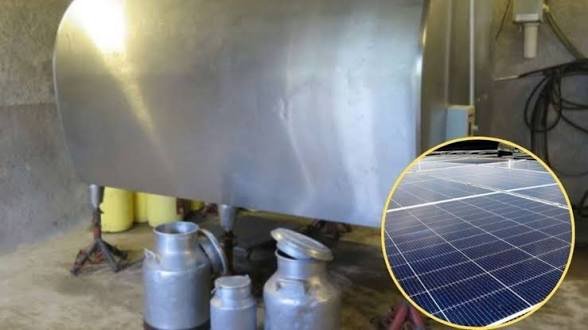

Access to reliable and affordable power often marks the thin line between making a profit and incurring heavy losses.
For commercial farmers, the situation has become critical, as grid electricity costs continue to fluctuate unpredictably.
To insulate operations from these volatile expenses, many producers are turning toward decentralized solar energy solutions.
The transition is particularly evident in processing hubs, where refrigeration and irrigation demand significant quantities of uninterrupted power.
High operational tariffs imposed by the Kenya Power and Lighting Company (KPLC) have forced agribusinesses to seek alternatives.
Smallholder cooperatives and large-scale growers alike are finding that solar investment reduces monthly overheads.
Frequent power outages have further complicated agricultural cold-storage management, leading to post-harvest losses.
For milk producers, maintaining a functional cold chain is essential to prevent spoilage before reaching processing facilities.
In rural areas, extending grid infrastructure remains prohibitively expensive for isolated agricultural enterprises.
Solar photovoltaic installations provide an immediate remedy, delivering power directly to the source of production.
Water pumping for irrigation remains one of the most energy-intensive activities on any modern farm.
By deploying solar-powered water pumps, growers eliminate their dependence on diesel generators and grid power.
The initial capital expenditure for these renewable systems remains a barrier for some lower-income farmers.
However, flexible financing models and specialized agricultural credit facilities are gradually lowering these market entry hurdles.
International development partners and local financial institutions have introduced targeted green credit lines.
These facilities allow farmers to pay for equipment through monthly savings realized from eliminated electricity bills.
Data from the Kenya Climate Innovation Centre (KCIC) indicates a growing commercial appetite for clean energy adoption.
Beyond immediate cost reductions, solar installations offer a degree of operational autonomy that the traditional grid cannot guarantee.
Agribusinesses can predict their long-term energy expenditures with greater accuracy when using independent solar assets.
As climate patterns become more erratic, reliance on precise, energy-dependent irrigation systems will only increase.
Modern farming requires stable power to run automated feeding, ventilation, and processing machinery.
The current shift toward solar infrastructure represents a structural adaptation to broader macroeconomic pressures.
Farms that manage to transition successfully are reporting stabled operating margins despite challenging economic conditions.
For the wider agricultural sector, this clean energy movement ensures domestic food production remains competitive.
Comments (0)
Leave a Comment
No comments yet. Be the first to share your thoughts!