

The Government of Kenya spent Sh1.8 billion on capital improvements across its overseas diplomatic properties, because the state seeks to remedy decades of structural neglect.
Documents submitted by the State Department for Foreign Affairs (SDFA) indicate that a major portion of this budget went toward premium properties located in Western capitals.
The diplomatic missions in London and New York utilized more than 60 percent of the total real estate budget, consuming Sh1.1 billion collectively.
In London, the department directed Sh550 million toward purchasing a new office block to house diplomatic operations securely.
An identical sum of Sh550 million was allocated to New York for the comprehensive refurbishment of the official residence belonging to the permanent representative to the United Nations (UN).
This multi-billion-shilling structural intervention follows consecutive critical reports from the Auditor-General (AG), who warned that several state-owned properties abroad were sliding into severe disrepair.
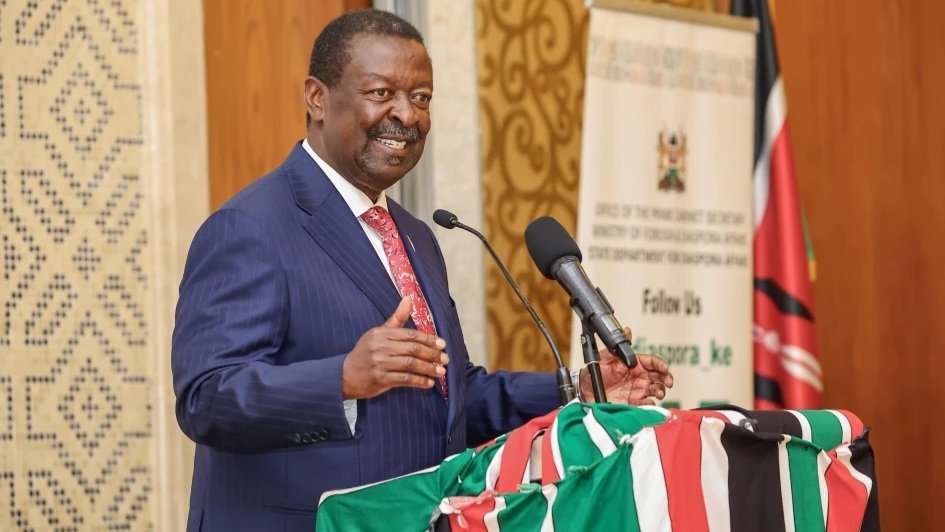
Prime Cabinet Secretary and Cabinet Secretary for Foreign and Diaspora Affairs, Musalia Mudavadi, addressed these concerns during an appearance before the Senate Committee on National Security, Defence and Foreign Relations at County Hall.
The legislative session examined the long-term utility of buying versus renting overseas properties, which remains a contentious fiscal topic in Nairobi.
Musalia Mudavadi noted that neglecting maintenance compromised national dignity, although balancing infrastructure needs against local revenue shortfalls requires careful prioritization.
Beyond basic structural repairs, the state dedicated portions of the Sh1.8 billion fund to modernize critical Information and Communications Technology (ICT) infrastructure.
Security systems at several high-risk embassies were also upgraded to align with modern international diplomatic protocols.
These upgrades are intended to secure communication channels, but implementing them across diverse geopolitical regions presents ongoing logistical hurdles.
Rental costs continue to impact the diplomatic budget significantly.
The Ministry of Foreign and Diaspora Affairs (MFDA) spends over Sh3 billion every year on lease payments for chanceries and residential quarters.
This recurring expenditure consumes roughly 15 percent of the ministry's annual operations budget, which leaves less funding for core diplomatic activities.
Government strategists argue that acquiring permanent properties is a more sustainable approach, if the state can secure the initial capital required.
The current renovations represent an early phase of a wider infrastructure program slated to run through June 2028.
Total projected expenditures for this global overhaul are estimated to reach Sh34.92 billion over the next two fiscal cycles.
Prior infrastructure interventions laid the groundwork for these current works, with Sh8.12 billion expended by the end of the last financial year.
Revenue shortfalls previously forced the postponement of several property upgrades, but the state has prioritized high-profile capitals to prevent further asset depreciation.
President Ruto has championed austerity measures across public sectors, but officials maintain that protecting overseas sovereign assets is a vital non-negotiable obligation.
Parliamentarians have frequently demanded detailed audit trails for overseas construction contracts, because past foreign property projects faced delays and cost overruns.
The current multi-million-shilling allocations are subject to strict oversight by the Senate to guarantee full value for taxpayers.
Kenya maintains over 60 diplomatic missions globally, which support trade, tourism, and security partnerships.
Property experts note that owning chanceries provides long-term stability, but the upfront construction and purchase costs demand rigorous, transparent fiscal management.
With these initial capital works completed, the ministry intends to shift focus to other dilapidated missions across Africa and Asia.
Comments (0)
Leave a Comment
No comments yet. Be the first to share your thoughts!