
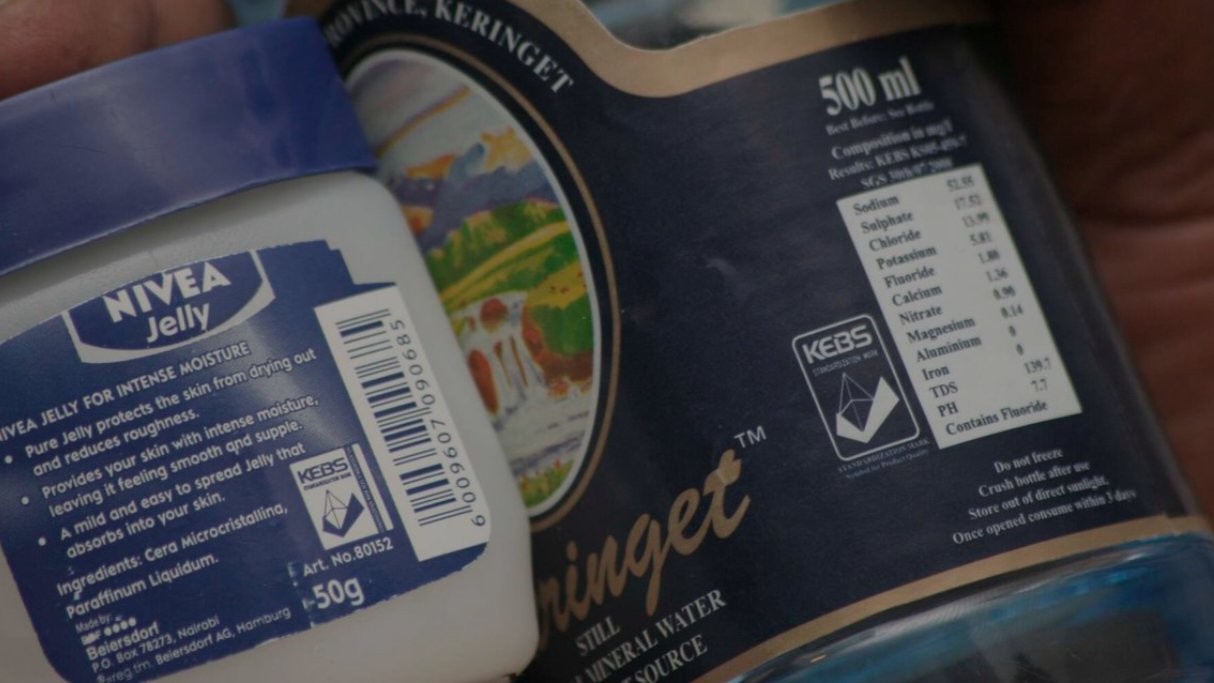

The Kenya Bureau of Standards (KEBS) launched investigations into retail chains stocking goods labelled entirely in foreign languages, raising fresh legal questions regarding consumer safety and regulatory enforcement.
Under the Consumer Protection Act (CPA), consumers hold the explicit right to receive sufficient information about any product to enable them to make informed purchasing decisions.
National trade standards mandate that all imported merchandise sold within local markets must display vital safety, ingredient, and operational information in either English or Kiswahili.
Failure to provide accessible information deprives buyers of essential knowledge regarding usage instructions, chemical composition, and potential physical hazards.
Market surveillance officers identified multiple instances where imported consumer products, household goods, and structural chemical items carried labels exclusively printed in Mandarin.
The practice bypasses the Pre-Export Verification of Conformity (PVoC) framework, which exists to guarantee that incoming products comply with national safety standards prior to shipment.
Even when goods bear the standard Import Standardization Mark (ISM), sold units remain in violation of the law if the packaging lacks dual-language translations.
Legal provisions under the Weights and Measures Rules prohibit the distribution of unlabelled or illegibly packaged items across retail channels.
Retailers often blame overseas manufacturers for supplying pre-packaged inventory without localizing language parameters, yet legal accountability ultimately falls on market distributors once goods hit local shelves.
Improperly translated materials present serious risks in real-world applications, particularly when users unknowingly misapply technical compounds or industrial-grade chemicals.
Enforcement agencies confirmed that non-compliant inventories face immediate seizure, while non-compliant vendors risk regulatory fines and potential license suspensions.
The ongoing probe highlights persistent gaps between international supply chain flows and local regulatory enforcement standards across commercial sectors.
Comments (0)
Leave a Comment
No comments yet. Be the first to share your thoughts!