
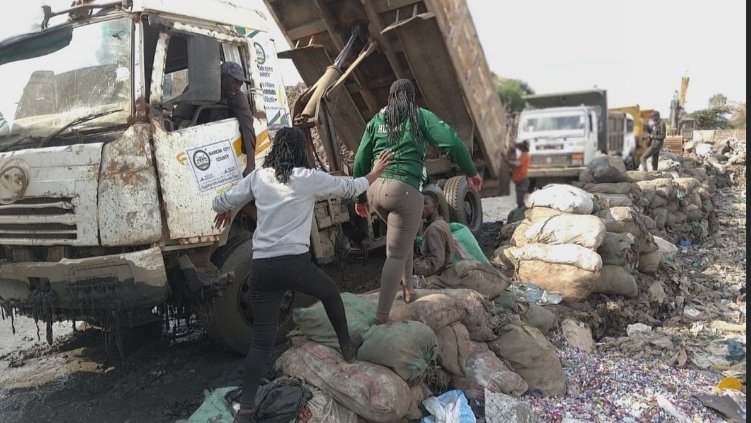

Nairobi City County has dramatically increased its garbage collection capacity in recent months. The county now removes more than 4,000 tonnes of waste daily, four times the previous volume.
A new county government report details operations since April 2026. City Hall deployed over 100 garbage trucks working around the clock and partnered with private operators in a citywide clean-up drive.
The campaign cleared more than 40 major illegal dumpsites and waste collection points. Areas such as Kasarani, Embakasi, Kibra, Mathare, Korogocho, Ngomongo, Waithaka and parts of Mukuru saw significant action.
In Kasarani alone, workers removed 679 truckloads from points including St Francis, Gituamba, Mawe Mbili and Kamulu 26. Embakasi East yielded around 1,170 truckloads from Kianda and Mihango while Kware Bridge in Embakasi South accounted for over 1,000.
Governor Johnson Sakaja said the efforts reclaimed several notorious dumping grounds. County Executive Committee Member for Green Nairobi Maureen Njeri noted that peak operations now handle up to 6,000 tonnes daily compared to just 1,000 tonnes before.
Despite these gains, powerful waste cartels continue to challenge the reforms. Criminal networks have long dominated the sector through illegal dumping, extortion and manipulation of collection routes.
The cartels operate in a lucrative underground economy estimated to generate billions of shillings annually. They control collection points in some estates and informal settlements, forcing residents to pay fees while intimidating those who resist.
At Dandora dumpsite, the city’s only official disposal facility, rival groups have historically fought for control of access, scavenging rights and truck movements. Violent clashes have occurred there in the past over recyclable materials.
Private operators have sometimes billed residents for waste removal and then claimed payments from the county for the same loads. Auditors previously flagged irregularities in contracts, including payments for unverified trips.
County officials view the clean-up and closure of illegal sites as steps toward dismantling these parallel networks. The goal is to restore order, increase revenue collection and establish a more efficient system.
Nairobi continues to grapple with rapid population growth and inadequate infrastructure. The persistent presence of cartels undermines broader efforts to manage waste sustainably.
Governor Sakaja and his team say the intensified operations will continue. The county aims to maintain momentum toward a cleaner capital despite resistance from entrenched interests.
The situation at Dandora remains particularly complex. Declared full years ago, the site still receives thousands of tonnes daily while communities nearby face ongoing environmental and health risks.
Comments (0)
Leave a Comment
No comments yet. Be the first to share your thoughts!