
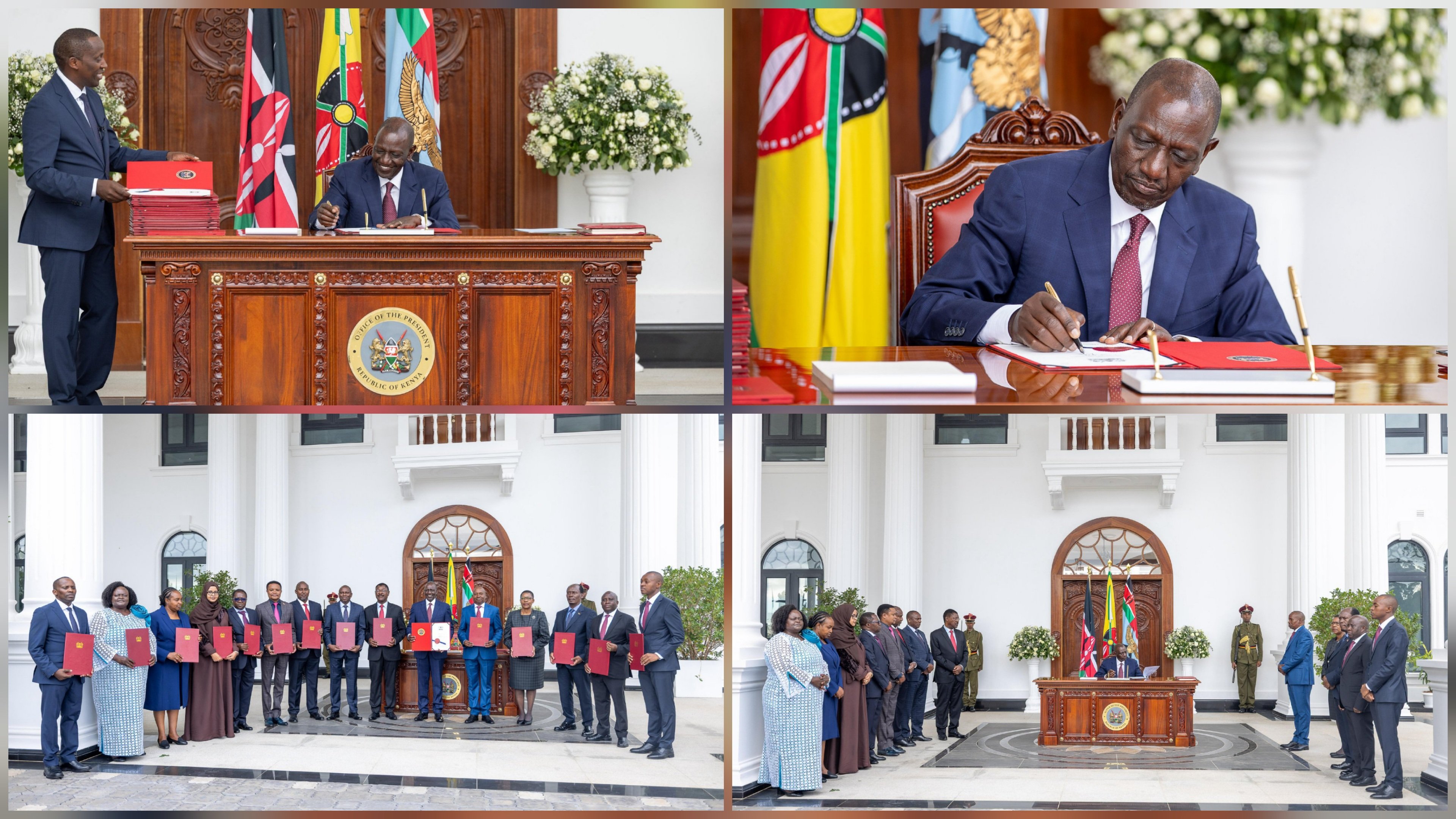

President William Ruto signed three pivotal legislative pieces into law at State House, Nairobi, on Tuesday. The move aims to streamline Kenya's legal environment and enhance its standing as a competitive destination for international capital.
The signed documents include the Income Tax Bill, the Special Economic Zones (SEZ) (Amendment) Bill, and the Technopolis Bill. These laws are intended to provide a predictable landscape for large-scale investors.
The Income Tax Act has been updated to rationalise how Capital Gains Tax (CGT) is administered. This alignment brings the local tax regime closer to international standards while maintaining focus on the ease of doing business.
Under the Special Economic Zones (SEZ) (Amendment) Bill, the scope of protected investment areas has been widened significantly. For the first time, these zones will officially include oil and gas operations.
This expansion is paired with a harmonisation of tax incentives for entities working within these areas. Government officials believe these changes will provide much-needed clarity for firms handling complex energy projects.
To accommodate the realities of massive infrastructure and industrial projects, the law now provides for a minimum license tenure of 10 years. This adjustment accounts for the long project cycles typical of heavy capital investments.
Beyond energy, the updated framework supports several strategic sectors. These include agro-processing, manufacturing, mining, and advanced technology production.
The Technopolis Act provides a dedicated legal structure for the creation and governance of technology hubs across the country. It establishes a formal path for developing integrated centers that offer one-stop government services.
This legislation is specifically designed to position Kenya as a hub for technology-driven enterprises and research. It seeks to attract global talent by providing a modern regulatory environment for innovation.
The government expects these hubs to accelerate the national transition toward a knowledge-based digital economy. By centralising service delivery, the hubs aim to reduce the bureaucratic hurdles often faced by start-ups and tech firms.
By strengthening the Special Economic Zones (SEZ) framework, the administration intends to secure more foreign direct investment. The inclusion of petroleum operations suggests a strategic shift toward capturing more value from the regional energy sector.
These legislative updates represent a shift toward specialized industrial planning. The integration of technology and industrial zones marks a coordinated effort to modernize Kenya's economic infrastructure.
Comments (0)
Leave a Comment
No comments yet. Be the first to share your thoughts!