
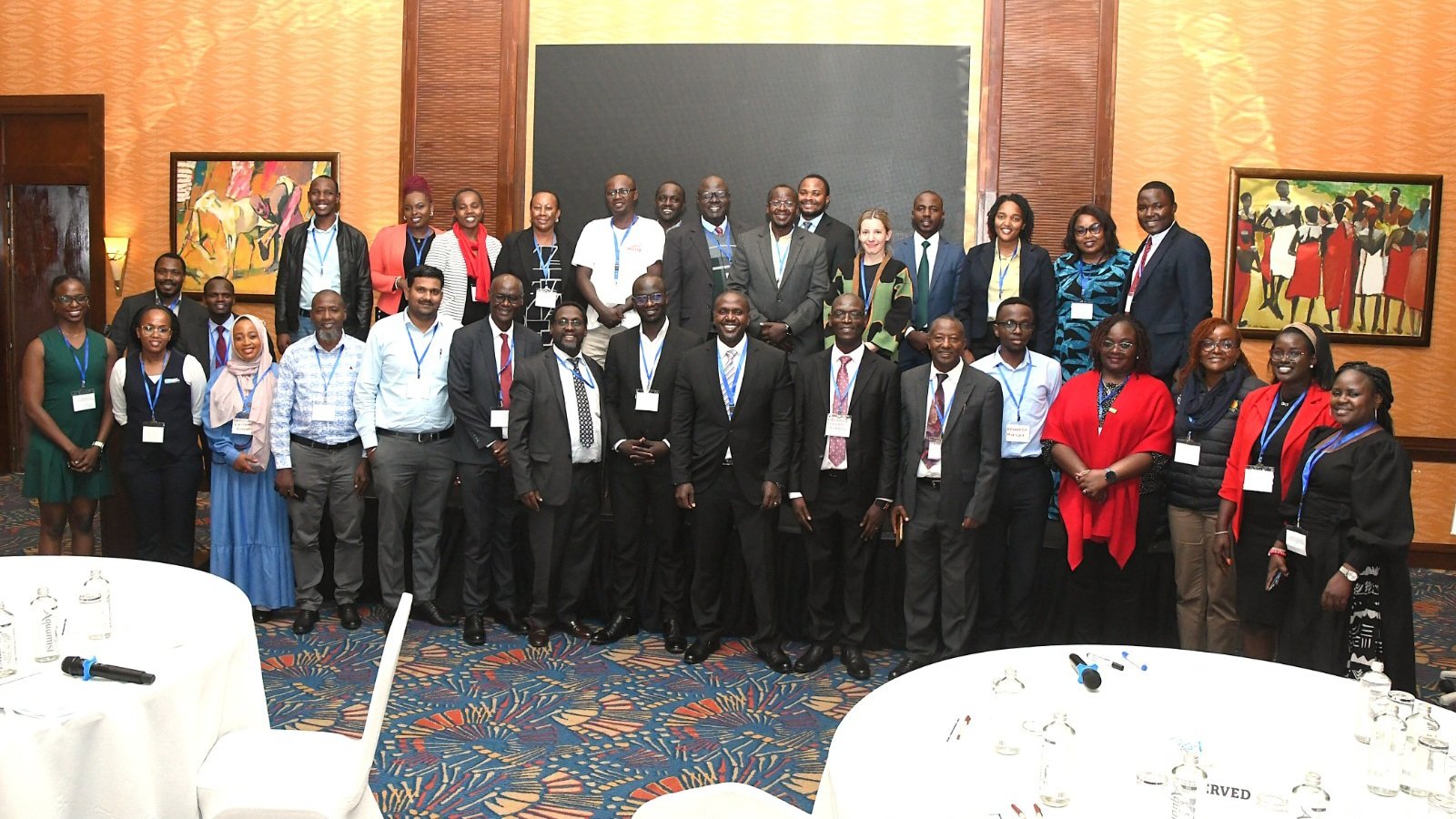

The Kenyan government has officially invited private sector players to take a lead role in the nation’s irrigation infrastructure, outlining a strategy where private capital is expected to provide 61 percent of the total investment required over the next decade. Speaking during a stakeholder engagement in Nairobi, the Principal Secretary for the State Department for Irrigation, CPA Ephantus Kimotho, detailed the financial framework of the National Irrigation Sector Investment Plan (NISIP) 2025-2035.
This ten-year roadmap, which was inaugurated last year, seeks to scale up the country's area under irrigation from the current 710,000 acres to a target of 1.5 million acres. To achieve this, the state estimates a total resource mobilization of approximately Sh598 billion. Under the proposed financing structure, the government will provide 39 percent of the capital, leaving the majority of the financial weight to private investors, development partners, and equipment suppliers.
PS Kimotho noted that while Kenya possesses an irrigation potential of 3.5 million acres, the current plan focuses on developing 50 percent of that capacity. The push for private involvement is driven by a need to address a significant trade imbalance in the agricultural sector. Currently, Kenya imports food-related goods valued at over 21 billion dollars annually, while only exporting 10 billion dollars in agricultural products. This 11 billion dollar deficit is a primary target of the NISIP, which aims to reduce the gap to 5 billion dollars through enhanced local production.
A central pillar of the strategy is Farmer-Led Irrigation Development (FLID), one of five pathways identified in the investment plan. This model is designed to empower smallholder farmers to adopt, invest in, and manage their own irrigation technologies. Smallholders currently account for 75 percent of the country’s agricultural production, yet the majority remain dependent on rain-fed systems.
The Principal Secretary highlighted a disconnect in the financial markets, where the banking sector allocates only three percent of its investment portfolio to agriculture despite the sector contributing 24 percent to the national Gross Domestic Product (GDP). This lack of credit is often attributed to the perceived high risk of agricultural ventures. To counter this, the government, in collaboration with the World Bank, is designing a Result Based Financing (RBF) facility. This mechanism is intended to provide credit solutions for both farmers and equipment suppliers, mitigating the risks that have historically deterred private lenders.
The World Bank has signaled its commitment to the framework. Peter Waalewijn, the Lead Water Resources Management Specialist at the World Bank, stated that the institution’s support is based on the premise that irrigation serves as a catalyst for job creation and climate resilience. The partnership with the World Bank is currently focused on finalizing the RBF facility to ensure that private capital has the necessary impetus to enter the market.
For the private sector to fully engage, the State Department acknowledges that irrigation must be demonstrated as a profitable undertaking. PS Kimotho emphasized that this requires concerted efforts to provide cost-effective technologies and to prolong loan repayment periods for farmers. The ongoing dialogue in Nairobi brought together digital communication providers, irrigation equipment suppliers, and development partners to harmonize these objectives.
The NISIP 2025-2035 represents a transition toward a more commercially viable irrigation sector. By shifting the burden of investment toward a public-private partnership model, the state hopes to modernize the agricultural landscape and secure food production against the volatility of climate change.
Comments (0)
Leave a Comment
No comments yet. Be the first to share your thoughts!