
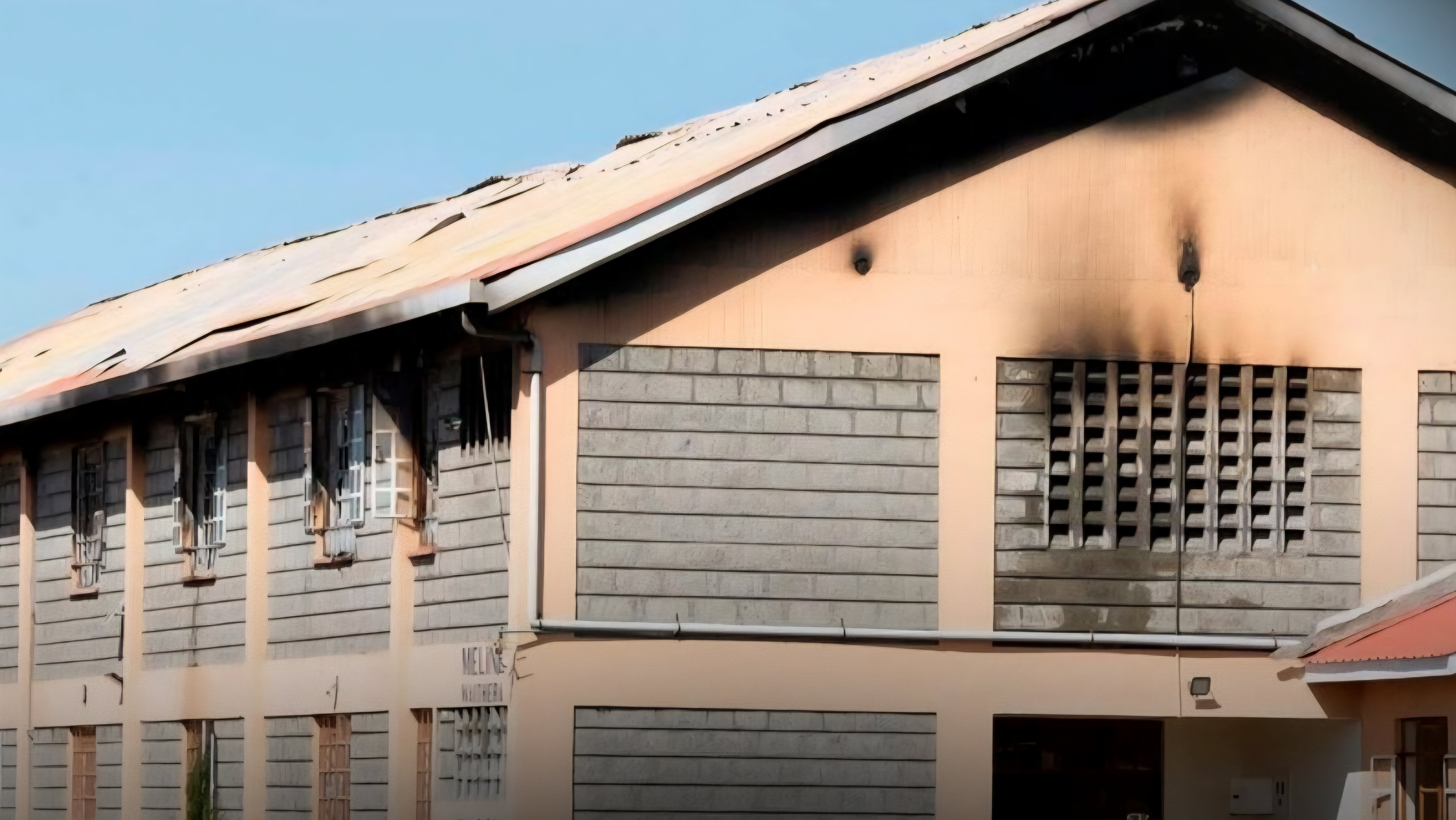

Secondary school students across Kenya have petitioned Members of Parliament (MPs) demanding direct representation in decision-making bodies, to help contain a spreading wave of unrest in learning institutions.
The learners are pushing for the establishment of structured consultation forums at individual school, county, and national levels. They argue, that active dialogue will provide an effective platform to address grievances before they escalate into violence.
This petition comes at a time, when data shows that more than 200 secondary schools across the country have faced various forms of student unrest. The scale of the disruptions has forced the Ministry of Education to intervene with safety audits.
According to recent statistics released by the ministry, exactly 204 senior secondary schools reported cases of disturbances. Education Cabinet Secretary (CS) Julius Ogamba stated, that this figure represents roughly two per cent of the country's senior schools.
While the majority of day schools remain peaceful, boarding institutions have borne the brunt of the property destruction. In many cases, schools were shut down indefinitely, but parents faced heavy repair costs.
Preliminary ministry investigations linked the rising tension to institutional leadership challenges, examination anxiety, and poor living conditions in some boarding facilities. Students also cited strenuous daily routines, but administrators blamed drug abuse and peer pressure.
Furthermore, the ministry noted an increasing demand by learners for early release from school. In response, school heads have been directed to urgently convene parents' association meetings, to discuss learner welfare and secure the properties.
The parliamentary petition emphasizes, that leaving students out of these crucial management conversations exacerbates the feelings of isolation. By securing a seat at the table, student leaders believe they can co-author lasting solutions with administrators.
The current unrest has drawn sharp reactions from local communities, who often watch infrastructure built through public funds go up in flames. Demands for accountability have grown louder, but students maintain that isolation fuels the destruction.
With the second-term mid-term break scheduled to begin on June 24, education officials hope the temporary closure will cool the temperatures. County and sub-county education officers are currently conducting safety assessments in vulnerable institutions.
Whether the lawmakers will act on the petition swiftly remains uncertain. However, the student-led initiative has successfully shifted the national conversation from pure discipline, to structural and administrative inclusion.
Members of the National Assembly (NA) Education Committee are expected to review the petition, which addresses the root causes of arson and strikes. Lawmakers have previously questioned the effectiveness of existing guidance and counseling departments.
The physical damage to dormitories, laboratories, and classrooms puts immense financial strain on parents, who are legally required to fund the reconstruction of torched facilities before students are readmitted.
Under current Ministry of Education guidelines, schools must undergo regular infrastructure safety checks. However, administrative bottlenecks often delay the implementation of these safety recommendations, leaving dormitories vulnerable to sudden outbreaks of fire.
Proponents of student representation argue, that inclusion in school boards could bridge the communication gap. Currently, student councils exist, but their role is largely restricted to enforcing pre-determined rules rather than shaping policy.
The petition outlines a framework, where elected student representatives would regularly meet with the school board of management. This structure would ensure, that grievances concerning diet, entertainment, and academic pressure are addressed formally.
In previous years, similar waves of unrest led to the formation of task forces, but many of their structural recommendations were never fully implemented due to budget constraints. This has led to a cycle of recurring school strikes.
Lawmakers must now decide, if they will amend the Basic Education Act to give learners a legal voice in school governance, although some conservative educationalists might oppose the shift.
School administrators under the Kenya Secondary Schools Heads Association (KESSHA) have expressed mixed feelings about the petition, noting that dialogue is essential, but final administrative decisions must remain with school heads.
Security agencies have also stepped up monitoring of local markets, where students frequently purchase petrol used in arson attacks. This preventive measure aims to cut off access to flammable materials, before crises manifest.
Comments (0)
Leave a Comment
No comments yet. Be the first to share your thoughts!