
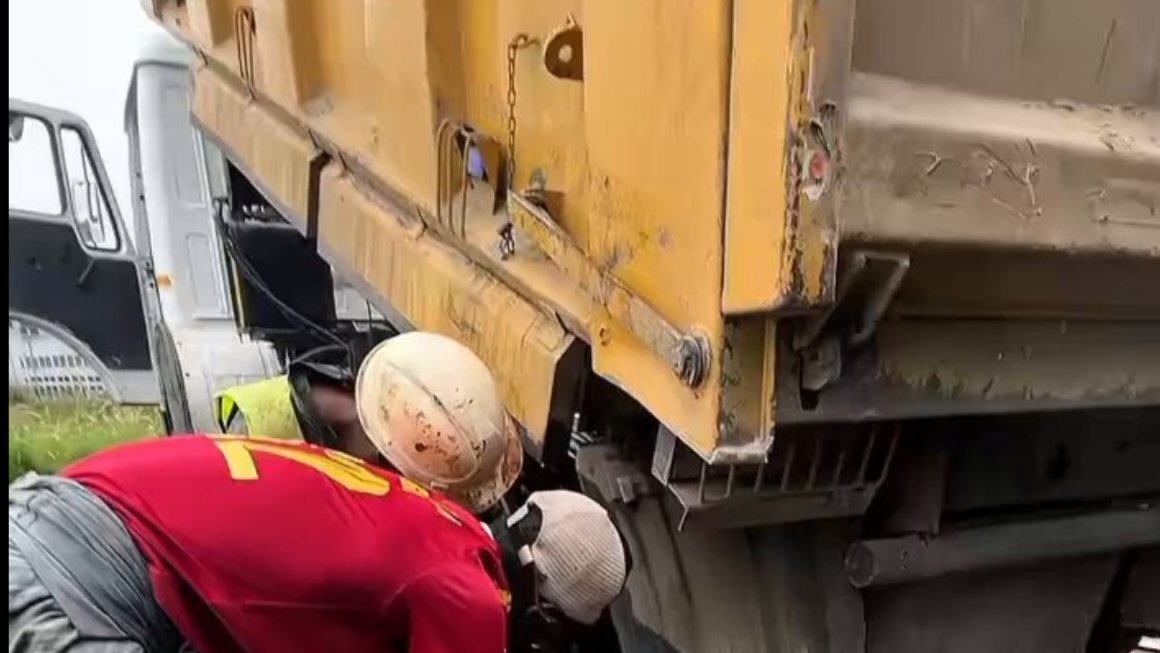

Management at Tatu City has begun enforcing a strict cleanliness policy requiring all vehicles entering or moving within the development to have clean tires. The move aims to protect the integrity of the paved road network within the 5,000-acre special economic zone in Kiambu County.
A video circulating on social media platforms shows construction trucks stopped at designated wash stations. Manual laborers are seen scrubbing the tires of heavy-duty tippers and earth-moving equipment before they are cleared to proceed onto the main asphalt surfaces.
The administration has made it clear that any vehicle found trailing mud or dirt onto the city’s roads will face immediate consequences. Drivers who bypass the cleaning stations or fail to meet the cleanliness standards are being slapped with a KSh5,000 fine for every violation.
Construction sites are notorious for contributing to road degradation, as heavy trucks often carry wet soil and gravel from excavation areas onto public thoroughfares. By mandating these wash-down procedures, Tatu City is attempting to mitigate long-term maintenance costs and improve safety for all road users.
The policy has sparked conversation among Kenyan observers regarding the standards of urban management. While some view the fines as punitive, others argue that such measures are necessary to preserve the high-quality infrastructure that defines the mixed-use development.
Tatu City, which is located near Nairobi, hosts dozens of industrial, commercial, and residential projects. The high volume of active construction sites means that hundreds of heavy vehicles move through the area daily, posing a constant risk to the cleanliness of the finished roads.
The enforcement of these rules reflects the broader governance structure of the special economic zone, which operates under its own set of bylaws and maintenance protocols. Management appears determined to ensure that the aesthetic and functional quality of the city remains uncompromised by the ongoing building boom.
As the development continues to expand, these tire wash stations are expected to remain a permanent fixture of the site's logistical operations. Contractors working within the zone are now factoring these cleaning stops into their daily schedules to avoid the financial sting of the KSh5,000 penalty.
Comments (0)
Leave a Comment
No comments yet. Be the first to share your thoughts!