
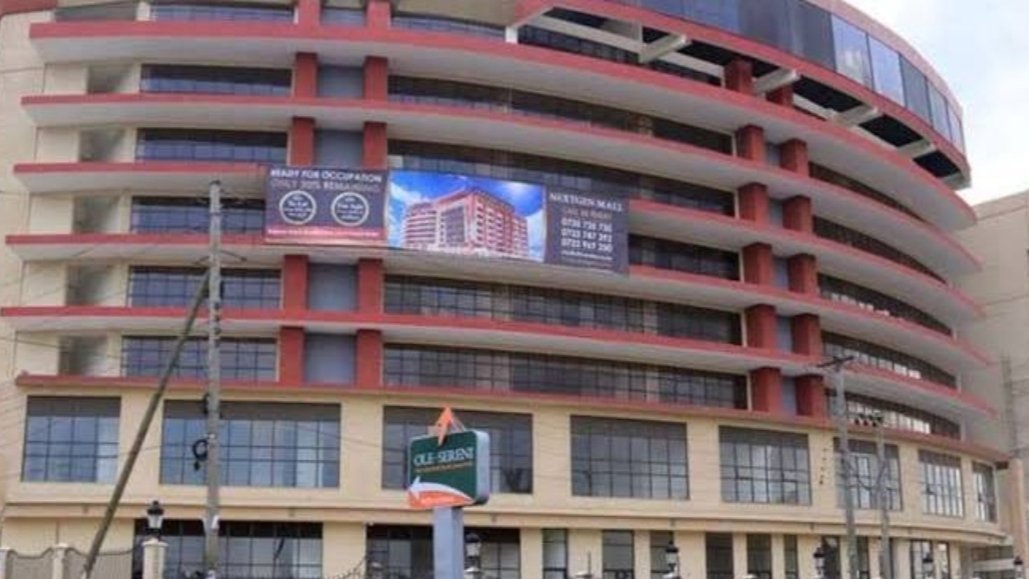

The Kenya Revenue Authority has been blocked from demanding taxes on service charge collections by building and estate managers after a ruling involving Nextgen Mall Management Company.
The Tax Appeals Tribunal found that the company only handled funds as a conduit for unit owners. The money covered basic upkeep services such as grass cutting, security, bin cleaning and management fees.
It ruled that the service charges and property owners’ contributions were not earnings that attract income tax or value-added tax. The decision sets a precedent for management companies that look after common areas in gated communities, office blocks and apartments.
KRA had issued a Sh119.8 million claim covering income tax and VAT dating back to 2016. The demand included income tax arrears of Sh38.5 million for the years 2016 to 2020 and VAT of Sh81.3 million for 2017 to 2020.
Nextgen Mall Management Company was set up to manage the common areas of Nextgen Mall on Mombasa Road in Nairobi. It acts on behalf of unit owners who bought from the developer, Nextgen Office Suites Limited.
The firm objected to the KRA demand at the Tax Appeals Tribunal. The legal battle began in September 2022 after a KRA audit triggered the tax claim.
KRA argued that the service charge contributions constituted taxable business income. It described the firm as a private company whose main activity is real estate management and said the transactions attract tax because the company offers services and charges a fee.
The tax authority maintained that firms receiving service charges can only escape taxation through a specific legal exemption.
The management company maintained that it merely collects the charges on behalf of property owners and uses the funds to pay third-party service providers. These providers handle garbage collection, utility bills and repairs in the common areas.
The Tribunal narrowed the case to two questions. The first was whether the service charges and member contributions formed income chargeable to income tax. The second was whether the same collections attract VAT.
On the first issue, the Tribunal ruled that the collections were fiduciary pass-through funds held for the benefit of unit owners. The company is a vehicle through which owners pool and spend their own money.
It found that the firm offers no service on its own account, adds no margin and retains nothing as a fee. The contributions therefore cannot be treated as taxable income.
On VAT, the Tribunal held that the company did not supply management services. The services were supplied by independent property managers who had already charged and accounted for VAT. Taxing the contributions again would amount to taxing the same services twice.
The Tribunal rejected KRA’s attempt to force the firm to register for VAT under the threshold of Sh5 million. It found the contributions do not attract taxation.
The ruling, delivered on July 27, 2026, set aside KRA’s objection decision. The Tribunal allowed KRA to tax the company’s own incidental commercial income, such as kiosk and market stall rentals.
Diro Advocates LLP said the decision reinforces the principle that fiduciary funds held on behalf of third parties are not taxable income merely because a management company receives and administers them. The firm said the ruling provides needed certainty to the real estate and property management sector.
The case had moved from the Tribunal to the High Court in 2024 before returning to the Tribunal for the final determination.
Comments (0)
Leave a Comment
No comments yet. Be the first to share your thoughts!