
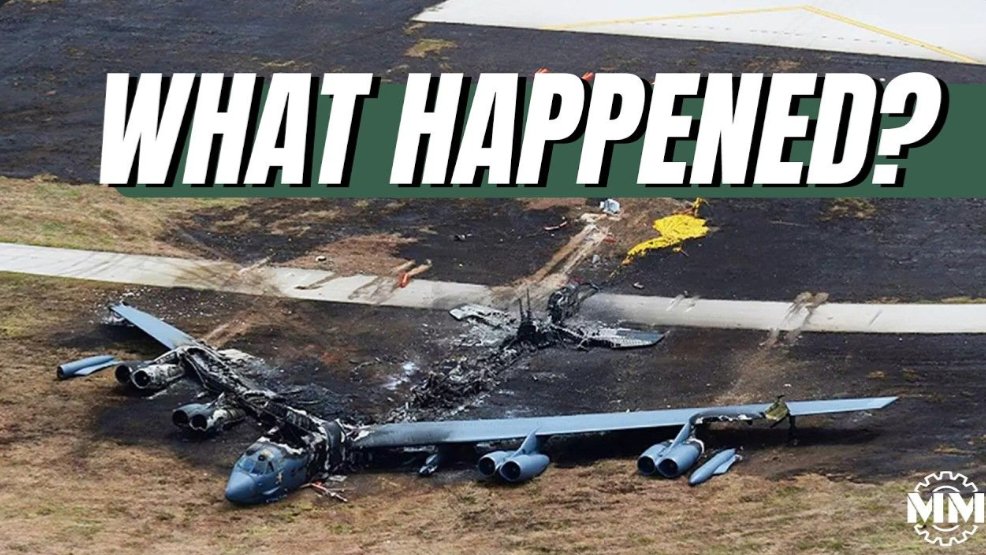

The global defense aviation infrastructure faces intense scrutiny following the near-simultaneous crashes of two iconic strategic bombers. On June 15, a United States Air Force (USAF) B-52 Stratofortress and a Russian Aerospace Forces (VKS) Tupolev Tu-22M3 went down within hours of each other.
The double disaster occurred thousands of miles apart. However, it highlights systemic vulnerabilities in aging military aviation assets globally.
In California, the heavy bomber crashed shortly after lifting off from Edwards Air Force Base (EAFB), which serves as a premier flight testing hub for international defense infrastructure.
All eight crew members on board the American aircraft died when the platform struck the ground. The crew included military personnel, government civilian employees, and Boeing contractors, who were conducting a routine test flight linked to a critical radar modernization program.
The lost B-52H belonged to the 412th Test Wing (TW), and it carried an Active Electronically Scanned Array (AESA) radar system. Engineers designed this platform to evaluate the upcoming B-52J variant.
The fatal incident will likely disrupt the long-term upgrade schedule.
The American modernization program has already faced deep delays and severe budget inflation, which complicates long-term defense planning. This crash eliminates a crucial test bed, and it forces engineers to re-evaluate structural stress variables across the remaining operational fleet.
Meanwhile, in the Irkutsk region of southeastern Siberia, a Russian Tu-22M3 supersonic bomber crashed during a training flight. The long-range aircraft was descending for its final landing approach near the Angara River, when a sudden engine failure forced the pilots to react.
Unlike the tragic outcome in the Mojave Desert, all four Russian crew members successfully activated their ejection seats. The aviators survived the emergency with non-life-threatening injuries.
The Russian Ministry of Defence (MoD) confirmed that the bomber carried no live combat ordnance.
Siberian authorities reported no civilian casualties or property damage on the ground, although a thick column of black smoke rose from the impact site. This specific supersonic aircraft class remains a core component of Russian long-range aviation operations, but maintaining these assets grows difficult.
The simultaneous loss of these legacy platforms exposes a broader logistics crisis affecting global military superpowers. Both nations rely on Cold War (CW) era airframes to maintain strategic deterrence, because manufacturing direct successors has proved immensely expensive over the past few decades.
The United States (US) currently has no strategic bomber platforms in active serial production. Production lines closed decades ago.
Every hull lost represents an irreversible decline in total operational capacity until the next-generation stealth assets finally enter service.
Russia continues to manufacture the larger Tupolev Tu-160 bomber, but it cannot easily replace the specialized anti-shipping capabilities of the Tu-22M3. Analysts note that structural wear and demanding operational tempos are draining the remaining lifespans of these highly complex combat airframes.
Modernization initiatives such as the American B-52J upgrade have suffered from severe cost overruns, which fuel intense debate among defense planners. The extensive engineering required to retrofit new electronics into seventy-year-old structures demands immense man-hours, but, it introduces unforeseen technical risks.
Both Washington and Moscow are rushing to develop modern stealth replacements, which include the American B-21 Raider.
However, these replacement initiatives face constant manufacturing bottlenecks, and they will not achieve full operational capability until the next decade begins.
The twin accidents highlight the immense physical strain placed on military infrastructure during an era of heightened international tension. Aviation managers must find a balance between maintaining high operational readiness and managing the structural degradation of their oldest airframes.
The recent twin crashes serve as a stark reminder of the physical limits governing long-range aviation infrastructure. Until new assembly lines deliver modern replacements, defense departments must navigate the escalating risks of keeping historic fleets airborne, when structural issues arise.
Comments (0)
Leave a Comment
No comments yet. Be the first to share your thoughts!