
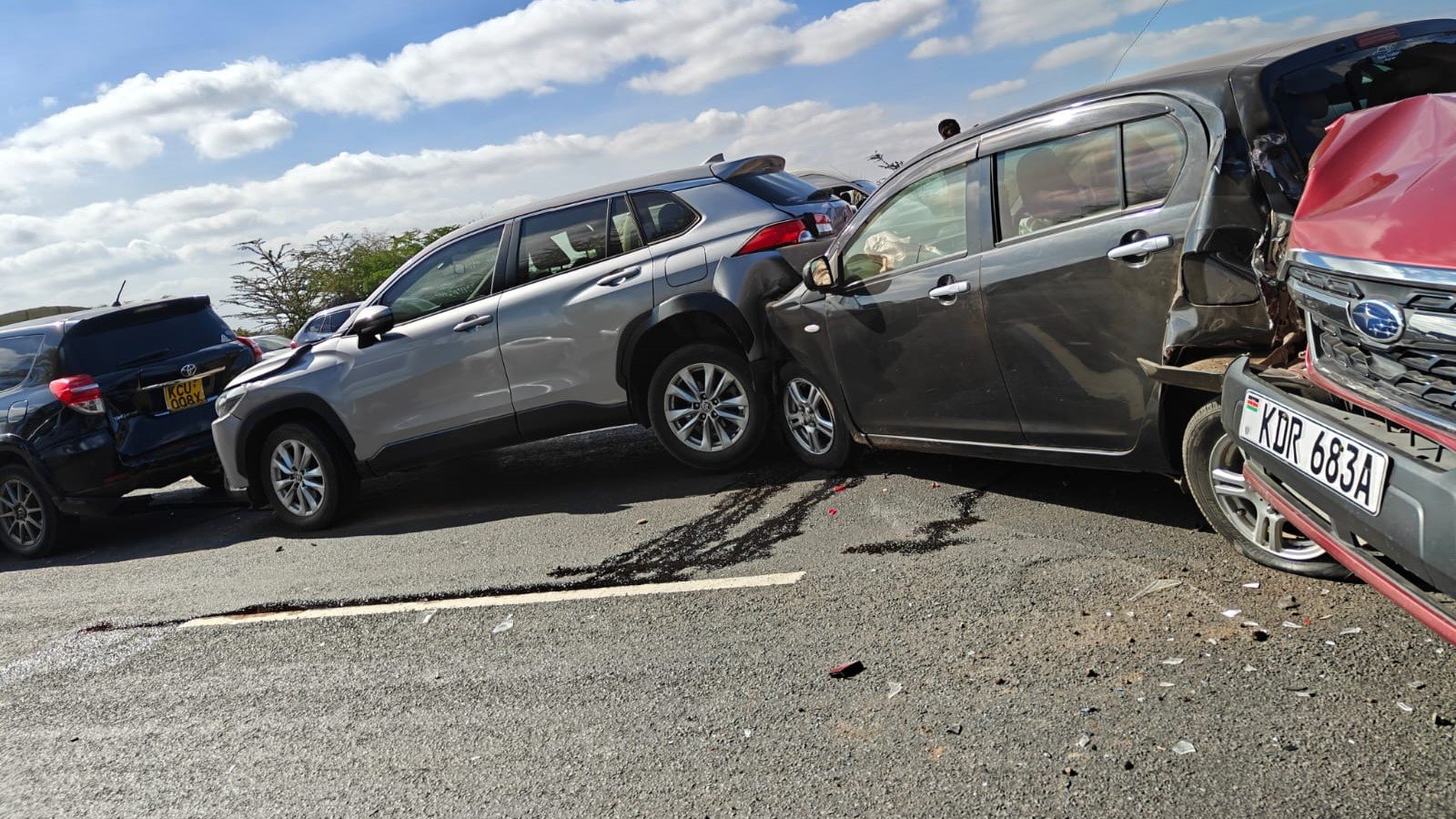

The Nairobi Southern Bypass, a project designed for efficient traffic flow, has tragically become synonymous with loss of life. Just yesterday, authorities reported a collision between a double-cab pickup and a trailer near the Kibra Underpass, resulting in traffic being restricted to a single lane at that location.
Over three years (June 2016 to April 2019) alone, the road recorded 87 total accidents with 131 victims, a crisis underlined by the fact that 39% of those incidents were fatal. This alarming casualty rate is fundamentally driven by overspeeding, which consistently ranks as the leading human error in police records, turning minor driving misjudgements into major, often lethal, collisions.

This aggressive behaviour is dangerously enabled by the road's very strength: a superior, smooth surface and excellent geometry that minimises physical feedback and creates a "comfort trap" that psychologically encourages drivers to exceed posted limits.
This high-velocity environment is most perilous at joining interchanges, where drivers conditioned by miles of smooth highway fail to decelerate adequately for necessary merges or diverges, causing severe speed differentials and crashes. Furthermore, while the road surface itself is excellent, the context of the entire corridor reveals deeper systemic flaws.
Accident data confirms that poor mechanical condition of vehicles, such as worn tyres or failing brakes, acts as an independent, catastrophic multiplier when high speeds are involved. This is compounded by the traffic composition on the route, where overloading and the presence of heavy vehicles create unpredictable slowing and large mass differentials, issues that are worsened by the speed induced by the smooth road.
Beyond excessive velocity, general non-compliance remains rampant, with improper overtaking and outright ignoring of traffic rules frequently cited alongside speeding. Compounding these human factors are specific infrastructure weaknesses, notably hanging road shoulders, where a sudden drop-off exists between the carriageway and the edge, which become lethal hazards if a driver runs wide at speed.
Quantitatively, analysis shows that while driver factors account for over 77.78% of accidents, road design and construction issues caused an average of 58.17% increased accident occurrence when combined with driver error, illustrating the synergistic risk. Ultimately, this persistent danger points toward regulatory and enforcement gaps; without sustained, rigorous policing to match the high standard of the road's construction, the road remains an environment where reckless driving is implicitly rewarded until tragedy strikes, ensuring the tragic figures will continue to rise.
The Southern Bypass will be closed this weekend for the Stanchart Nairobi City marathon. Find alternative routes here.
Good morning.
Comments (0)
Leave a Comment
No comments yet. Be the first to share your thoughts!