
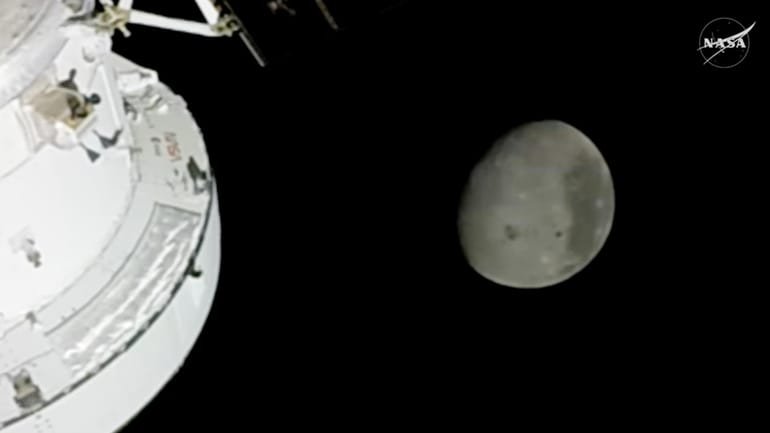

NASA has officially pushed the boundaries of human exploration with its Artemis II mission, sending a crew of four astronauts further into the solar system than any previous generation. The mission reached a maximum distance of 252,756 miles from Earth, surpassing the previous records set during the Apollo era. This milestone represents a critical stress test for the hardware intended to eventually ferry humans to Mars.
The crew consists of three Americans and one Canadian, reflecting a broadened international partnership in space infrastructure. NASA astronauts Reid Wiseman, Victor Glover, and Christina Koch are joined by Jeremy Hansen from the Canadian Space Agency. Their journey takes them around the far side of the moon, utilizing a high-altitude orbit to test life-support systems in a deep-space environment.
This flight is not a lunar landing, but a vital precursor to the Artemis III mission. The primary objective is to verify that the Orion spacecraft can safely sustain human life for extended durations away from Earth’s immediate protection. Engineers are closely monitoring radiation shielding and communication delays, which are significant factors for future lunar base construction.
The distance achieved during this flight path is roughly 24,000 miles beyond the moon itself. By reaching this far-flung point, the mission enters a zone where the Earth's magnetic field provides little to no protection. Success here confirms the viability of the Space Launch System and the Orion capsule as the primary vehicles for the next decade of orbital activity.
The Artemis program represents a massive shift in how space agencies approach extraterrestrial construction. Unlike the temporary stays of the 1960s, this era focuses on sustainable infrastructure. This includes the development of the Lunar Gateway, a planned space station that will orbit the moon and serve as a hub for surface expeditions.
From a technical standpoint, the flight path utilized a "free-return trajectory." This means that if the spacecraft’s engines were to fail after the initial lunar flyby, the Earth’s gravity would naturally pull the capsule back toward home. It is a safety-first approach essential for missions carrying human lives into unchartered territory.
International observers and industry experts view the record-breaking distance as a signal of intent. The mission serves as a message that the technical hurdles of deep-space travel are being cleared. With the Orion capsule performing within expected parameters, the focus now shifts to the complex logistics of landing on the lunar south pole.
The data gathered during this record-setting journey will inform the design of future habitats. Builders and engineers require precise readings on how materials hold up against the vacuum and temperature extremes of deep space. Every mile gained beyond the previous record provides new data points for the eventual construction of a permanent moon base.
As the crew begins their return leg, the focus remains on the high-speed reentry into Earth's atmosphere. This final phase will test the heat shield, which must withstand temperatures nearing 5,000 degrees Fahrenheit. If successful, this mission clears the path for the first human footprints on the moon in over fifty years.
Comments (0)
Leave a Comment
No comments yet. Be the first to share your thoughts!