
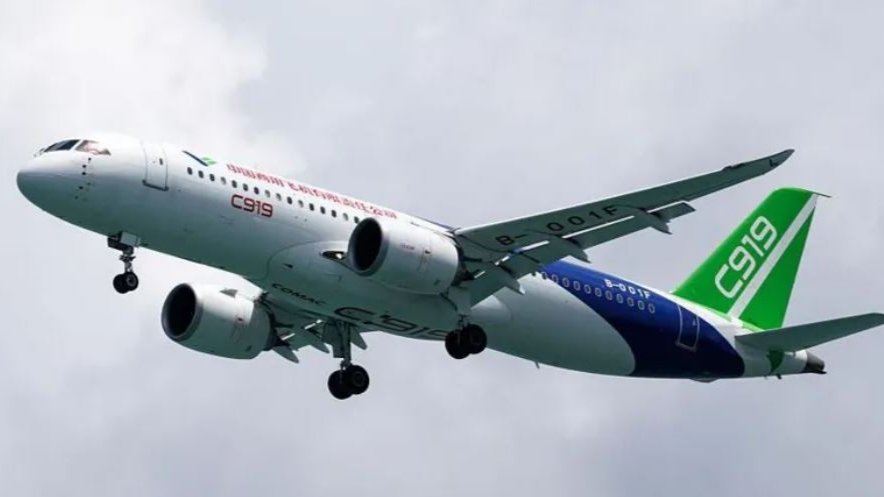

At the Singapore Airshow held early February 2026, China's Commercial Aircraft Corporation of China, or COMAC, positioned its C919 passenger jet as a growing alternative in the Asia-Pacific region. The state-owned manufacturer highlighted progress since the aircraft's first international appearance in Singapore two years earlier. COMAC described its current focus as setting sights on the Southeast Asian aviation market, where demand for planes continues to climb.
The C919, a narrowbody single-aisle design seating roughly 158 to 192 passengers, targets direct competition with the Airbus A320neo family and Boeing 737 MAX series. COMAC reported delivering more than 200 units of its C909 and C919 models combined, with about a quarter now flown by carriers in Laos, Indonesia, and Vietnam. Brunei-based GallopAir has committed to a substantial order, while Cambodia plans to acquire around 20 aircraft. Within China, airlines hold over 1,000 orders for the C919, though deliveries remain limited, with only a dozen fulfilled so far.
Industry figures attending the airshow acknowledged the pressures on established manufacturers. Airlines across the region contend with extended wait times for new aircraft, averaging about seven years from order to delivery according to International Air Transport Association data. Supply chain bottlenecks, engine shortages, and lingering effects of past disruptions have pushed fleet ages higher and increased operating costs. IATA director general Willie Walsh described the situation as incredibly frustrating for carriers and predicted double-digit growth in Asia-Pacific this year if more planes become available.
Walsh viewed COMAC's rise cautiously but positively. He expected the company to evolve into a global competitor over the next 10 to 15 years, eventually joining Boeing and Airbus as a major player. Association of Asia Pacific Airlines director general Subhas Menon welcomed the addition, stating the need for more suppliers in the supply chain, particularly in the region. Cebu Pacific chief executive Mike Szucs expressed openness to newcomers, noting COMAC would need to complete its certification processes before becoming attractive, likely in the 2030s.
COMAC pursues European Union Aviation Safety Agency validation for the C919, with regulators already conducting test flights. Estimates suggest approval might arrive by 2028, though some projections extend to 2031. Harmonizing components from Chinese and Western suppliers, along with establishing maintenance networks, pilot training programs, and repair infrastructure, presents ongoing hurdles. These areas benefit from the decades-long presence of Boeing and Airbus.
The airshow underscored broader dynamics. Boeing and Airbus retain strong visibility, with signs of easing delivery backlogs. Yet COMAC's lower pricing, government backing, and regional footprint appeal to budget operators in emerging markets. Orders in Southeast Asia reflect that pull, even as the manufacturer builds credibility outside China.
No direct link to Kenya or East African aviation appeared in coverage of the event. Kenya Airways and other regional carriers have historically leaned on Airbus and Boeing fleets, with occasional interest in alternatives like Embraer models. COMAC's current push stays centered on Southeast Asia, though longer-term ambitions could extend further as production scales.
Production ramps remain gradual. Recent reports indicate COMAC targets around 28 C919 deliveries in 2026, following supply chain improvements after setbacks in prior years. The company displayed models of its future widebody C929 at the show, signaling plans for larger aircraft to challenge models like the Airbus A330neo and Boeing 787. That program advances through detailed design and early wind tunnel testing, with Chinese regulators involved to potentially accelerate timelines.
For now, the C919 forms COMAC's flagship effort. Its domestic certification allows operations within China, where three airlines fly the type. International expansion depends on overcoming technical and regulatory barriers. As Asia-Pacific aviation demand surges, the entry of a third manufacturer could reshape procurement options, though Boeing and Airbus dominate order books and global networks.
Analysts question the verifiability of some COMAC order figures due to its state-owned structure, unlike the publicly listed Western rivals. Still, visible aircraft in service across borders demonstrate tangible steps forward. The Singapore showcase served as a platform to signal readiness, even if full global rivalry lies years ahead.
Comments (0)
Leave a Comment
No comments yet. Be the first to share your thoughts!