
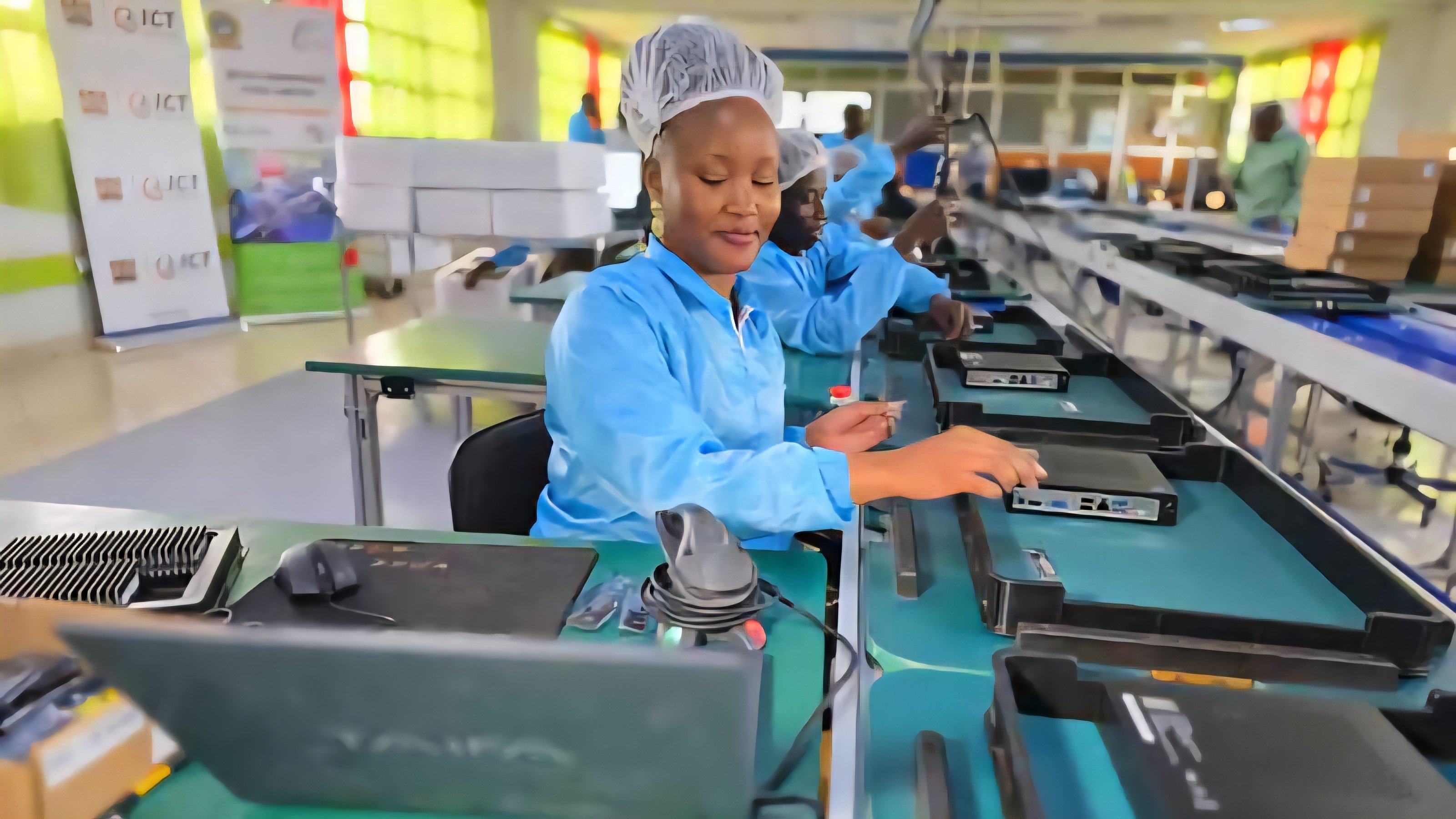

The Ministry of Information, Communications and the Digital Economy has formally engaged Jomo Kenyatta University of Agriculture and Technology, also known as JKUAT, to begin the assembly of computer hardware for the national digital hub project.
ICT Cabinet Secretary William Kabogo confirmed the partnership during a recent inspection of the Taifa Computer Assembly Line located at the university's main campus in Juja. The facility is expected to produce 3,000 devices as part of an initial phase to equip digital innovation centers across the country.
According to the Cabinet Secretary, the broader program involves the assembly of 10,000 units in total. While JKUAT handles the first batch, other public institutions, including Moi University, are scheduled to assemble the remaining 7,000 devices to meet the growing demand for digital infrastructure.
President Ruto has prioritized the establishment of 1,450 digital hubs, with the intention of placing at least one facility in every ward. Each hub is designed to accommodate between 50 and 100 computer workstations to facilitate digital literacy and remote work opportunities.
During the site visit, Cabinet Secretary Kabogo indicated that the government intends to move beyond basic assembly. The long-term strategy involves transitioning to full local manufacturing, where components are sourced or fabricated within the country to create a sustainable domestic tech industry.
The Taifa assembly line, which has been operational in various capacities for several years, will serve as a primary production point. The Cabinet Secretary noted that expanding these assembly lines to five or six units would generate substantial employment for technicians and support staff.
JKUAT Vice Chancellor, Prof Victoria Ngumi, stated that the university is already preparing to transition the assembly operations to a larger, dedicated facility. This move is intended to scale up production capacity to meet the government's ambitious rollout timelines for the ward-based hubs.
Beyond the physical assembly of hardware, the ministry is focusing on the technical maintenance of the equipment. CS Kabogo emphasized that training programs for youth will be integrated into the project, ensuring that every ward hub has qualified personnel to manage and repair the devices locally.
The digital hub initiative relies on a collaborative funding model. It draws support from the National Government Constituencies Development Fund, and involves partnerships with Members of the National Assembly to ensure the physical structures are completed alongside the delivery of the JKUAT-assembled hardware.
Recent data indicates that over 20,000 devices are already active across approximately 300 existing hubs. The new batch of 3,000 computers from JKUAT is expected to be deployed within the next three weeks, targeting new centers that have reached structural completion.
Comments (0)
Leave a Comment
No comments yet. Be the first to share your thoughts!