
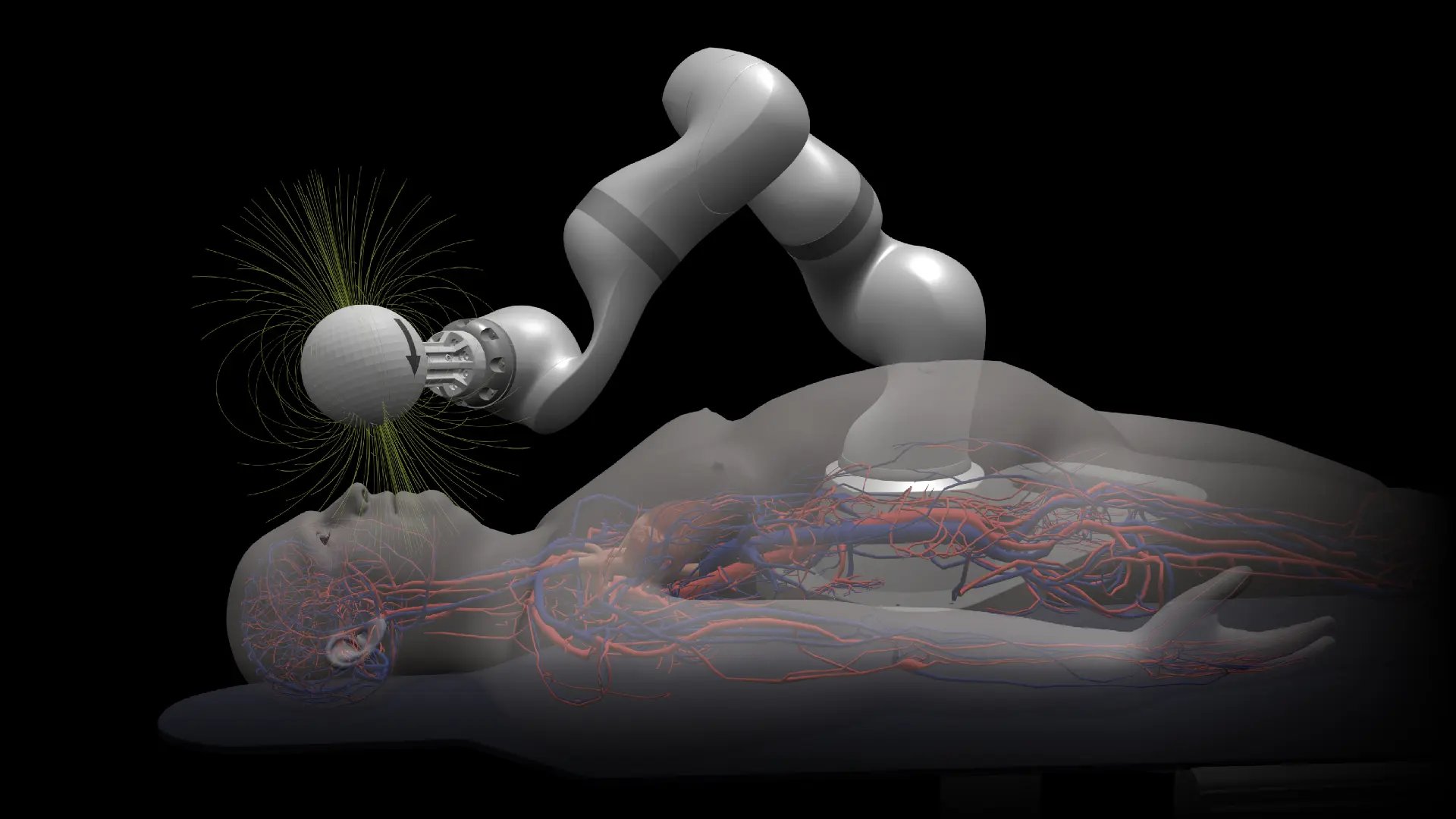

Federal healthcare innovation agency Advanced Research Projects Agency for Health (ARPA-H) has awarded up to $32 million over five years to medical technology company Magnendo.
The funding supports development of an autonomous magnetic robotic system aimed at treating ischemic strokes.
The Massachusetts Institute of Technology (MIT) spinout intends to refine magnetic navigation tools, which can guide thread-like instruments through blood vessels.
By removing the need for continuous manual direction from endovascular specialists, the firm hopes to expand access to emergency interventions.
Emergency endovascular procedures currently demand specialized surgical expertise, which remains scarce in regional healthcare facilities.
High equipment costs and training barriers frequently delay critical interventions, as patients often require transfer to regional tertiary medical centers before treatment can begin.
If blood flow to brain tissue remains blocked for extended periods, permanent neurological damage or death becomes far more likely. Consequently, reducing initial delays during emergency patient intake remains a critical priority for specialized clinical teams.
Engineers at the spinout are focused on integrating magnetic fields, which safely direct flexible surgical tools through complex vascular pathways.
Advanced automation software will handle routine movements, while medical personnel monitor operations remotely from standard workstations.
The research team aims to complete clinical trials, which will validate both safety and efficacy across diverse patient demographics.
If successful, regional hospitals could deploy these systems to initiate rapid treatment locally, avoiding hazardous long-distance patient transport.
Medical device developers continue building sophisticated autonomous systems, which are increasingly handling precise tasks inside clinical environments.
Broad industry interest in automated surgical support reflects ongoing efforts to lower operational barriers across specialized emergency medicine.
Funding from the federal agency will be disbursed in structured tranches over the next five years. Magnendo plans to expand engineering staff, while acquiring specialized testing equipment to accelerate prototype refinement.
Public health officials emphasize that rapid intervention during ischemic events directly correlates with improved long-term recovery metrics.
Decreasing reliance on immediate, in-person specialist availability could fundamentally restructure emergency care protocols for rural regional facilities.
Developers remain focused on establishing rigorous fail-safe protocols, which will allow human clinicians to override automated sequences instantly if complications arise.
Testing will continue across simulated biological models prior to human trials.
The project represents a substantial federal investment into specialized medical infrastructure, where advanced automation meets critical clinical care needs.
Comments (0)
Leave a Comment
No comments yet. Be the first to share your thoughts!