
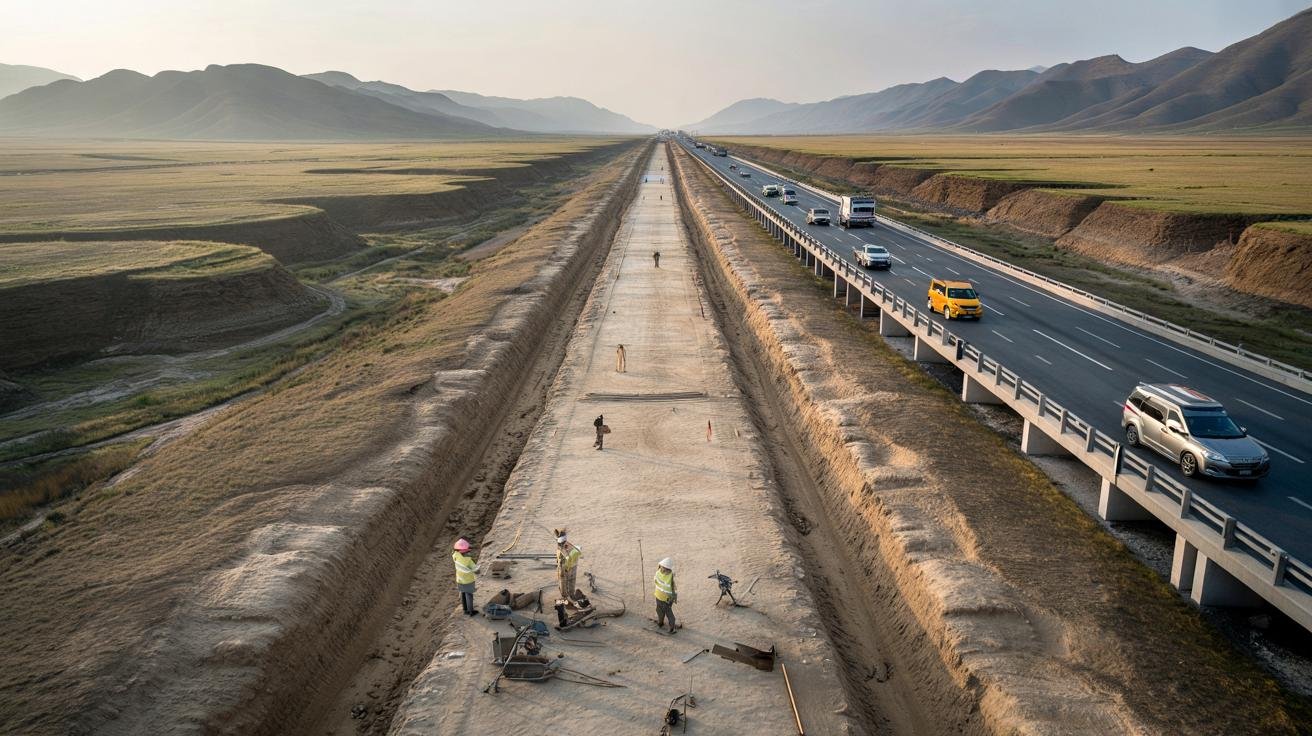

Archaeological teams in Shaanxi Province have documented the remains of the Qin Zhidao, an extensive imperial highway constructed over two millennia ago. The road was commissioned by Emperor Qin Shi Huang to facilitate rapid military movement and administrative communication across the northern frontiers of the empire. Spanning approximately 700 kilometers, the route connects the ancient capital of Xianyang with the Ordos region, crossing challenging mountainous terrain and river valleys.
The discovery highlights sophisticated engineering methods used by ancient construction crews. Unlike standard dirt paths of the era, the Qin Zhidao was built using rammed earth techniques, where soil was heated to prevent the growth of vegetation and then compressed to create a surface as hard as modern concrete. This process has allowed large sections of the roadbed to remain intact despite 2,200 years of exposure and environmental shifts.
Site inspections reveal that the road maintained a consistent width of approximately 30 meters, with some sections expanding to 60 meters. This scale allowed for the simultaneous passage of multiple horse-drawn carriages and large infantry units. Engineers of the period also incorporated advanced drainage systems to mitigate water damage, ensuring the route remained functional during heavy rains. The precision of the alignment suggests the use of early surveying tools to maintain straight trajectories over long distances.
Historians and civil engineers note that the durability of the road challenges contemporary assumptions regarding the lifespan of infrastructure. While modern asphalt highways require frequent maintenance and resurfacing every few decades, the core structural integrity of the Qin Dynasty road has survived since 212 BC. The site is currently being studied to better understand the chemical composition of the treated soil and the logistical management required to complete such a massive project within a reported five-year timeframe.
Comments (0)
Leave a Comment
No comments yet. Be the first to share your thoughts!