
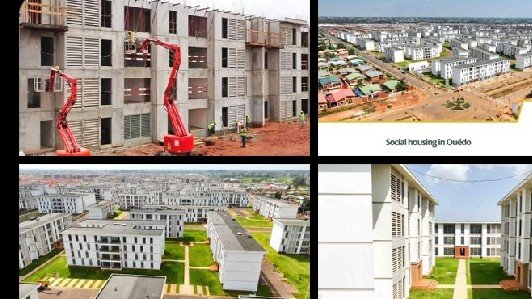

Benin, like many African countries, has experienced steady urban growth over the past decades. Cotonou, as the country’s economic hub, attracts people from across the nation in search of jobs, education and better access to services. This movement has increased demand for housing, leading to rising rents and the expansion of informal settlements. The Ouèdo housing project was designed to help ease this pressure by providing planned, affordable homes within reasonable distance of the city.
An ongoing housing project in Ouèdo, located just a few meters from Cotonou, is set to deliver 20,000 social and low cost housing units for citizens of the Benin Republic. The project is part of a broader effort by the government to address the growing demand for affordable housing, especially in urban and peri urban areas where population growth has put pressure on existing infrastructure. With construction now almost complete, many see the development as a timely response to a long standing need.
The choice of Ouèdo as the project site reflects the need to expand housing beyond the crowded city center while still keeping residents close to economic opportunities. Being only a short distance from Cotonou, the location allows future homeowners and tenants to commute easily for work or business. At the same time, it opens up new areas for development, reducing congestion in the city and encouraging more balanced urban growth.
The housing units are designed to be accessible to low and middle income earners, a group that often struggles to find decent housing at affordable prices. By focusing on social and low cost homes, the project aims to improve living conditions for families that might otherwise rely on overcrowded or poorly serviced neighborhoods. Access to safe housing is closely linked to health, educationm and overall well being, making this initiative important beyond just shelter.
As the project nears completion, attention has also turned to supporting infrastructure. Roads, water supply, electricity and sanitation are essential for any housing development to function properly. Authorities have indicated that basic services are being integrated into the project to ensure that residents can move in without facing major challenges. Schools, health centers and small commercial areas are also expected to follow, helping to create a complete and livable community rather than just a collection of houses.
The project has also created employment opportunities during the construction phase. Local workers, contractors and suppliers have benefited from steady work, contributing to income generation and skills development. While construction jobs are temporary, the long term economic impact may continue through maintenance, local businesses and increased activity in the surrounding area once people settle into their new homes.
Affordability remains a key concern for many potential beneficiaries. For a housing project of this scale to succeed, financing options must match the income levels of ordinary citizens. Authorities and developers are expected to work with financial institutions to provide flexible payment plans, mortgages or rent to own options. Clear and fair allocation processes will also be important to ensure that the homes reach those they are intended to serve.
The nearly completed status of the project has raised expectations among citizens, especially those who have followed its progress closely. For many families, the prospect of moving into a planned neighborhood with basic services represents a major improvement in quality of life. It also reflects a shift toward more structured urban planning, which can help prevent the problems associated with unplanned settlements.
In the wider context, the Ouèdo housing project may serve as a model for future developments in Benin and the region. Rapid urbanization is a shared challenge across Africa and large scale, affordable housing initiatives are increasingly seen as part of the solution. Lessons learned from this project, including what worked well and what could be improved, may guide similar efforts in other cities.
As final touches are completed, the focus will soon move from construction to occupation and community building. The success of the project will not only be measured by the number of houses delivered, but also by how well the new neighborhood supports daily life over time. If managed well, the Ouèdo housing development could mark a meaningful step toward addressing housing needs and improving urban living for thousands of Benin citizens.
Comments (0)
Leave a Comment
No comments yet. Be the first to share your thoughts!