
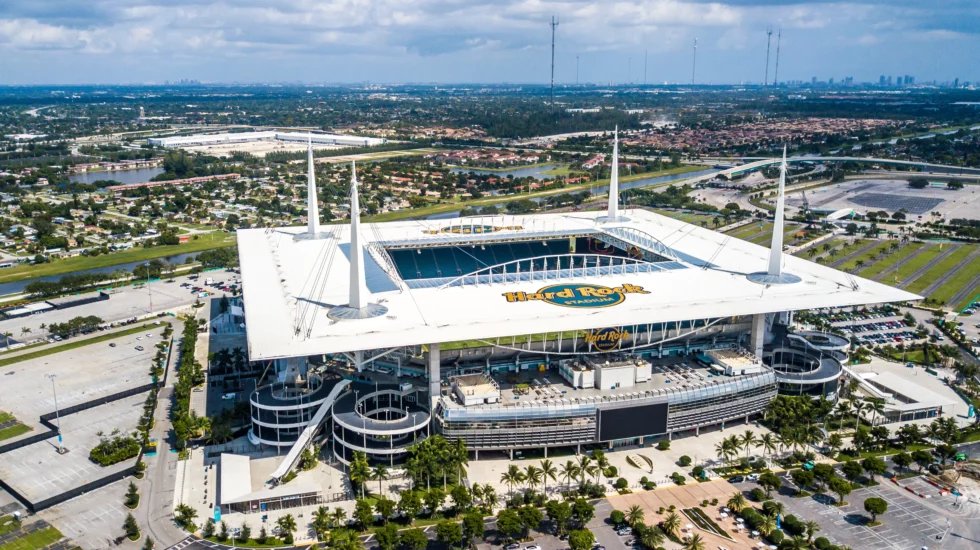

Hard Rock Stadium in Miami Gardens hosts match fifteen of the 2026 FIFA World Cup tonight when Saudi Arabia face Uruguay. FIFA strips commercial branding from all host venues during the tournament, so the stadium is known officially as Miami Stadium for the competition.
The Vision and Construction
The stadium opened in 1987 as Joe Robbie Stadium, named after the Miami Dolphins owner who financed it privately rather than relying on public funding, an unusual approach for the era. It was designed for both football and baseball.
Current owner Stephen Ross bought the stadium in 1994 and the Dolphins in 2009. By the early 2010s, he had committed to a comprehensive rebuild that would reshape the venue without forcing the team to relocate during construction.
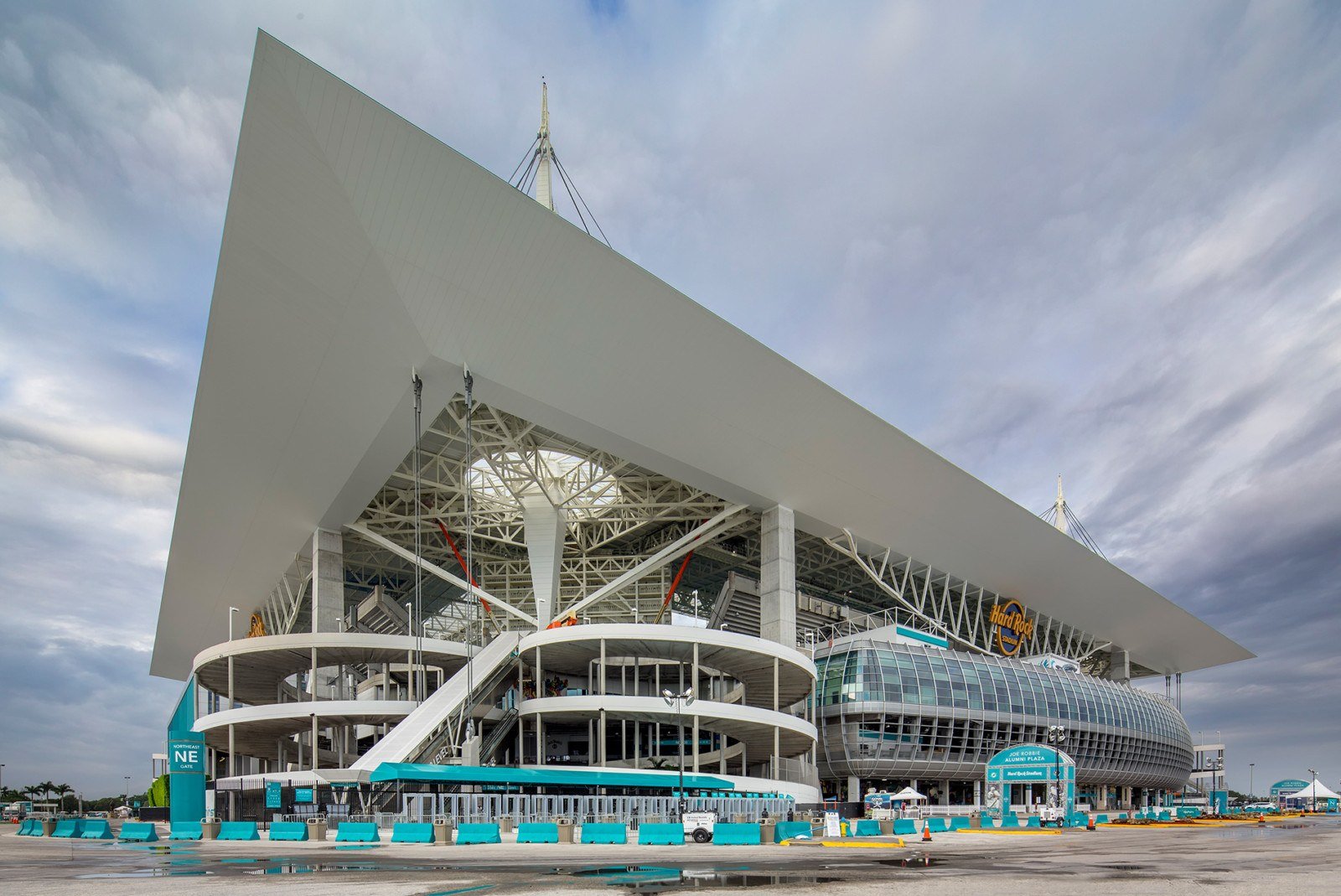
Miami Stadium /HOK
The renovation ran in two phases across two NFL offseasons, between 2015 and 2016, at a cost of $500 million (approximately KES 64.6 billion), funded entirely by Ross. The original concrete shell was preserved while the interior underwent largely new construction.
World Cup Debut and International Events
Miami Stadium has already hosted six Super Bowls and two World Series, when the venue was also home to the Florida Marlins until 2011. It hosted the Copa América 2024 final, a match marked by serious crowd control issues outside the ground.
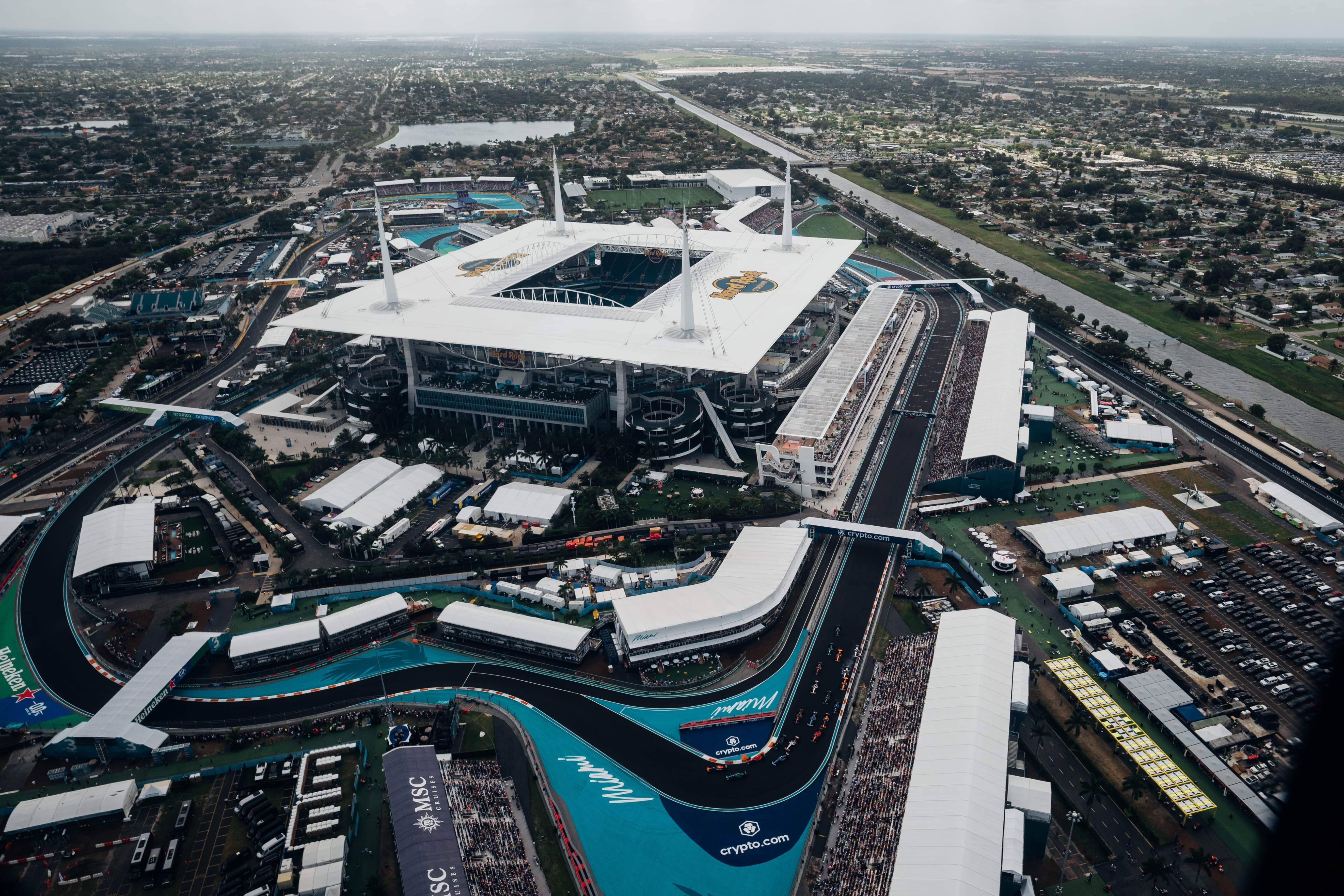
Miami Stadium hosting F1 /Modern Luxury
The venue hosts seven matches during the 2026 World Cup, including the third-place playoff and several group and knockout stage games. Saudi Arabia and Uruguay meet here tonight in a Group H fixture also featuring Spain and Cape Verde.
Engineering and Design
The renovation's first phase rebuilt the lower seating bowl, moving stands 24 feet (7.3 metres) closer to the field and reducing capacity from an original 75,000 to approximately 65,000. All seating was replaced, with the original orange and teal colours swapped for aqua.
The second phase, designed by architect HOK with structural engineering by Thornton Tomasetti, added the stadium's defining feature: an open-air canopy spanning 58,000 square metres (624,000 square feet), supported by eight reinforced concrete super columns and four corner spires standing 109 metres (358 feet) tall.
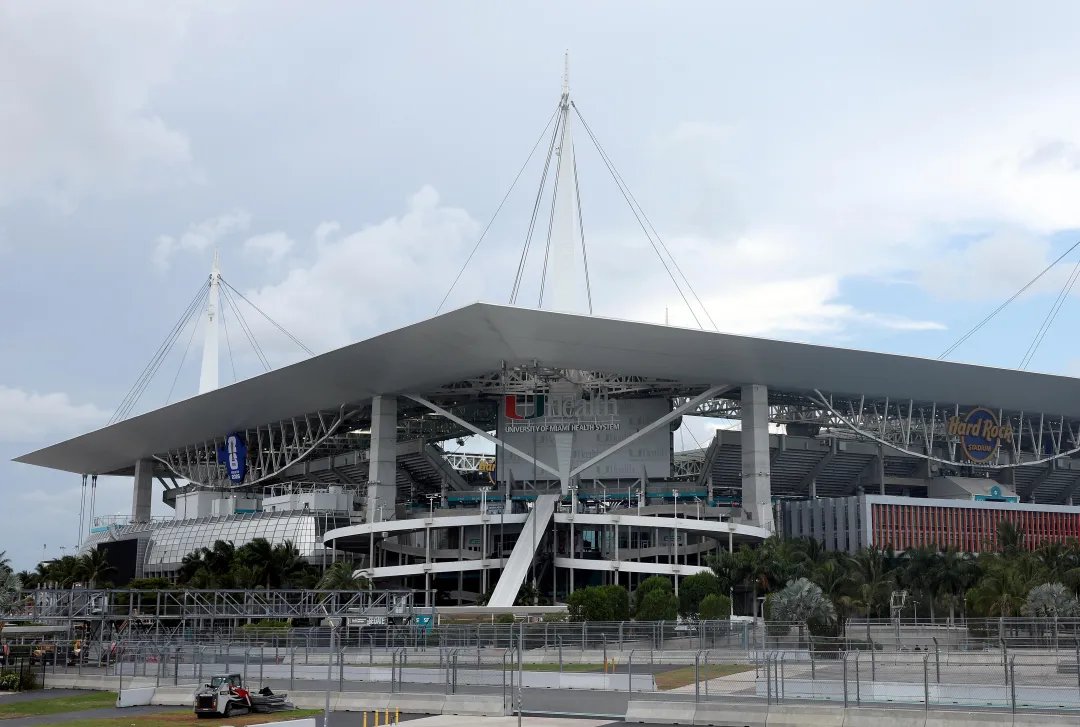
Miami Stadium structure /Stars and Stripes FC
Sixty-four locked coil steel cables, some up to 91 metres (300 feet) long, help support the structure, an arrangement chosen partly for redundancy in Miami's hurricane-prone climate. The canopy covers seating but leaves a football-field-sized opening above the pitch, exposed to open sky.
Modern Setup for 2026
Before the renovation, only around 17 percent of seats were shaded. The canopy raised that figure to approximately 92 percent, while still preserving the open-air feel of the original bowl and allowing airflow across the stands.
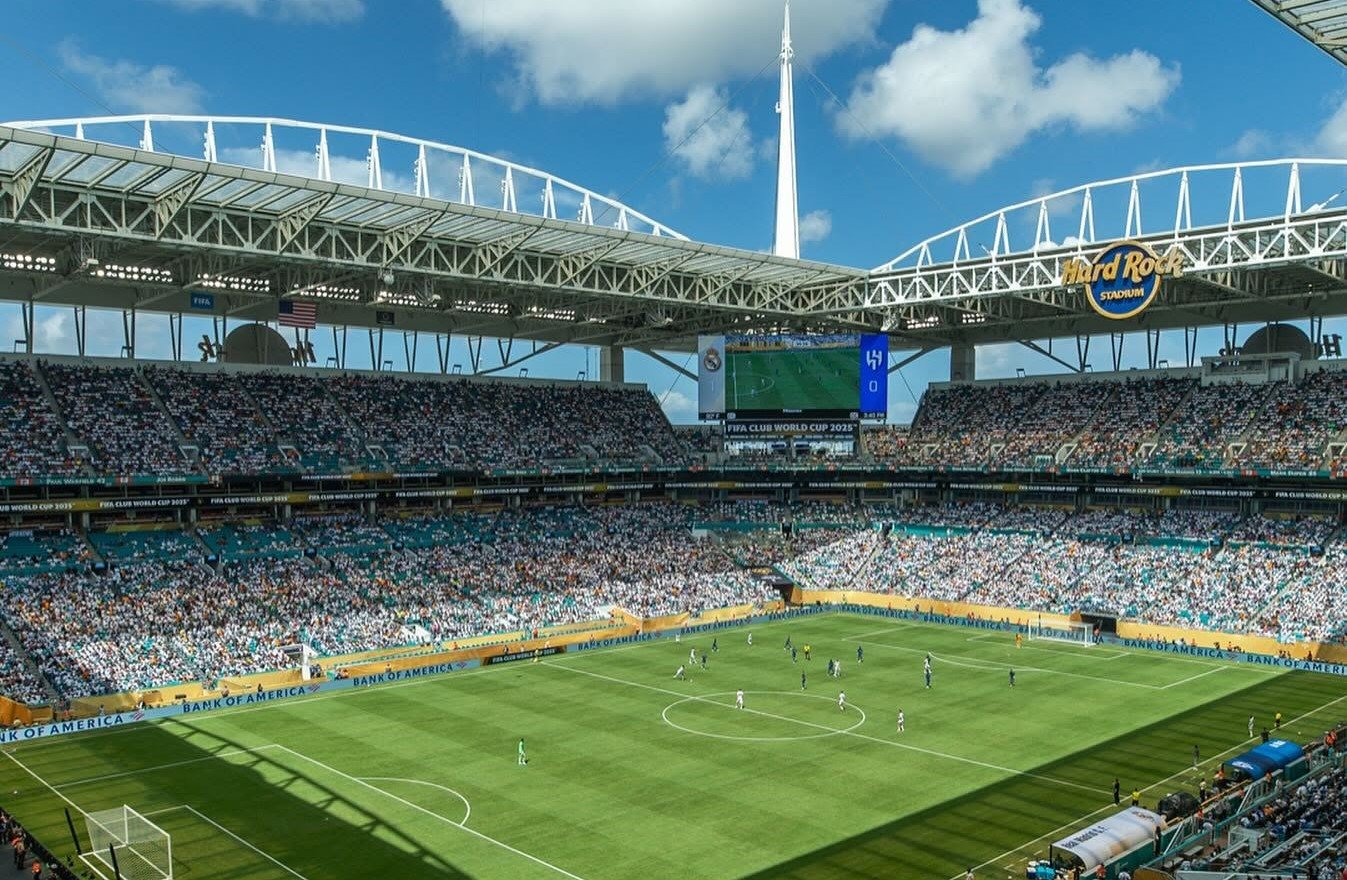
Inside Miami Stasium/HRS
Four giant high-definition video boards are mounted on the canopy structure, one in each corner. Miami Stadium retains its natural grass surface, which already meets FIFA's tournament requirements without modification.
What Makes It Unique
Miami Stadium is one of the few World Cup venues where the roof structure shades the crowd entirely while leaving the playing field open to natural sunlight and rain, a deliberate trade-off between fan comfort and pitch conditions.
The stadium's name has changed repeatedly since 1987, reflecting a string of sponsorship deals. Under FIFA's branding rules, all of that history is set aside for the tournament, with the venue known simply as Miami Stadium until the final whistle of its last match.
Comments (0)
Leave a Comment
No comments yet. Be the first to share your thoughts!