
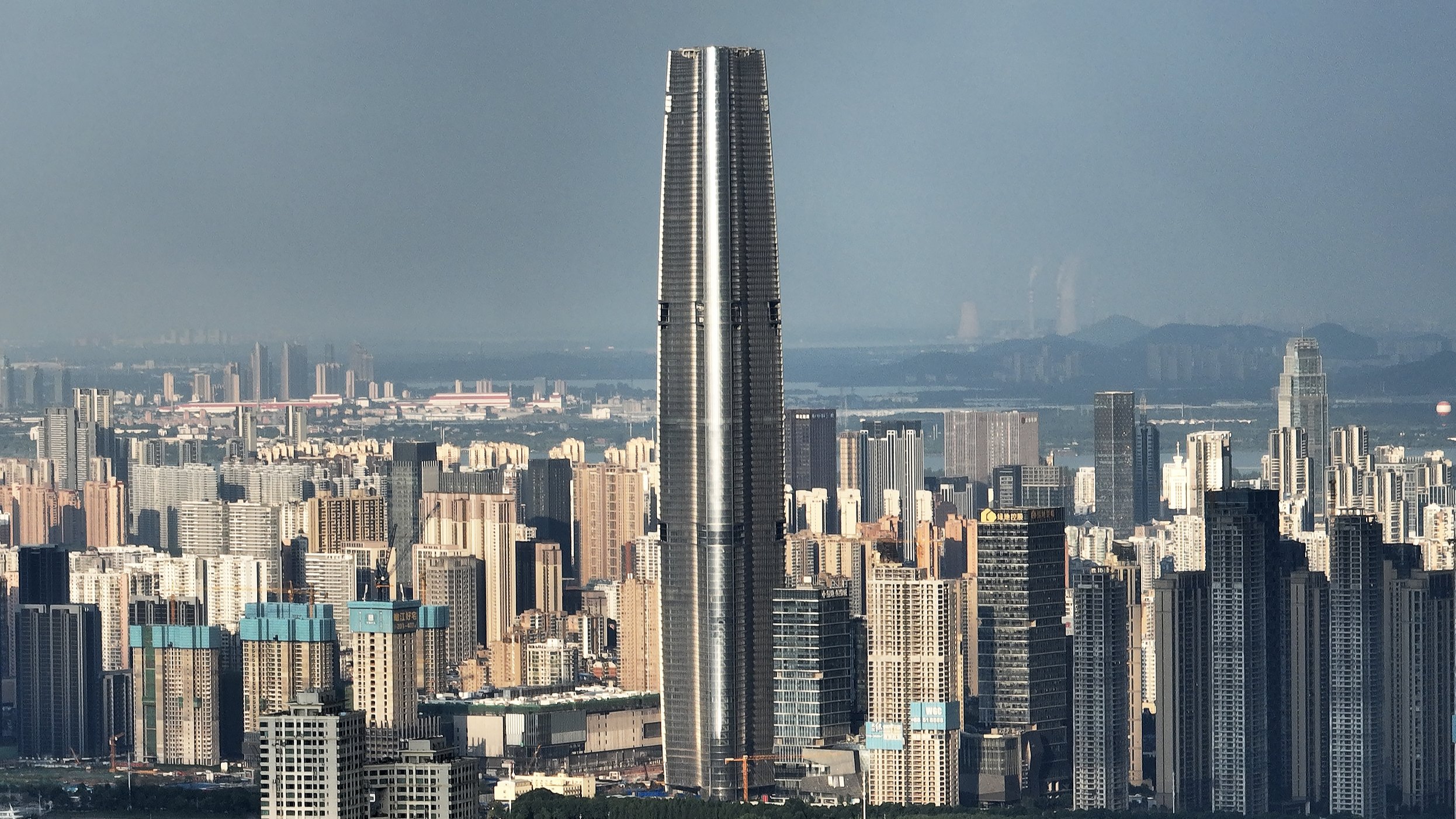

Urban skylines across major Chinese metropolitan centres are undergoing significant regulatory restructuring as national planners prioritise practical building utility over symbolic vertical height. The structural trajectory of Wuhan Greenland Center highlights how evolving regulations directly impact megaproject designs.
When initial construction broke ground in 2012, civil engineers designed the tower to reach a final structural height of 636 metres. At that projected height, the complex was slated to become the second-tallest skyscraper worldwide, serving as a primary architectural anchor for central China.
By 2017, structural construction had progressed past the 400-metre mark along the Yangtze River shoreline. However, concurrent expansion projects at Wuhan Tianhe International Airport altered regional low-altitude airspace flight corridors, intersecting directly with the skyscraper's proposed vertical profile.
Municipal aviation authorities introduced revised height restrictions to prevent potential hazards along active commercial flight paths. In response to safety mandates, project architects redesigned the upper structural envelope, scaling down the final architectural crown to 475 metres.
The design modification removed over 160 metres from the building's original structural blueprint. Despite the required reduction in overall height, the completed structure remains one of the tallest architectural towers in central China.
Beyond local airport flight path adjustments, broader regulatory changes soon impacted high-rise real estate developments across the entire nation. National authorities issued comprehensive policy guidelines placing strict height limits on future skyscraper construction projects.
The 2020 regulatory directive established a nationwide ban prohibiting approval for new building projects exceeding 500 metres in height. Planning officials cited concern over expensive vanity height features that increased construction overhead without adding practical floor space.
Government policy documents emphasised that extreme vertical structures often functioned as costly status symbols rather than efficient commercial properties. The regulatory framework aimed to curb speculative high-rise developments while encouraging sustainable urban architectural practices.
The policy shift effectively ended an era of unchecked mega-tower competition across major Chinese urban centres. Future commercial developments across primary and secondary cities are now required to adhere strictly to realistic economic and operational height limits.
Urban planning experts note that enforcing building height caps helps balance municipal infrastructure capacity with safety requirements. The capping of Wuhan Greenland Center stands as a prominent case study marking a shift toward utilitarian urban development.
Comments (0)
Leave a Comment
No comments yet. Be the first to share your thoughts!