
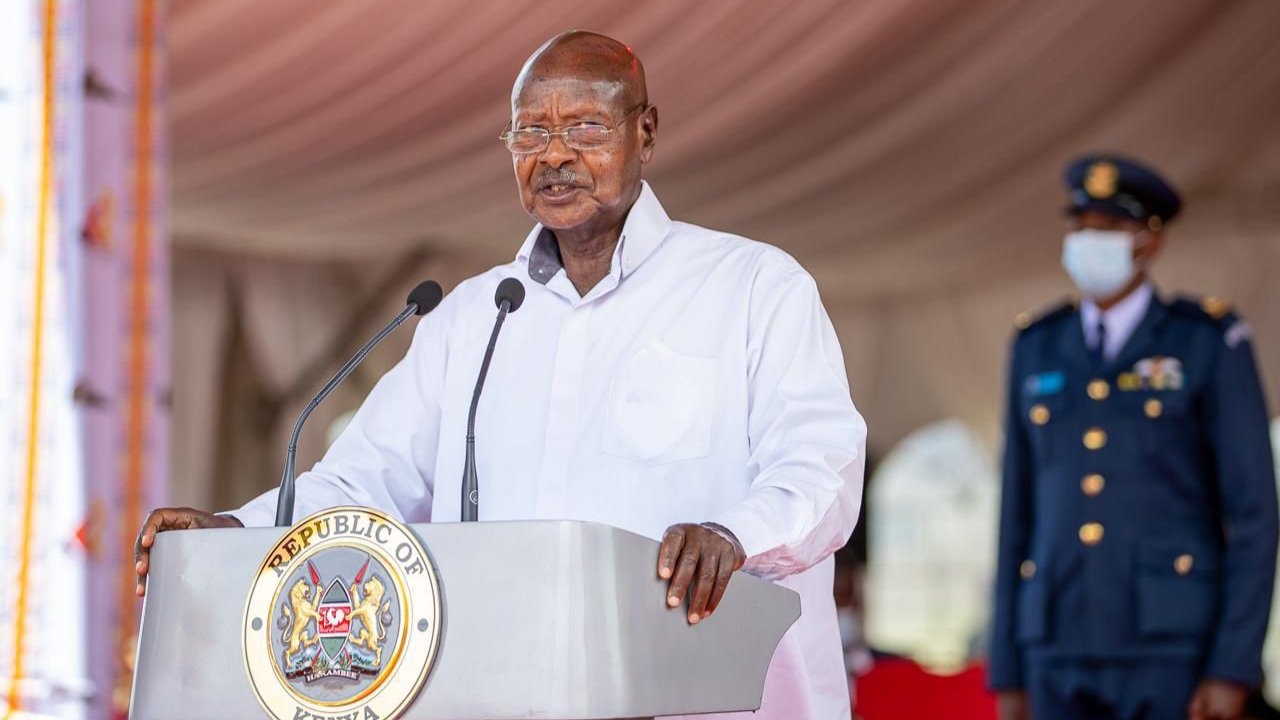

The long-awaited extension of the Standard Gauge Railway (SGR) toward the Ugandan border has entered a new phase following a joint commitment by President William Ruto and President Yoweri Museveni. The two leaders met to launch the Kisumu-Malaba section, a critical link intended to connect Kenya's port-driven rail system with its landlocked neighbor.
This development follows years of speculation regarding the viability of the line beyond Naivasha. By focusing on the Kisumu to Malaba stretch, the government aims to create a continuous modern track that bypasses the slower, aging meter-gauge lines currently handling bulk cargo.
President Ruto noted that the expansion is designed to replicate the efficiencies seen on the Mombasa-Nairobi route. For the construction sector, this signifies a massive procurement and engineering undertaking, involving extensive earthworks, several new stations, and the installation of specialized signaling systems compatible with the existing Kenyan network.
The regional strategy hinges on Uganda simultaneously developing its own SGR line from Malaba to Kampala. Historically, the two nations have struggled to align their construction timelines and financing, but recent high-level talks suggest a renewed bilateral urgency to secure funding as a single corridor.
Logistics experts suggest that a seamless rail connection will significantly reduce the cost of moving goods from the Port of Mombasa to the Great Lakes region. Currently, truck transport dominates the Northern Corridor, leading to high maintenance costs for regional highways and frequent transit delays at border crossings.
The Kisumu-Malaba segment involves complex terrain, requiring contractors to navigate the Rift Valley's unique geography. Engineering firms will likely face substantial technical challenges, including the construction of long-span bridges and viaducts to maintain the gentle gradients required for heavy freight trains.
While the specific budget for this phase remains under tight wraps, the focus has shifted toward public-private partnerships and regional development bank financing. Previous phases were heavily reliant on bilateral loans, but the current approach appears more diversified to manage national debt levels.
The project is expected to generate thousands of jobs for local technicians, surveyors, and laborers. Beyond the immediate construction phase, the rail line is anticipated to stimulate industrial hubs in western Kenya, particularly around the lakeside city of Kisumu and the border town of Malaba.
Uganda’s participation is seen as the linchpin for the entire project's success. Without a matching standard-gauge track on the Ugandan side, the Kenyan line would effectively terminate at a bottleneck, forcing cargo to be transloaded back onto trucks or older trains.
As the heavy machinery begins to move, the focus of the regional engineering community turns to the procurement of materials. Steel, cement, and ballast requirements for a project of this scale will provide a steady demand for local manufacturers over several years.
This move reaffirms the commitment to the original master plan of the Northern Corridor. By linking the Indian Ocean to the interior via a modern rail spine, the project intends to redefine the trade map of East Africa for the next several decades.
Comments (0)
Leave a Comment
No comments yet. Be the first to share your thoughts!