
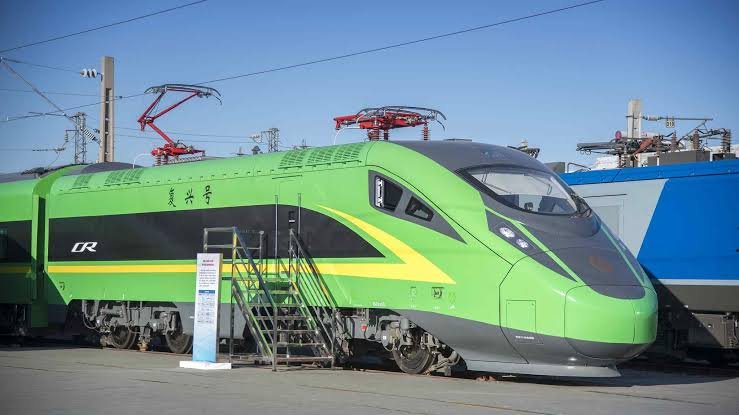

Tanzania has secured the necessary financing for the majority of the remaining sections of its Standard Gauge Railway (SGR), marking a critical pivot toward the completion of the 2,500-kilometer electrified network.
Government officials confirmed that funding for phases three and four is firmly in place, while phase five has also successfully secured capital. The focus now shifts to contractor performance to maintain the project’s momentum.
As of April 2026, the nation has invested more than $10 billion into the infrastructure. A recent $2.3 billion financing agreement is expected to anchor the upcoming construction stages, with additional support anticipated from regional development partners.
The China Civil Engineering Construction Corporation (CCECC) remains a primary partner, handling significant portions of the construction work as the line extends further into the interior.
Operational data highlights a growing shift in commuter behavior. Since the launch of the Dar es Salaam to Dodoma service, the SGR has transported over 5.5 million passengers, averaging roughly 9,000 travelers every day.
The appeal lies in the dramatic reduction of transit times. While a bus trip between the commercial hub and the capital typically lasts eight hours, the electric train completes the journey in four to five hours, reaching speeds of 160 kilometers per hour.
Tickets for the service average around $15, providing a competitive alternative to road transport at a time when fluctuating fuel prices have pressured the domestic economy.
However, the scale of the debt required to build the network has drawn scrutiny from local economists. Experts have noted that while financing is currently available, the government must ensure that future revenues can service these loans without compromising essential sectors such as health, education, and agriculture.
The long-term economic viability of the project hinges on its freight capacity. The government intends to use the SGR’s 10,000-ton cargo limit to increase the railway's share of transport from a mere 2 percent to 30 percent by the year 2030.
By moving heavy goods off the asphalt, the state hopes to reduce road maintenance costs and significantly improve the turnaround times at the Port of Dar es Salaam.
Beyond domestic logistics, the SGR is being positioned as a linchpin for regional trade, connecting landlocked neighbors to the coast and lowering the overall cost of doing business across East Africa.
Comments (0)
Leave a Comment
No comments yet. Be the first to share your thoughts!