

If you priced a project six months ago and you are still buying materials based on those old figures, there are high chances you are bleeding money.
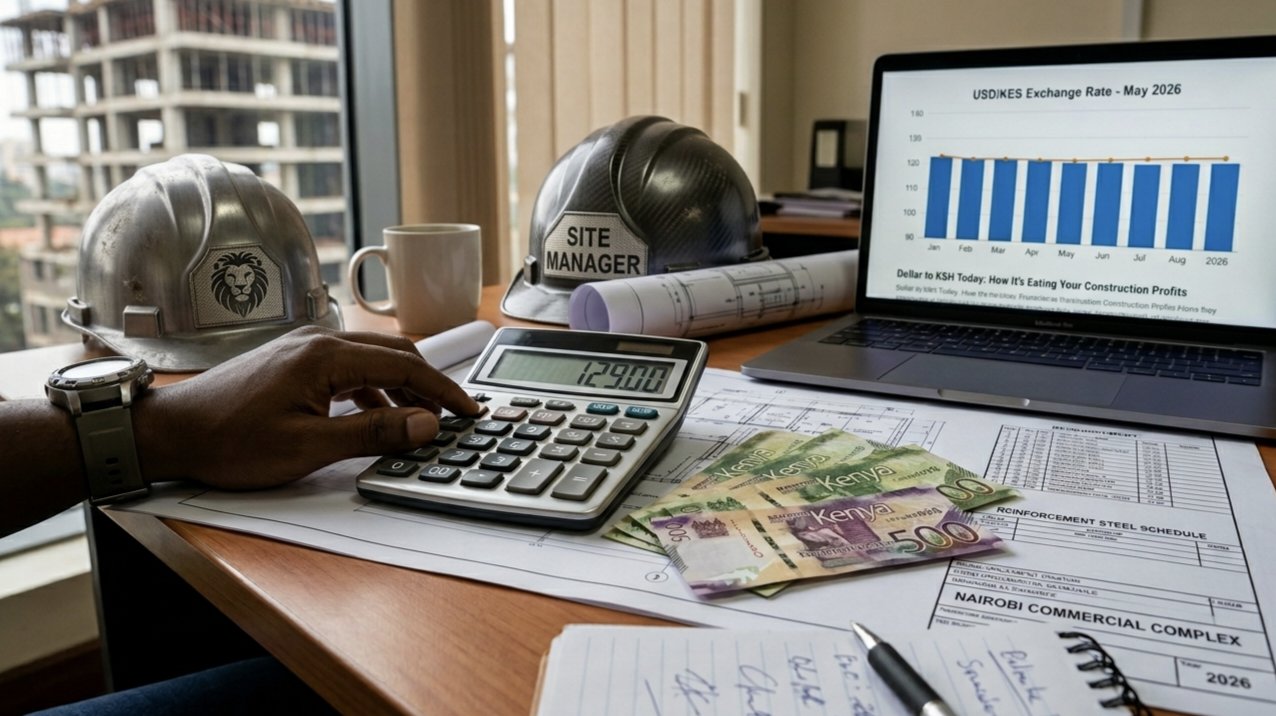
The dollar is currently sitting at approximately Ksh 129 as of May 2026. While this looks stable compared to the Ksh 160 volatility of 2023, do not let the calm surface fool you. In the construction world, even a 2 or 3-shilling move changes everything when you are purchasing steel, glass, or cables in bulk.
Which Materials Get Hit First?
The rule is simple: if it is imported, it is vulnerable. The following items react almost instantly to dollar fluctuations:
- Reinforcement Bars (Steel): Global raw material prices are pegged to the USD.
- Roofing and Finishing: Tiles, glass, and premium roofing sheets.
- Electrical and Plumbing: Copper cables and specialized fittings.
Even local materials are not immune. Cement may be "Made in Kenya," but manufacturers like Bamburi and National Cement still import clinker and coal. When the shilling weakens, the cost of production rises, and cement prices usually follow within weeks.
The Real Problem: The Quotation Gap
The biggest threat to your margin is the time between when you quote and when you buy.
The Reality Check:
You quoted rebar at Ksh 130/kg in January. By May, the rate has shifted, and the price is now Ksh 137/kg. That 7-shilling difference per kilo is not just a "cost increase" but significant amount of money coming straight out of your personal profit.
2 Ways to Protect Your Profits
1. Add a Forex Buffer to Your BOQ Prices
Never quote at the "current" market rate. Always include a 5–8% contingency specifically for exchange rate fluctuations. If the shilling remains stable, that buffer becomes extra profit. If it weakens, your business survives. This is now standard practice for any serious project involving imported finishes.
2. Lock in Materials Immediately
Do not wait until the day you need the materials on-site. The moment you receive a client deposit, buy and secure your most volatile items like steel and electrical fittings. In the current economy, storage costs are far cheaper than swallowing a 10-shilling jump on a massive order.
Navigating inflation in construction requires not just technical expertise but strong leadership, similar to the path of construction leaders shaping Kenya’s skyline.
The Bottom Line for 2026
The shilling has stayed within the 128–130 range for most of 2026, but stability is never guaranteed. With global dollar strength and high import demand, the rate will move.
Quote like it will move, not like it will stay. Your profit depends on your ability to predict the market, not just your ability to build.
Comments (0)
Leave a Comment
No comments yet. Be the first to share your thoughts!