
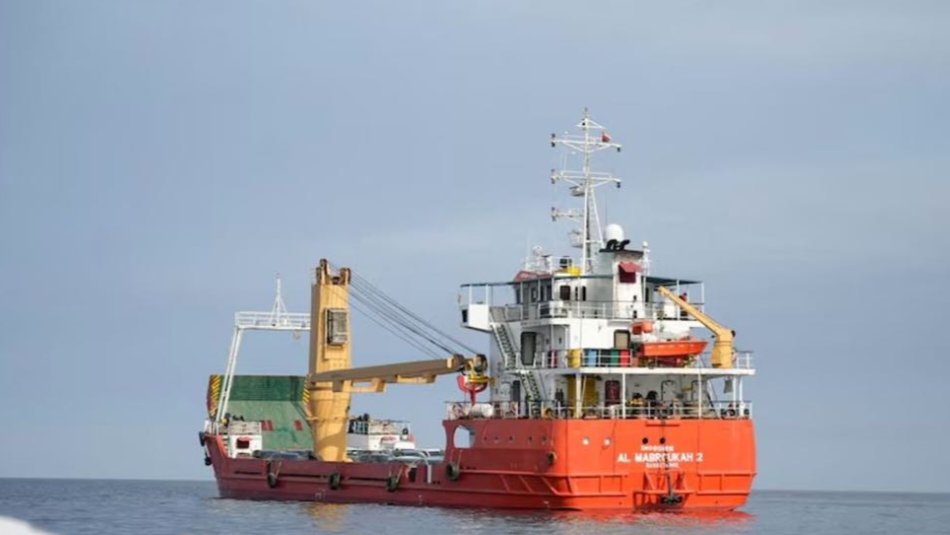

Conflicting signals from Washington and Tehran over potential peace talks have heightened diplomatic tension across the Middle East. A fresh attack on a cargo vessel in the Strait of Hormuz has further endangered critical maritime shipping routes.
United States (US) President Donald Trump stated that negotiations were actively taking place to resolve the ongoing five-month conflict. He warned that Tehran faces a final opportunity to secure a workable bilateral agreement.
Iranian officials swiftly contradicted the claims made by Washington regarding any direct diplomatic engagements. Iranian Foreign Ministry spokesman Esmail Baghaei insisted that no negotiations were taking place, when he addressed reporters during a briefing in Tehran.
The maritime monitoring agency known as the United Kingdom Maritime Trade Operations (UKMTO) reported that a merchant ship was struck by an unidentified projectile near the Omani coast. The incident occurred near the strategic entrance of the Gulf, where commercial shipping remains severely restricted.
Vessel movement data shows that commercial traffic through the strategic waterway has declined sharply over recent days. Only six merchant ships transited the narrow maritime corridor on Monday, which marked a reduction from seven vessels recorded during the previous day.
President Trump indicated that diplomatic discussions were encouraged by key regional partners, including Saudi Arabia, Qatar, and the United Arab Emirates (UAE). He suggested that Washington remains willing to pursue a diplomatic resolution, but warned that alternative measures remain under consideration.
Iranian representatives reiterated that their only active discussions regarding maritime passage in the region are being handled through Oman. Officials noted that their primary diplomatic team remains in Iran, although Foreign Minister Abbas Araqchi was traveling in neighboring Iraq.
Global commodity markets responded with notable volatility as investors assessed the conflicting statements from both capitals. Benchmark Brent crude oil prices dropped by approximately seven percent, while stock indices across major international exchanges recorded modest short-term gains.
The diplomatic friction follows the earlier breakdown of a formal Memorandum of Understanding (MoU) that was signed between both nations. Strategic differences persist over transit rules through the waterway, because Tehran asserts full sovereign authority over shipping channels near its coast.
Industry analysts observe that Iranian forces are utilizing trade corridors as leverage during ongoing strategic negotiations. By raising insurance premiums and security risks for international shipping, Tehran aims to test the economic resolve of coalition forces operating in the area.
Following the public denials from Tehran, President Trump voiced strong criticism of the Iranian leadership on social media. He insisted that coalition naval assets maintain operational control over the waterway, although commercial vessel owners continue to exercise extreme caution.
The latest maritime disruption highlights the ongoing fragility of global energy supply chains reliant on Gulf transit points. Construction contractors and infrastructure developers in import-dependent regions continue to monitor the situation, as potential fuel price shifts impact equipment transport and material logistics.
Military analysts emphasize that diplomatic breakthroughs will require explicit agreement on maritime security protocols from both governments. Until formal talks are acknowledged by all parties, commercial operators face sustained uncertainty when routing vessels through the Gulf.
Comments (0)
Leave a Comment
No comments yet. Be the first to share your thoughts!