


The Kenya National Highways Authority (KeNHA) has formally notified traders and residents occupying the road reserve along the Mtito Andei section of the A8 Mombasa Road to vacate the area. The directive, issued on 17th March 2026, requires the removal of all unauthorized structures, goods, and encroachments in both directions of the busy corridor.
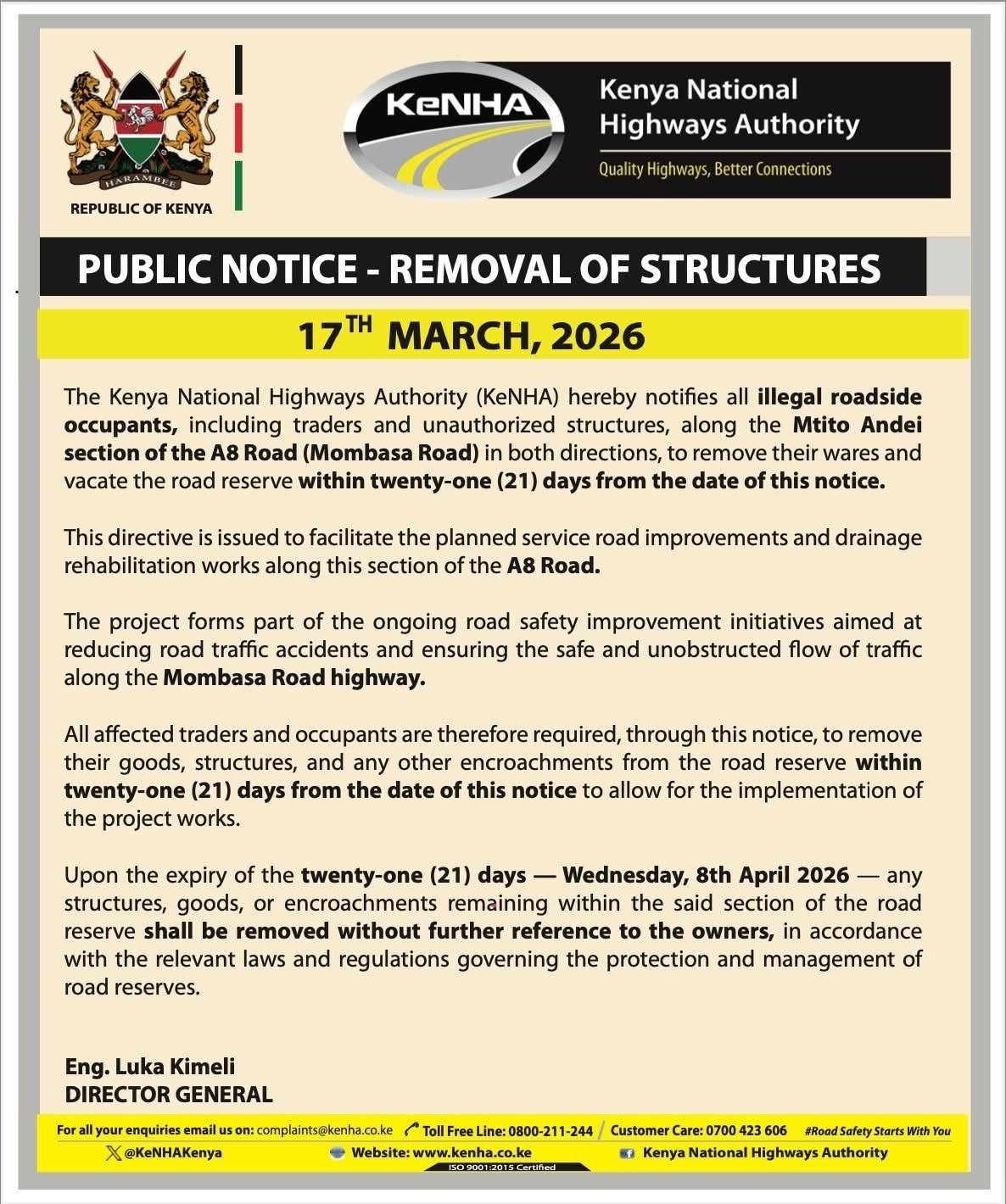
Affected individuals have been granted a 21-day window to dismantle their setups and salvage their property. This grace period is scheduled to lapse on Wednesday, 8th April 2026. According to the public notice, any structures remaining within the road reserve after this deadline will be removed by the authority without further reference to the owners.
This enforcement action is rooted in the protection and management of road reserves, as stipulated by Kenyan law. The authority maintains that the move is essential to facilitate planned infrastructure upgrades. Specifically, the site is earmarked for service road improvements and comprehensive drainage rehabilitation works.
Engineers familiar with the corridor note that illegal encroachments often impede maintenance activities and contribute to the rapid deterioration of road surfaces. By clearing the reserve, KeNHA aims to restore the intended width of the highway, which is vital for the execution of the upcoming civil works.
Beyond the physical construction requirements, the clearing of the Mtito Andei section is tied to broader safety objectives. The A8, which connects Nairobi to the port city of Mombasa, is the country’s most critical transport artery. KeNHA officials indicated that the removal of roadside structures is a key component of ongoing efforts to reduce road traffic accidents.
Unauthorized trading hubs along major highways often create bottlenecks and visibility issues for long-haul drivers. The presence of pedestrians and haphazardly parked vehicles near illegal stalls has been a recurring concern for safety advocates. The authority expects that a clear corridor will ensure a more predictable and smoother traffic flow.
The Mtito Andei stretch is a well-known transit stop for trucks and buses, making it a high-pressure area for roadside commerce. However, the government has become increasingly stringent regarding the boundaries of the national road network. The 17th March notice serves as a final warning to those who have set up permanent or semi-permanent businesses within the highway’s legal limits.
Once the 8th April deadline passes, KeNHA is expected to deploy enforcement teams to oversee the demolition of non-compliant structures. The authority has urged all affected parties to comply voluntarily to avoid the loss of property during the forced clearance exercise.
This move follows similar enforcement patterns observed across other sections of the Northern Corridor, where the government is prioritizing the modernization of service lanes to separate local traffic from through-traffic. The rehabilitation of the drainage system is also a priority, especially given the impact of seasonal flooding on the structural integrity of the Mombasa-Nairobi highway.
Comments (0)
Leave a Comment
No comments yet. Be the first to share your thoughts!