
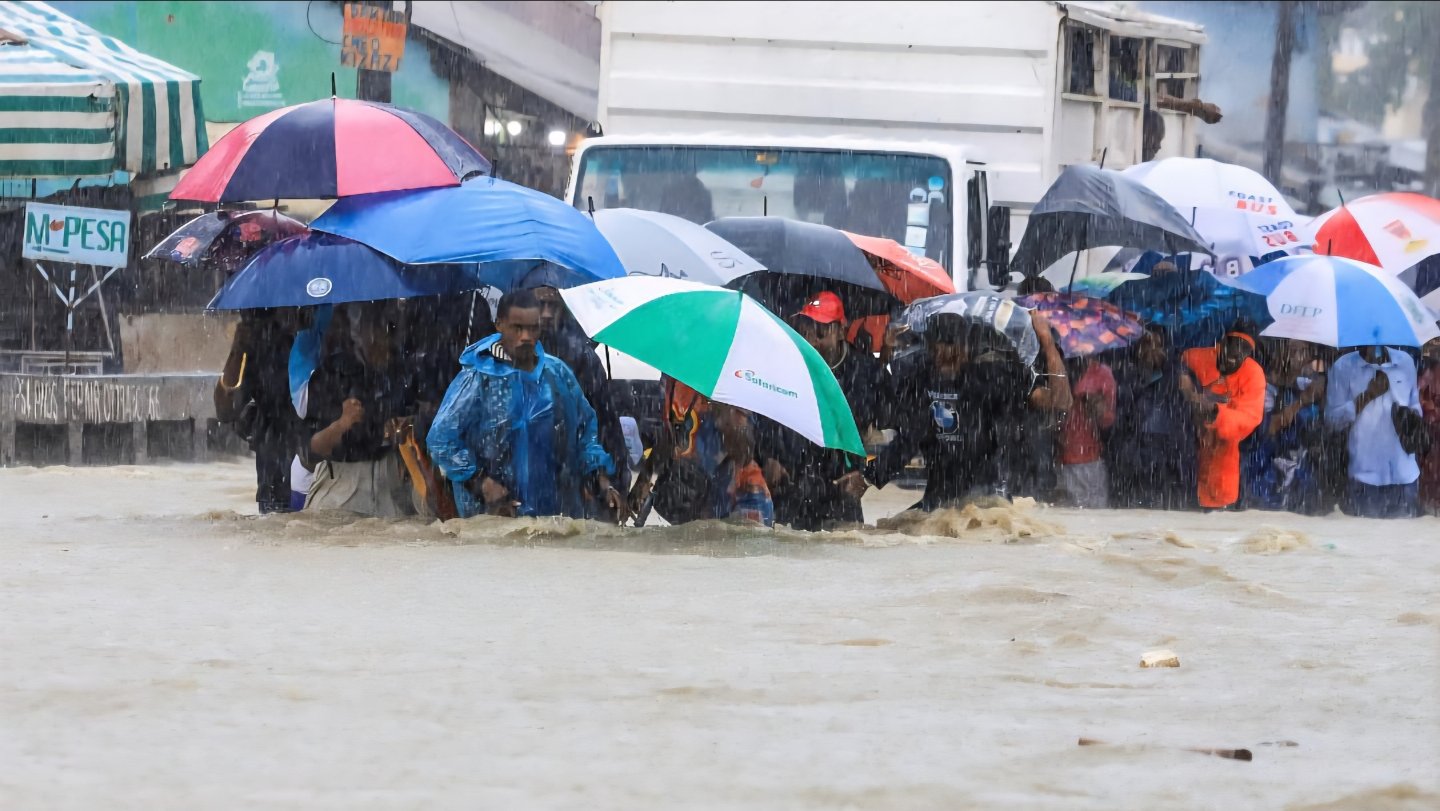

The National Police Service confirmed on Saturday that the death toll from devastating flash floods in Nairobi has reached 23. This follows a night of torrential rainfall that overwhelmed the city's drainage capacity, leading to the recovery of 13 additional bodies by rescue teams during afternoon operations.
Police spokesperson Muchiri Nyaga stated that the downpour triggered severe inundation across the capital, resulting in the destruction of property and significant displacement of residents. The fatalities highlight the persistent vulnerability of the city's built environment to extreme weather events, particularly in low-lying zones and areas with high-density informal construction.
Emergency assessments indicate that the most severe impacts occurred in Mukuru, Kibra, Mathare, and Huruma. In these areas, the proximity of structures to riverbanks and the lack of integrated stormwater management systems contributed to rapid water accumulation. Similarly, the estates of South B, South C, and Pipeline in Embakasi reported extensive waterlogging.
The city's transport infrastructure faced near-total paralysis on several key corridors. Sections of the Thika Superhighway, Mombasa Road, and Uhuru Highway were rendered impassable, as runoff exceeded the design limits of existing culverts and drainage channels. Motorists were stranded for hours on Jogoo Road, Enterprise Road, and Lang’ata Road as floodwaters turned major thoroughfares into rivers.
Construction and urban planning experts have frequently pointed to blocked drainage systems and uncollected waste as primary drivers of such localized flooding. Rapid urban development, often proceeding without concurrent upgrades to subterranean infrastructure, has reduced permeable surfaces, increasing the volume and velocity of surface runoff during peak rainfall.
Despite the heavy toll, search and rescue operations managed to save 29 people from various locations. The National Police Service remains deployed across the city, monitoring high-risk zones as the Kenya Meteorological Department warns that the peak of the rainy season may bring further precipitation.
Authorities have urged residents to avoid crossing flooded roads and to remain vigilant near riverine areas. The current crisis has renewed calls for a comprehensive audit of Nairobi's drainage master plan and more stringent enforcement of riparian buffer zones to mitigate future risks to life and property.
Comments (0)
Leave a Comment
No comments yet. Be the first to share your thoughts!