
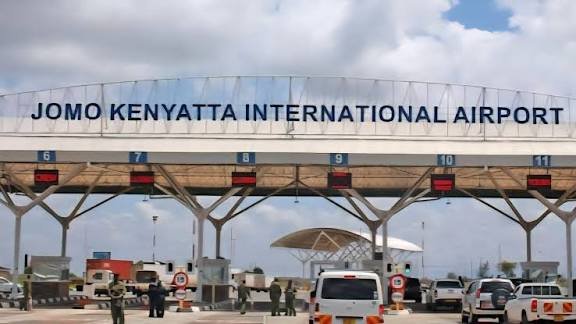

Operations at Jomo Kenyatta International Airport (JKIA) and across Kenya’s domestic aviation network reached a virtual standstill on Tuesday, February 17, 2026, as industrial action by the Kenya Aviation Workers Union (KAWU) entered its second day. The strike, which has primarily targeted air traffic control and ground handling services, comes at a sensitive time for the Kenya Airports Authority (KAA) as it prepares to break ground on a massive $2 billion modernization project.
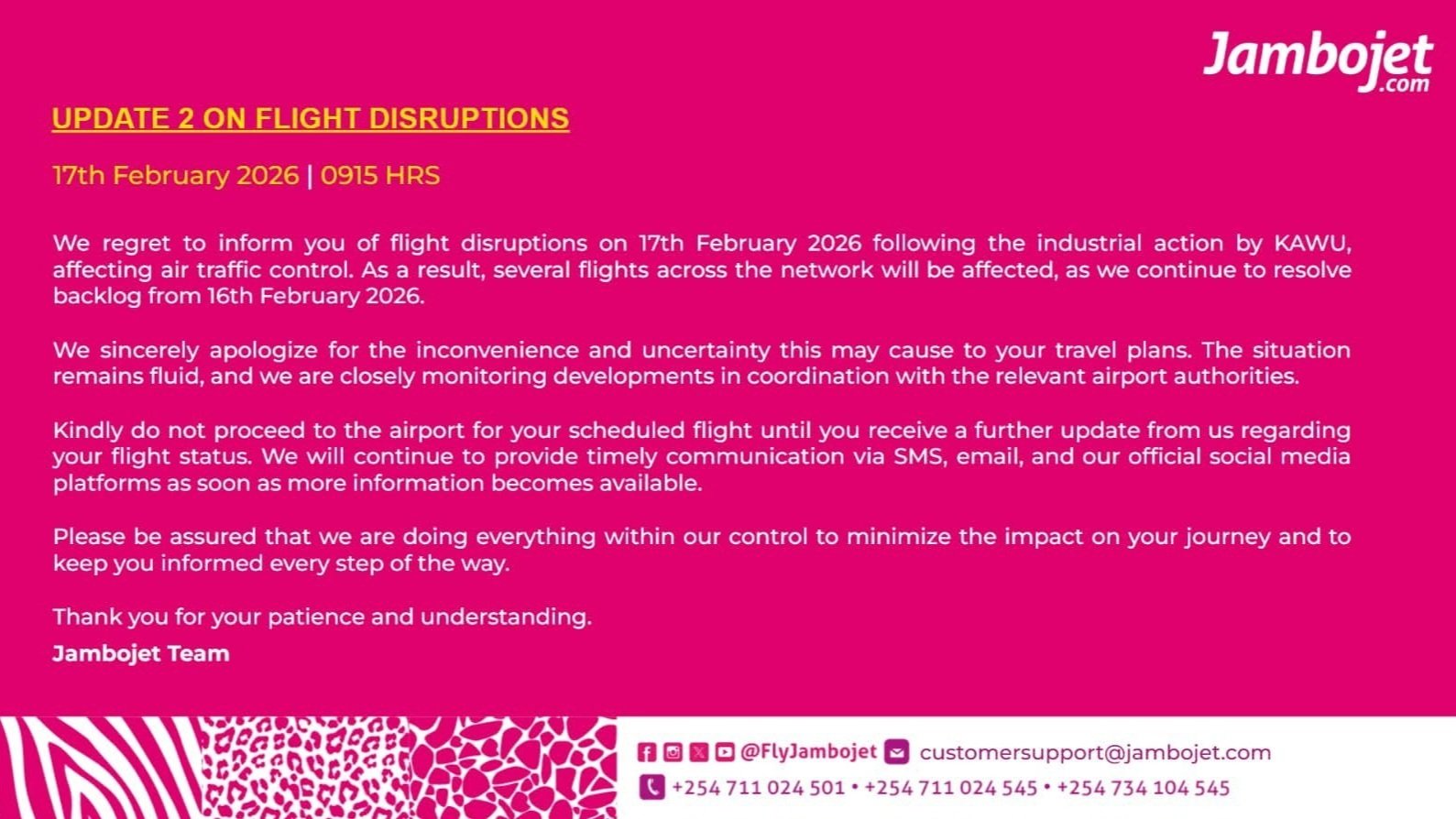
Low-cost carrier Jambojet issued a fresh travel advisory at 0915 HRS, confirming that the standoff has caused a significant backlog of flights dating back to February 16. The airline has taken the unusual step of advising passengers not to proceed to airports until they receive direct confirmation of their flight status. This level of disruption at the region’s primary hub is already rippling through the construction and logistics sectors, which rely on the facility for the movement of specialized equipment and technical personnel.
The labor dispute centers on a long-standing grievance regarding the failure of the Kenya Civil Aviation Authority (KCAA) to conclude a Collective Bargaining Agreement (CBA) that has remained pending since 2015. Union officials have been vocal about stagnant wages and the exclusion of contract staff from pensionable terms, issues that have now boiled over into a full-scale withdrawal of labor.
From a construction perspective, the timing of the paralysis is particularly problematic. The Kenyan government recently reaffirmed plans to begin the construction of a new, world-class terminal and a second 4.8-kilometer runway in May 2026. These upgrades are intended to increase the airport’s capacity from its current 7.5 million passengers per year to over 15 million. However, prolonged industrial instability at the site could deter the private investors and international development partners currently reviewing the project’s financing framework.
Industry analysts suggest that the strike highlights the fragility of the human infrastructure underpinning Kenya’s aviation ambitions. While the $2 billion blueprint focuses on physical assets like check-in counters, boarding gates, and advanced baggage handling systems, the current crisis proves that operational continuity is equally dependent on resolving decade-old labor disputes. If the KAWU strike persists, it could lead to increased costs for the upcoming expansion as contractors factor in the risk of site closures and logistical delays.
The Kenya Airports Authority has stated that contingency plans are in place to restore service, but the effectiveness of these measures remains limited. Ground services, including the marshaling of aircraft and baggage handling, remain under-resourced as the union continues to defy court orders intended to block the strike. For the construction firms eyeing the multi-billion shilling contracts set for tender, the current standoff serves as a stark reminder of the social and labor complexities involved in large-scale brownfield developments at active transport hubs.
As of Tuesday afternoon, the situation remains fluid. Coordination between airlines and airport authorities is ongoing, but the lack of a clear timeline for the resumption of full air traffic control operations is causing concern for regional trade. For a project as ambitious as the JKIA expansion, which aims to anchor Nairobi as the aviation capital of East Africa, the resolution of this labor dispute is now seen as a necessary precursor to physical construction.
Comments (0)
Leave a Comment
No comments yet. Be the first to share your thoughts!