
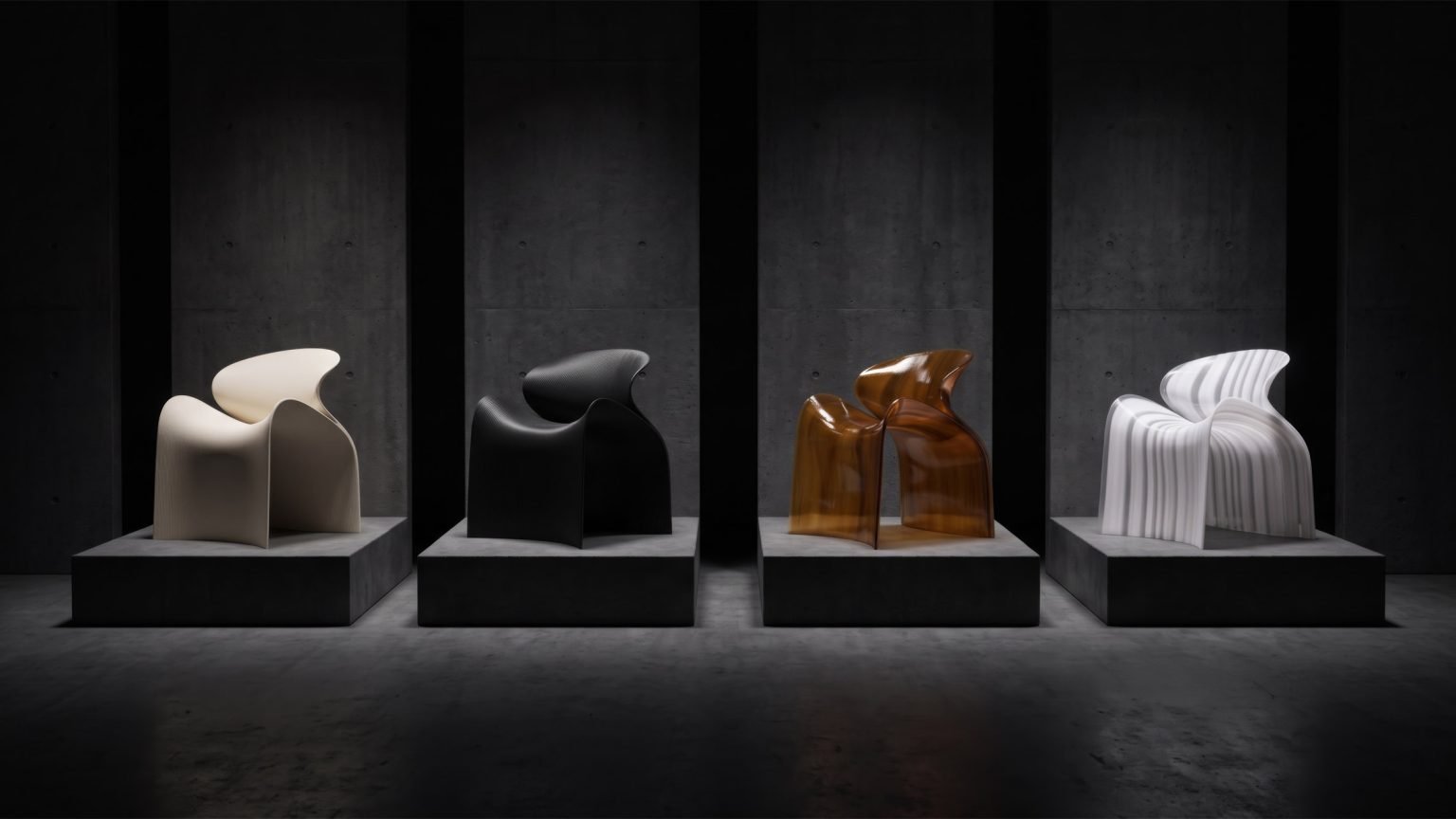

London architecture studio Zaha Hadid Architects (ZHA) partnered with Spanish manufacturing brand Nagami to introduce a new collection of three-dimensional printed furniture. The project showcases a sculptural chair manufactured entirely from recycled industrial plastic waste materials.
Named the Echo Chair, the furniture piece relies on complex parametric design software to generate its fluid, organic lines. The distinctive structural geometry features a sweeping backrest extending down to the ground plane while the sides scoop upward.
Fabrication takes place through a specialized continuous-extrusion manufacturing technique where layers of plastic build up sequentially. This specific robotic deposition process leaves a distinctively ribbed exterior surface across the completed chair frame.
The advanced manufacturing method eliminates any need for post-production assembly or separate joining parts. Project designers successfully integrated structural support, ergonomic seating requirements, and surface textures into a singular continuous system.
Production teams selected Recycled Polyethylene Terephthalate Glycol (rPETG) reinforced with glass fiber to fabricate the crisp monochromatic black and white models. This specific material mixture provides high structural stability and durability for heavy daily use.
Another variant incorporates a sustainable bio-based cork composite to produce a warm caramel tone across the sweeping surfaces. A fourth option introduces an elegant gradient aesthetic shifting gradually from solid white to completely translucent tones.
Sourcing agents acquired the raw polymer materials from discarded single-use medical plastics and various industrial waste streams. The initiative establishes a viable circular framework for transforming abundant waste resources into premium commercial design items.
According to ZHA project design director Sebastian Andia, the objective focused on turning an overlooked resource into a highly desirable product. The textured finish purposefully replicates the complex mineral qualities of natural stone surfaces.
This collaborative venture reflects a growing international trend toward adopting large-scale additive manufacturing within commercial design. Robotic extrusion allows technical teams to minimize material waste compared to traditional subtractive manufacturing options.
The commercial launch follows an extensive series of computational research initiatives conducted by the specialized ZHA Lab division. The research group focuses heavily on structural optimization, robotic construction workflows, and advanced material performance.
The finished four-piece furniture series is currently on public display in the United Kingdom at the London Creates exhibition. Located at The Truman Brewery, the international architectural design trade show remains open until late July.
Nagami originally worked with the prominent architecture office in 2018 to launch its debut line of robotic furniture. That historical collaboration resulted in two highly celebrated experimental seating designs named Bow and Rise.
Unlike the new recycled plastic versions, those initial structural pieces utilized a biodegradable polylactic acid plastic derived from corn starch. The studio continues to expand its broader catalog of digitally fabricated structural elements.
The new furniture release arrives shortly after a formal corporate branding transition for the famous London-based design office. Principal Patrik Schumacher recently announced the firm would officially drop its historical name in favor of its acronym.
The strategic decision followed a resolved legal dispute regarding long-term organizational governance and corporate legacy. The simplified branding reflects the current corporate identity across active international architecture and structural engineering markets.
Comments (0)
Leave a Comment
No comments yet. Be the first to share your thoughts!