

A version of this article appeared on Interesting Engineering.
The mechanics behind Starlink reveal a significant departure from traditional telecommunications systems, particularly in how data is transmitted to isolated regions, such as the middle of the Pacific Ocean or at high altitudes.
Traditional satellite systems rely on spacecraft positioned in geostationary orbit, which keeps them at a fixed point roughly 35,000 kilometres above the planet.
This extreme distance introduces high latency, which slows down response times. In contrast, Starlink uses a constellation of Low-Earth Orbit (LEO) satellites.
These satellites operate at an altitude of just 550 kilometres, which dramatically reduces the distance data must travel.
By positioning the hardware closer to the ground, the network achieves speeds that rival ground-based systems, such as traditional fibre optics, Fifth Generation (5G) networks, and standard broadband lines.
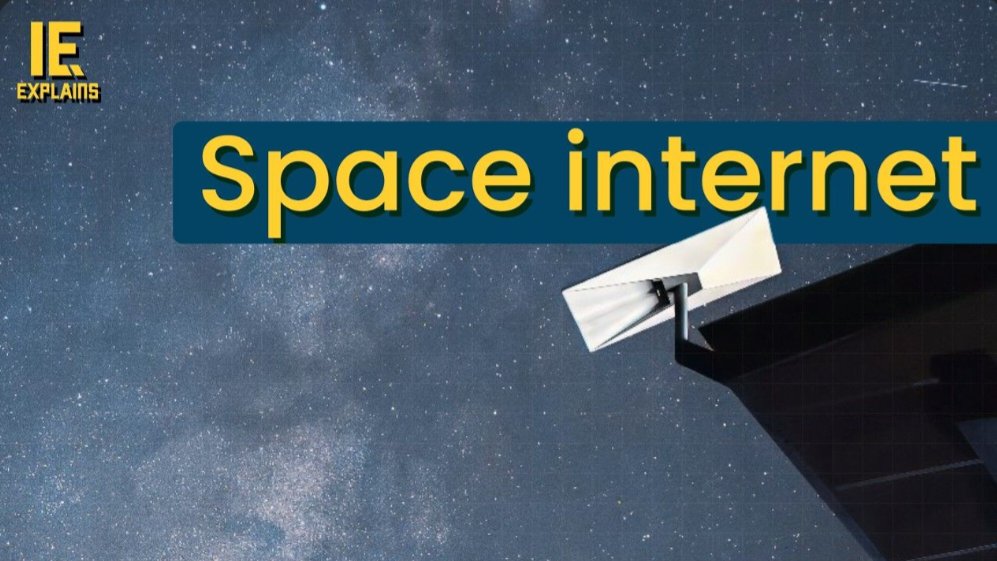
The network consists of over 10,000 active satellites orbiting the globe. To access this network, a user relies on a hardware terminal shaped like a compact, flat box.
This terminal communicates directly with the overhead satellites, which pass data across the network to ground stations.
The setup enables connectivity in remote environments where laying physical fibre cables is physically or financially impractical.
The system is increasingly deployed to connect moving platforms, including commercial aircraft flying at 35,000 feet, and maritime vessels navigating remote oceanic corridors.
However, the rapid expansion of these massive constellations presents unique challenges. Astronomers have raised concerns about visual light pollution, which can disrupt deep-space observations.
Orbital debris tracking is also a growing logistical issue, given the sheer volume of hardware now circling the planet.
Despite these challenges, the infrastructure provides an alternative for rural areas, maritime operators, and aviation networks that lack access to traditional terrestrial infrastructure.
Comments (0)
Leave a Comment
No comments yet. Be the first to share your thoughts!