
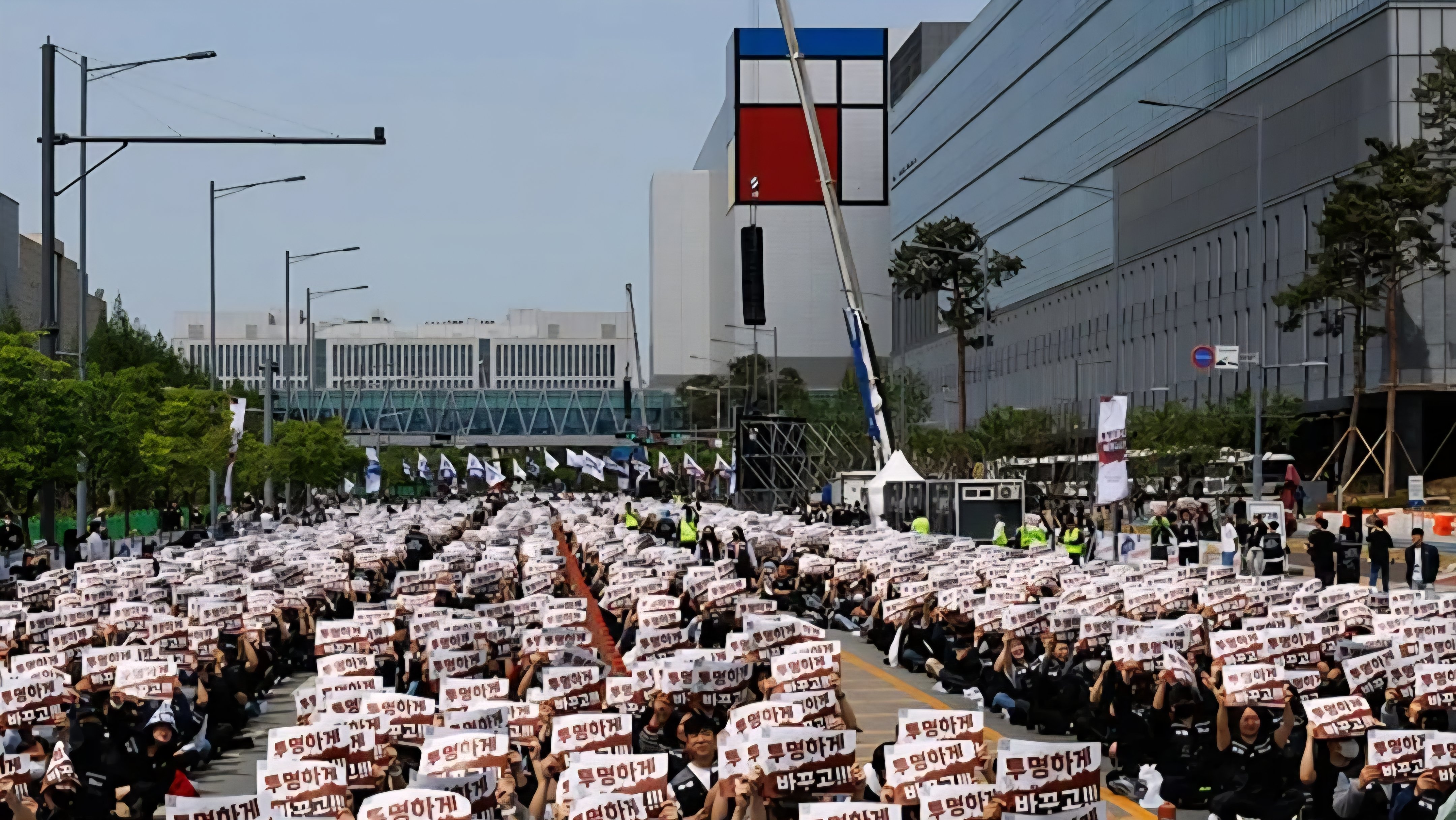

Labor unrest has hit the global technology production sector as a major industrial dispute over the financial rewards of the artificial intelligence (AI) boom threatens manufacturing operations in South Korea.
A general strike at Samsung Electronics Company Limited was narrowly averted after management and union representatives established a provisional agreement, but the settlement has triggered sharp divisions across the workforce and faces mounting pushback from external stakeholders.
The dispute is centered around the semiconductor manufacturing infrastructure in Pyeongtaek, a critical second-tier port city that has suddenly become the epicenter of a global conflict over how to distribute corporate wealth generated by the AI market surge.
The joint headquarters of the labor union had initially scheduled a comprehensive walkout involving tens of thousands of workers, which was postponed following intense, government-mediated negotiations.
To halt the industrial action, Samsung Electronics agreed to a package that includes a 6.2 percent wage increase and a specialized semiconductor performance-based bonus framework, allocating 10.5 percent of semiconductor operating profits to special payouts for chip division employees.
While the massive financial payouts successfully pacified the primary union base ahead of the strike deadline, the structure of the deal has stoked widespread unhappiness among other company employees who do not stand to reap equal benefits from the AI windfall.
The division between high-earning chip manufacturing staff and workers in other corporate divisions highlights a widening compensation gap within major industrial enterprises.
Beyond internal workforce friction, the stopgap agreement has provoked severe institutional complications for the electronics manufacturer, including a direct revolt from organized shareholder groups.
The Korea Shareholder Action Headquarters has publicly opposed the profit-linked bonus structure, staging protests near the residence of the company chairman and arguing that the agreement lacks legal validity without a formal shareholders' resolution.
The investor group has threatened legal action to completely invalidate any board resolution executing the deal, asserting that company executives may be in breach of their fiduciary duties.
Government officials had closely monitored the standoff, with the industry ministry warning that prolonged industrial action at the Pyeongtaek hub could cause direct economic damage of up to KRW 1 trillion per day and permanently harm supply chain trust.
Local commercial groups and component suppliers in the port city had also threatened class-action lawsuits against the union due to the anticipated economic impact on the surrounding industrial ecosystem.
With global big tech clients closely observing the stability of South Korean memory chip production, the uneasy truce underscores the volatile corporate environment facing modern infrastructure operators during rapid technological transitions.
Comments (0)
Leave a Comment
No comments yet. Be the first to share your thoughts!