
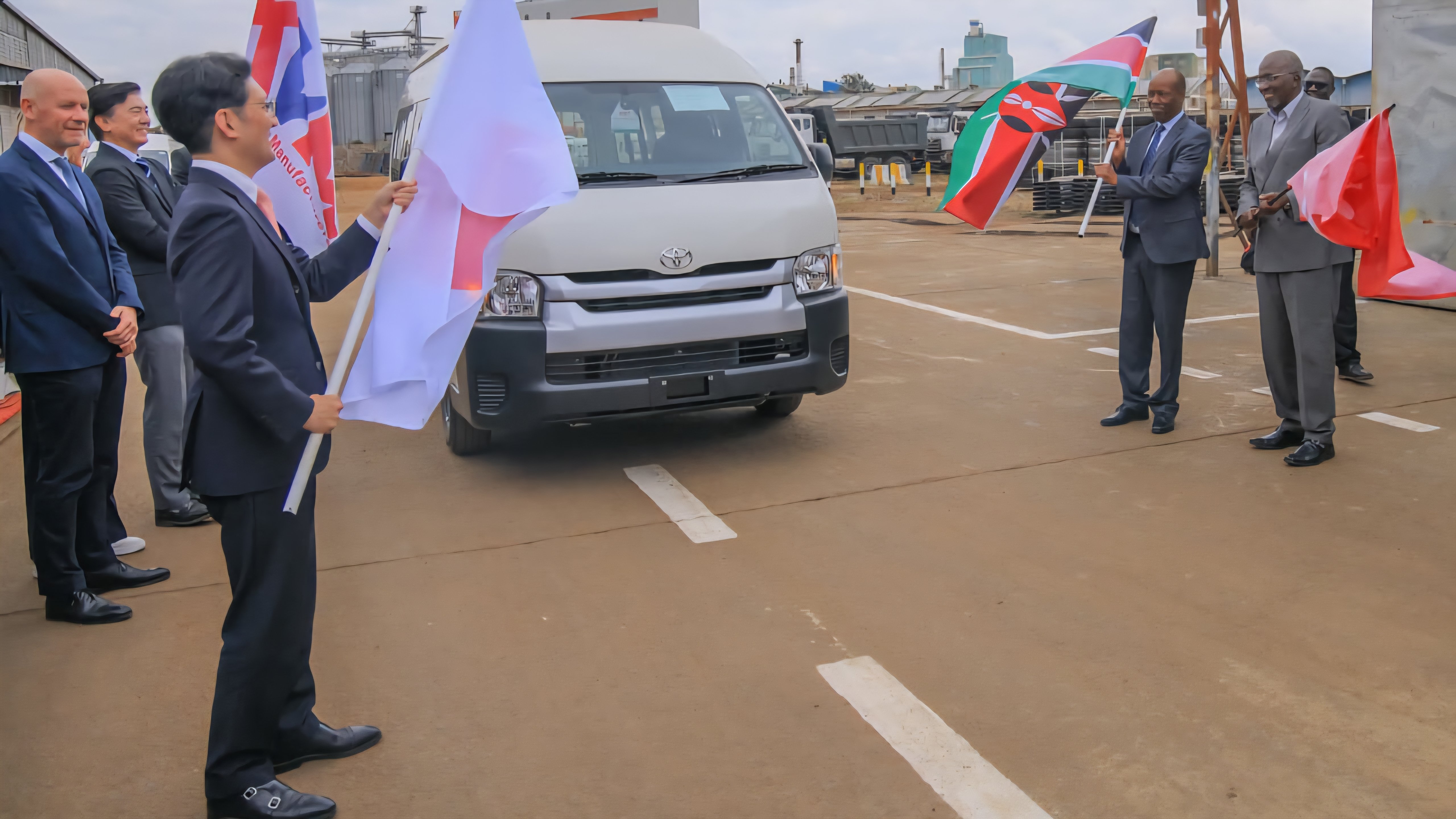

The landscape of public transport and commercial transport in Kenya is shifting toward domestic manufacturing following the opening of a new vehicle production line in Kiambu County.
Kenya Vehicle Manufacturers (KVM) officially commissioned a specialized assembly line for the Toyota Hiace at its Thika manufacturing plant.
The production setup represents part of a broader infrastructure modernization and facility expansion programme, which is backed by a Sh2.3 billion investment from CFAO Mobility Kenya.
The project deepens domestic value addition, creating direct employment opportunities for more than 200 people at the facility.
The manufacturing expansion aims to absorb local youth into technical roles, while expansion plans are projected to generate additional technical jobs.
Cabinet Secretary for Investments, Trade and Industry, Hon. Lee Kinyanjui presided over the commissioning ceremony at the Thika site.
Cabinet Secretary Lee Kinyanjui noted that the public transport sector relied on imported alternatives for decades, following the era of the older passenger vans.
The initiative positions the domestic supply framework to supply locally produced components, which opens up commercial opportunities for local parts suppliers, secondary manufacturers, and small and medium-sized enterprises (SMEs) within the regional automotive value chain.
The Thika production facility already assembles commercial vehicles and passenger cars for several other global automotive brands, including Volkswagen, Tata, Mercedes-Benz, and Sinotruk.
The newly completed first phase of the modernization programme upgraded production infrastructure, technical logistics capabilities, and environmental compliance systems at the factory.
First-year production targets are set at approximately 600 units of the passenger and commercial vehicle, with the plant built to scale up output as domestic and regional market demand dictates.
Comments (1)
Leave a Comment
echoproperties limited ✓
Jun 08