
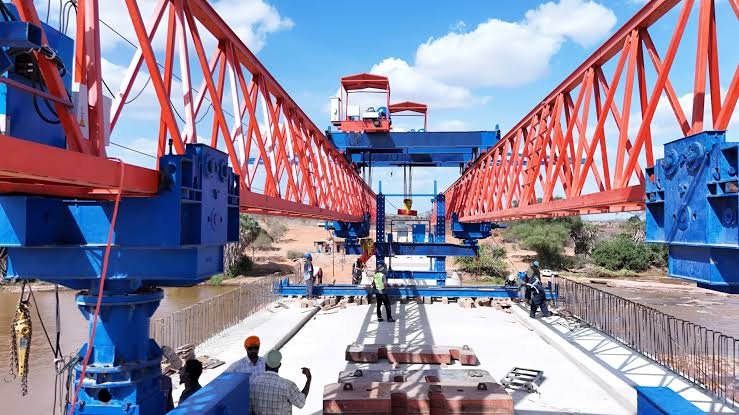

The logistical bottleneck that has long hampered the Galana Kulalu Food Security Project is nearing a resolution. Interior Principal Secretary Raymond Omollo, during a recent site inspection, confirmed that the Galana Kulalu bridge is now 90 percent complete. The structure is expected to facilitate the seamless movement of heavy machinery, agricultural inputs, and produce, addressing a major physical barrier that previously isolated the farm during the rainy seasons.
This infrastructure progress aligns with a broader shift in the management of the project under the Bottom-Up Economic Transformation Agenda (BETA). After years of underperformance as a purely state-led initiative, the government has transitioned the scheme toward a Public-Private Partnership (PPP) model. Selu Limited, the lead private investor, is currently managing production on the initial 10,000-acre model farm. Recent data indicate that maize cultivation is scaling from 3,200 acres at the end of 2025 toward a target of 5,400 acres by mid-2026.
Beyond the bridge, significant investments in water management and energy are underway to stabilize the scheme's operations. The National Irrigation Authority (NIA) has overseen the construction of a 450,000-cubic-meter water reservoir and a new intake system designed to mitigate siltation issues. These facilities are intended to support year-round irrigation, moving the project away from its reliance on erratic rainfall. To further lower operational costs, the government is implementing a KSh2.98 billion electrification project through the Rural Electrification and Renewable Energy Corporation (REREC). This initiative aims to replace expensive diesel-powered pumps with grid electricity by June 30, 2026.
The long-term vision for the Galana Kulalu ranch involves a massive expansion of its irrigated footprint. While current activities remain concentrated on the model farm, plans are in place for the construction of the Galana Dam. This proposed reservoir, with a projected capacity of 300 million cubic meters, is expected to provide the water security necessary to bring an additional 200,000 to 350,000 acres under cultivation.
State officials have also indicated a policy shift toward industrialization within the scheme. There are active plans to gazette Galana Kulalu as a Special Economic Zone (SEZ), a move intended to attract agribusiness players to establish value-addition facilities on-site. The goal is to process cereals, edible oils, and livestock products within the region, thereby creating a more robust value chain and generating local employment.
For a project once frequently labeled a "white elephant," the current pace of construction and the integration of private capital represent a pragmatic attempt to salvage its potential. If the infrastructure milestones, including the bridge and the upcoming electrification, translate into consistent yields, the project could significantly reduce the country’s reliance on food imports, particularly for maize and wheat. The pressure remains on the Ministry of Agriculture and the NIA to ensure that this latest phase of implementation avoids the procurement and technical hurdles that stalled the project in previous years.
Comments (0)
Leave a Comment
No comments yet. Be the first to share your thoughts!