
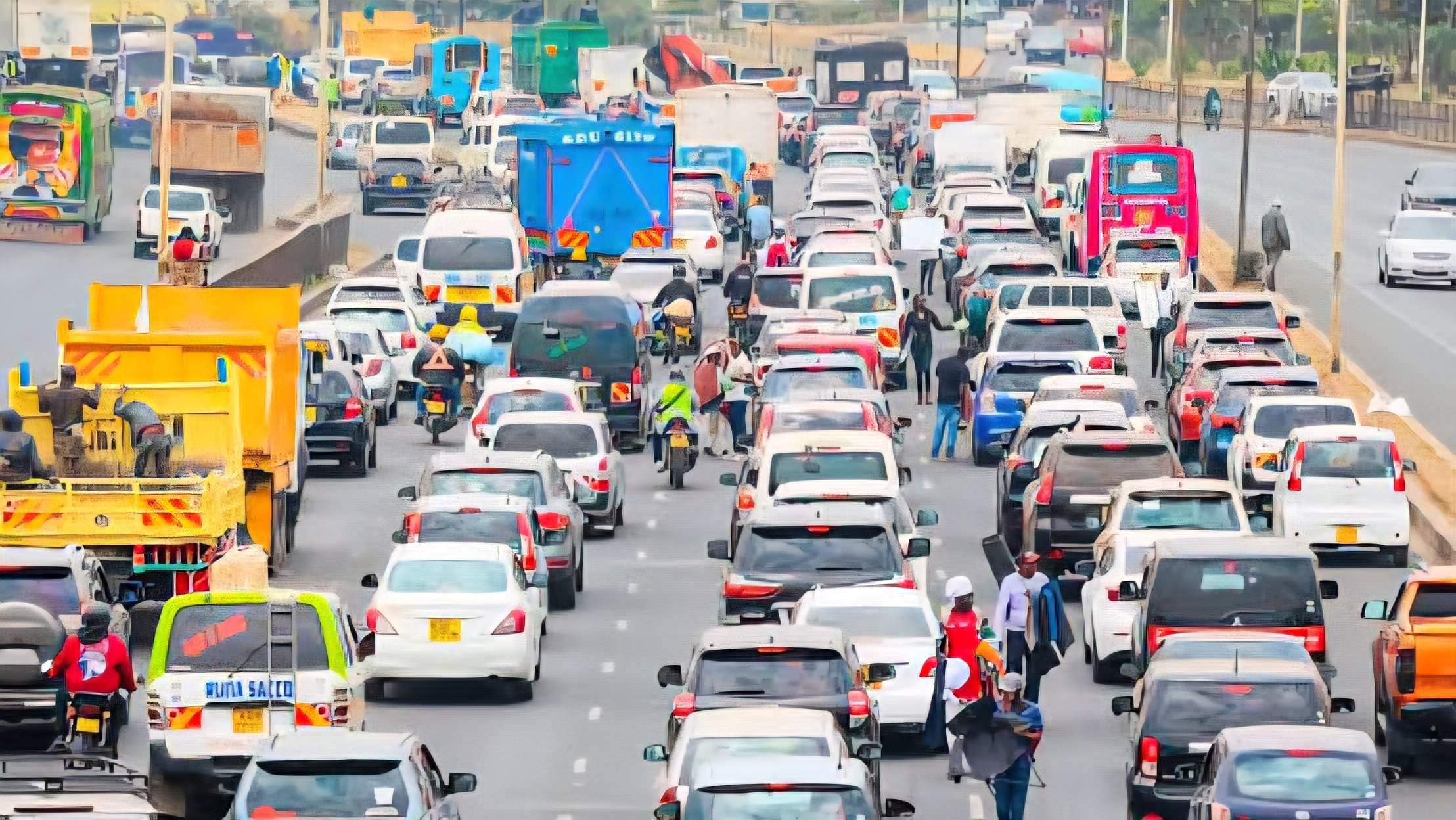

Nairobi is bracing for a period of restricted mobility as the government initiates a series of infrastructure projects centered on the city’s primary arterial routes. Traffic disruptions are expected to intensify over the next two weeks following the commencement of construction works under the Nairobi Rivers Regeneration Program. The project, which was officially commissioned by President William Ruto, involves substantial civil works at several high-traffic intersections that facilitate movement into and out of the Central Business District.
The Kenya National Highways Authority has highlighted that the works will focus on key nodes, including the Globe Roundabout, the University of Nairobi roundabout, and the Museum Park roundabout. These areas serve as essential conduits for commuters using both the Thika Superhighway and Waiyaki Way. Additional activity is also slated for the vicinity of Michuki Park, where construction crews are preparing to install infrastructure that supports the broader environmental and urban renewal goals of the regeneration scheme.
While the long-term objective is to revitalize the city’s water bodies and surrounding urban spaces, the immediate impact on logistics is clear. Engineering teams will be occupying sections of the carriage ways to facilitate the installation of drainage systems, pedestrian walkways, and structural reinforcements. These interventions are necessary for the rehabilitation of the riparian zones, but they inevitably require the narrowing of lanes and the temporary redirection of vehicle flow.
The timing of these works coincides with other maintenance activities already underway on the national road network. Earlier this month, the highways authority issued a seven-day notice to small-scale traders operating on road reserves at Roysambu and Githurai. The eviction was a precursor to the construction of new, designated bus bays intended to improve passenger safety and reduce the congestion caused by public service vehicles stopping in active lanes. By clearing these zones, the government intends to create more orderly pick-up and drop-off points, although the transition period is expected to be difficult for road users.
Motorists are being advised to anticipate delays, particularly during peak morning and evening hours when the volume of traffic entering the city from the Kiambu and Westlands directions is at its highest. Traffic marshals and police officers are expected to be deployed to the affected intersections to manage the flow if, as projected, the lane closures create significant bottlenecks. Engineering experts have noted that the complexity of working within a densely populated urban corridor often leads to unpredictable timelines, but the current schedule suggests a phased approach to minimize total closures.
Funding for these infrastructure improvements is being provided by the Government of Kenya in collaboration with various development partners. This financial backing has allowed for the settlement of several pending bills owed to contractors, which had previously slowed the pace of road maintenance across the country. With these financial hurdles addressed, the rate of construction activity in the capital is expected to remain high throughout the third quarter of the financial year.
For residents of the Nairobi Metropolitan area, the advice from the editorial desk is to seek alternative routes or adjust travel schedules where possible. The construction at the Globe Roundabout is particularly sensitive given its role as the primary gateway for the thousands of vehicles arriving from Thika and the northern suburbs. As the heavy machinery moves in, the period of convenience on these major highways is likely to be paused in favor of these necessary structural updates.
Comments (0)
Leave a Comment
No comments yet. Be the first to share your thoughts!